John Krasinski returns as Jack Ryan in Tom Clancy’s Jack Ryan: Ghost War, a film follow-up to the hit action series that Amazon Prime Video released Wednesday, May 20.
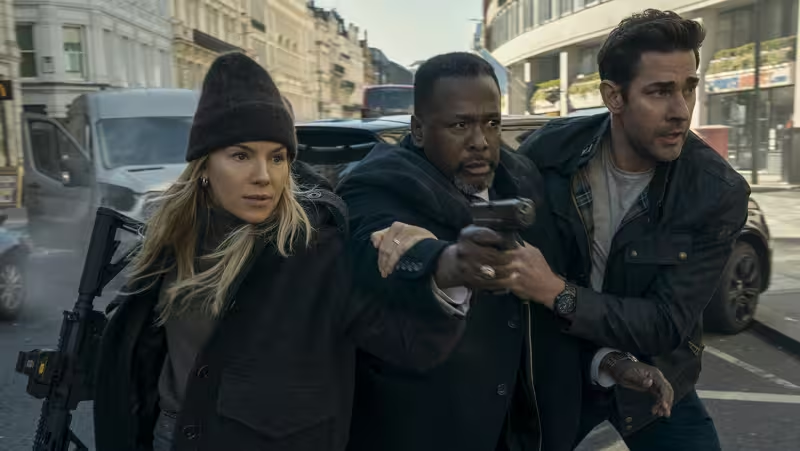
The movie is R-rated, runs 1 hour 45 minutes and reunites Krasinski with two familiar figures from the series: Wendell Pierce as James Greer and Michael Kelly as Mike November. Sienna Miller also appears, and Max Beesley plays Liam Crown, a former MI6 agent at the center of the plot.
For four years Krasinski played Jack Ryan on the series before stepping back into the role for this cinematic entry; the screenplay carries two credits, Aaron Rabin and John Krasinski, and Andrew Bernstein directed.
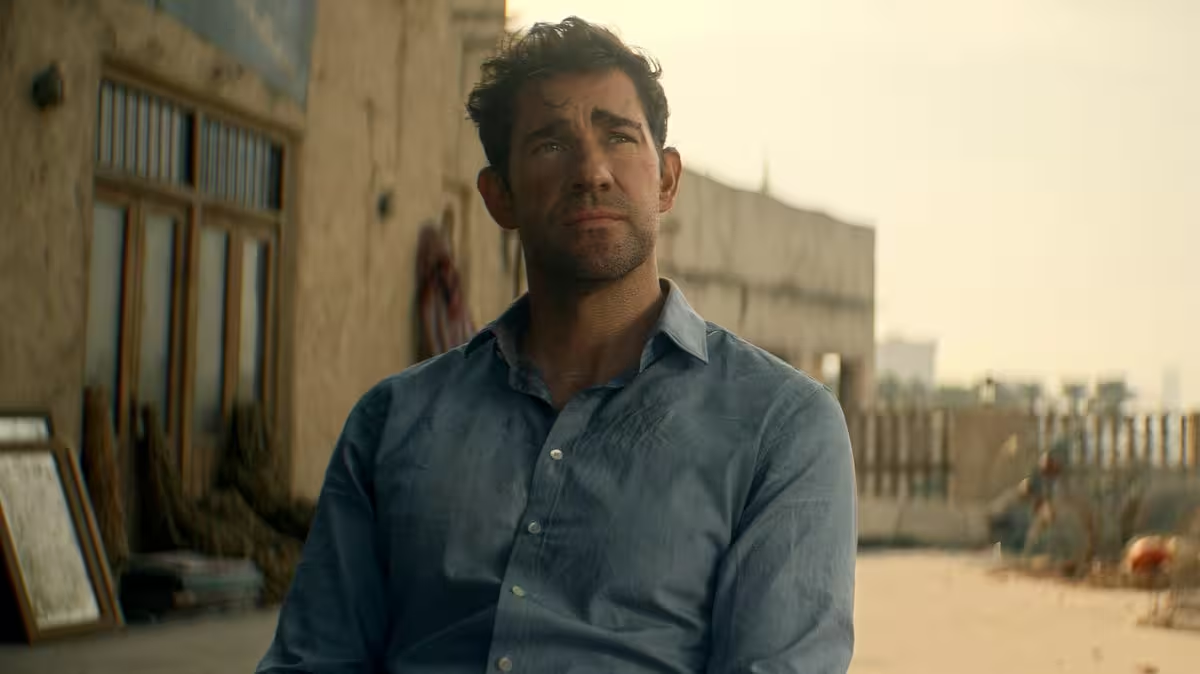
The story opens with Jack Ryan traveling to Dubai with Mike November to pick up a vitally important package from a former MI6 operative. That retrieval sets a chain of events that culminates in a plot to blow up Tower Bridge, raising the stakes far beyond a single handoff.
On screen the film leans into familiar alliances and tensions. Wendell Pierce returns as James Greer and Michael Kelly returns as Mike November; Max Beesley’s Liam Crown is revealed to be the erstwhile MI6 operative whose actions tip the plot toward catastrophe.
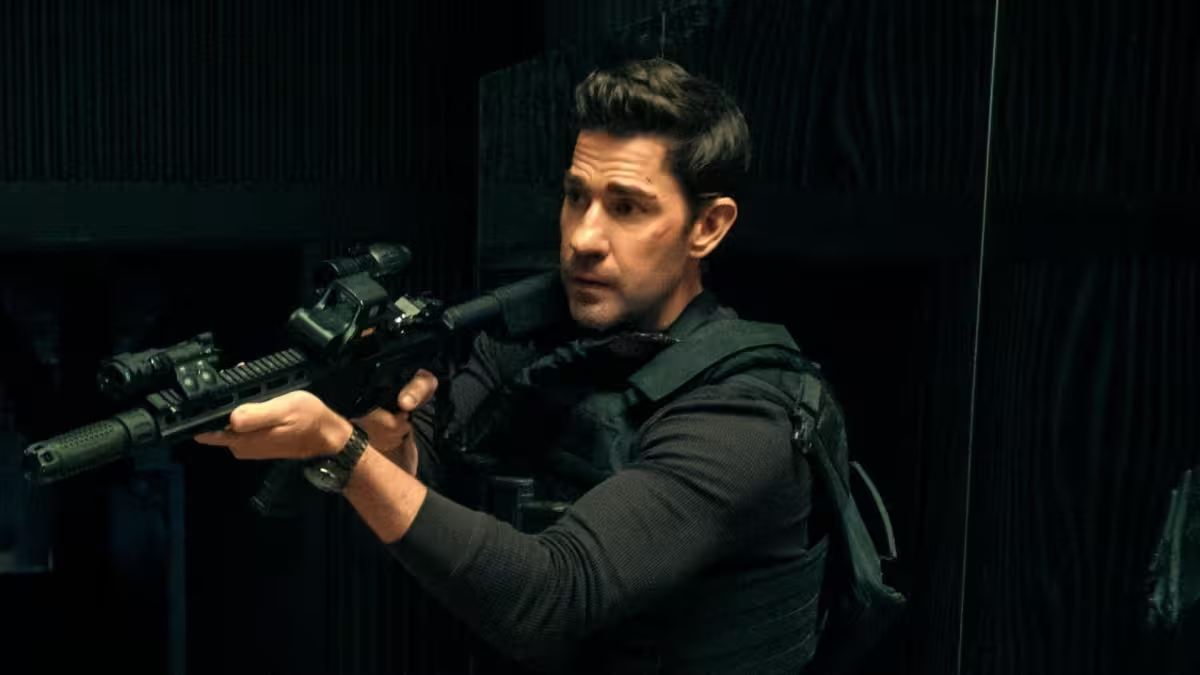
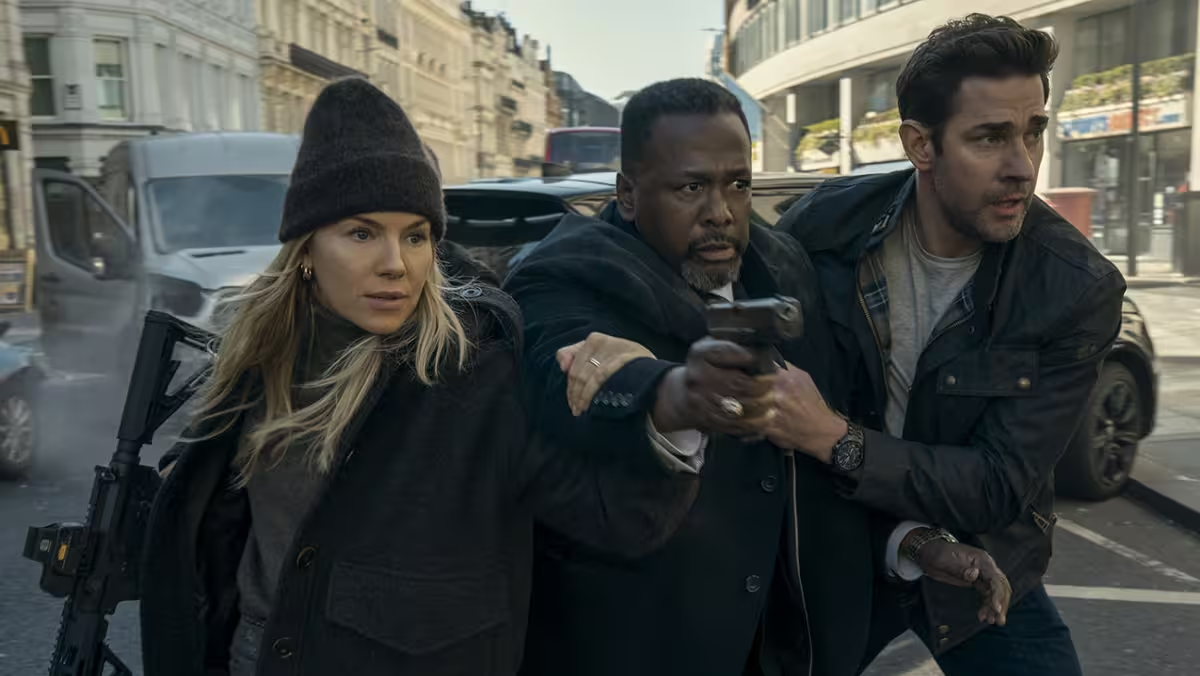
That concentration of cast and plot is the film’s clear weight: a condensed, R-rated thriller that has to carry the expectations of viewers who followed Ryan for years on television. Jack Ryan has a long on-screen history — the character was previously portrayed on the big screen by Alec Baldwin, Harrison Ford, Ben Affleck and Chris Pine — and this entry is explicitly pitched as the next chapter of that lineage.
The move from a four-year series to a 1 hour 45 minute film creates friction. A serialized run allowed character and worldbuilding room to breathe; a tight runtime demands narrative economy. The screenplay credit shared by Krasinski and Aaron Rabin signals an attempt to bend the television past into a cinematic future, but compressing that history into a single feature risks leaving viewers who expect the series’ depth wanting.
There is also tonal tension in the plot’s escalation. The Dubai retrieval is a clear set piece, but the later reveal of a plan to blow up Tower Bridge shifts the film into high-consequence territory — an arc that requires both global stakes and credible emotional grounding in a condensed runtime. James Greer’s on-screen cynicism undercuts neatness: "Where’s the fun in that?" he asks, a line that marks the film’s appetite for complication rather than comfort.
Production credits underline that this is both a continuation and a new venture: Andrew Bernstein in the director’s chair and Krasinski taking a second credit as a screenwriter. The review framing the movie as the start of a possible run of additional cinematic entries suggests the film was built to test whether Jack Ryan can live again on the big screen after its television incarnation.
Conclusion: John Krasinski has deliberately brought Jack Ryan back for a short, sharp film night — he co-wrote the script, returned to the part after four years on the series and joined a cast that includes familiar colleagues. The result is meant to be the first of more cinema outings, and the film’s compact, R-rated approach both demonstrates how the character can be concentrated for theaters and makes clear the gamble: if Ghost War connects on May 20, expect additional cinematic entries; if it does not, the experiment may stop where the credits roll.