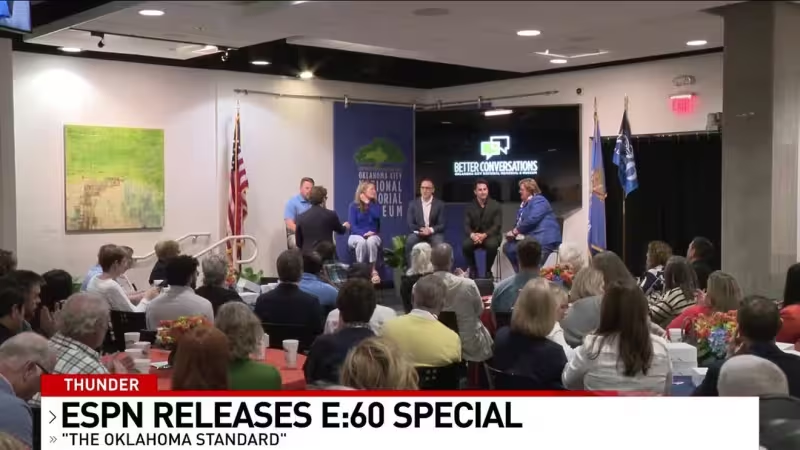
Baxter Holmes stood among a crowd at the Oklahoma City National Memorial and Museum on the night people gathered to watch ’s documentary The Oklahoma Standard, a film the network says traces how the Thunder helped the city emerge from the shadow of the bombing.
The screening drew local fans and visitors to the memorial to see a story the franchise has lived for years: since 2008, every new Thunder player and employee has visited the Oklahoma City National Memorial and Museum, a ritual the documentary spotlights as part of the team’s role in the city’s recovery.
The film’s title, The Oklahoma Standard, is tied to a statewide initiative rooted in acts of kindness that followed the attack. The documentary links that initiative to the way people and institutions — including the team — committed to preserving a culture of care in the years after the tragedy.
Holmes said that in February of last year he found himself thinking about the approaching 30th anniversary and how, after such an event, it can be easy for people to feel forgotten. That thought threaded through the screening: the film lays out how the Thunder’s visits and public presence helped a battered city find a new public face and a steady ritual of remembrance.
The number attached to the tradition is simple and stark: 2008. Organizers highlighted that year as the beginning of an explicit practice of bringing each new member of the franchise to the memorial, turning private grief and public duty into an ongoing education for the team. Viewers at the screening saw archival moments and contemporary testimony intended to show how that routine became part of the city’s recovery narrative.


The documentary also makes clear the broader aim behind its name. The Oklahoma Standard is presented not as a slogan but as an initiative that grew from neighbors helping neighbors — a statewide push to preserve a culture of caring that traces its roots to the immediate responses after the attack. The film frames the Thunder’s relationship with the memorial as one chapter in that longer story.
That framing, however, contains a strain of tension. The ritualized visits and the documentary’s portrait of civic solidarity exist alongside the worry Holmes expressed about memory fading with time. The screening gathered people to watch a film arguing that rituals and public institutions keep memory alive; Holmes’s reflection, offered in February of last year, underscored the opposite fear — that anniversaries and commemorations can dim, leaving survivors and witnesses feeling sidelined.
Organizers and the film make an answer implicit: rituals, when repeated and attached to public institutions, can extend memory beyond anniversaries. The Thunder’s practice of taking every new player and employee through the museum is the clearest, empirical example the film offers of how a sports franchise can anchor a city ritual into ordinary operations.
For fans who missed the memorial screening, the documentary is available on the app, where the film can reach a wider audience and, the producers suggest, renew the public conversation about remembrance and civic care. The movie tries to do more than recount history; it aims to show how a team and a community have kept a painful past from being forgotten through ceremony and repeated act.
The clearest conclusion the screening left behind is that the Thunder’s ritual is now part of the city’s memory infrastructure. Whether that ritual will be enough, in the long run, to prevent the feeling Holmes warned about remains the central question the film raises out loud: can repeated public acts of remembrance stave off being forgotten, or will they become another footnote in a changing civic life?