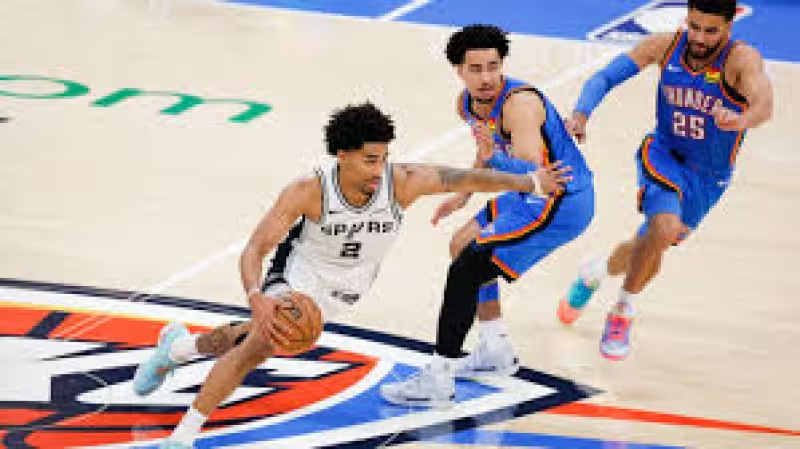
De’Aaron Fox has been playing through an ankle injury that began in Game 4 of the Western Conference semifinals and flared again in Game 6, and the problem returned late in the third quarter of Game 3 of the 2026 Western Conference final when Oklahoma City guard Lu Dort dove on his right ankle.
Fox briefly went to the locker room and returned early in the fourth quarter, finishing Game 3 with 15 points, six assists, seven rebounds and four turnovers in nearly 31 minutes — numbers that underscored both his importance to the Spurs and how far from ideal his mobility looked on a night he described as difficult. "Yeah, I mean, it’s definitely tough," said after the game. "I feel like (the Dort dive) was a play that could have been avoidable, but it is what it is."
The stat line is tidy enough for a playoff box score. The consequence is sharper: Fox missed the first two games against the Thunder because of the aftereffects of the ankle injury he first suffered against the Minnesota Timberwolves, and San Antonio is now down the hard choice every contender hates — play a star who is not 100 percent or alter the roster in the middle of a conference final.
Fox did not soften the reality. "Obviously it is disappointing not being able to be 100 percent," he said. "But like I said, I’m able to be out there, so that’s all that matters to me right now." That willingness to play is a resource for a team in the 2026 NBA Western Conference final. It is also the precise kind of edge that can mask limitations: speed is Fox’s superpower, and the injury he sustained in the semifinals and re‑aggravated in Game 6 is described in team circles as a high ankle sprain — an injury notoriously difficult to play through without sacrificing burst and lateral quickness.
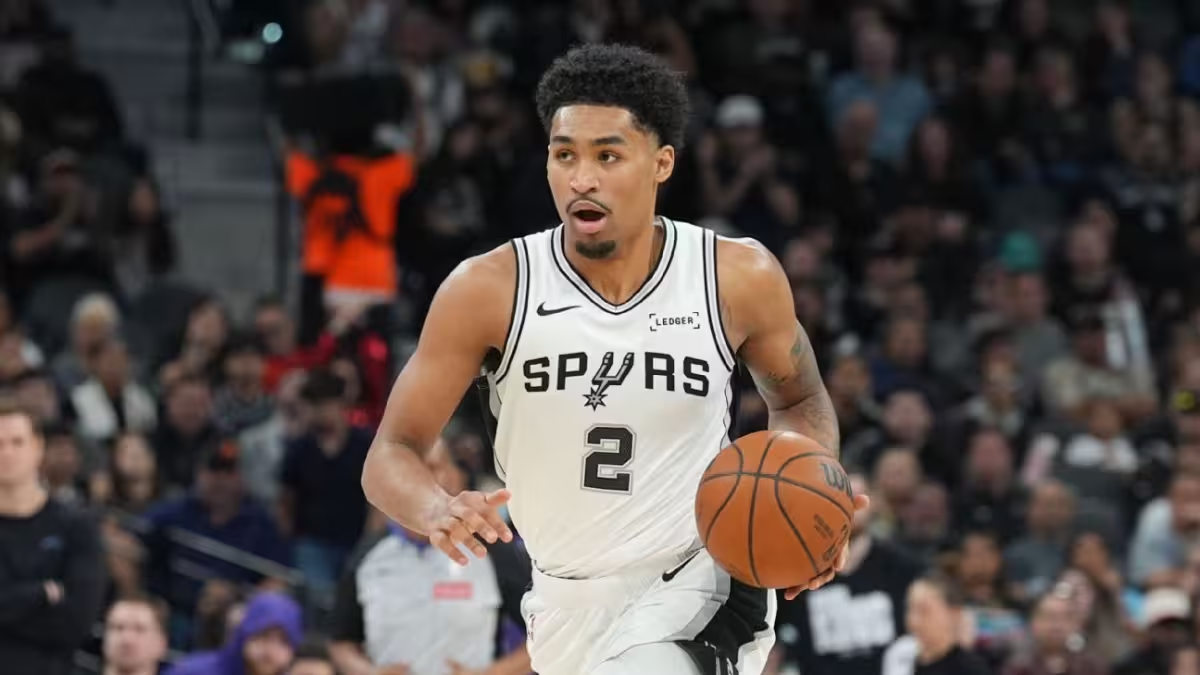
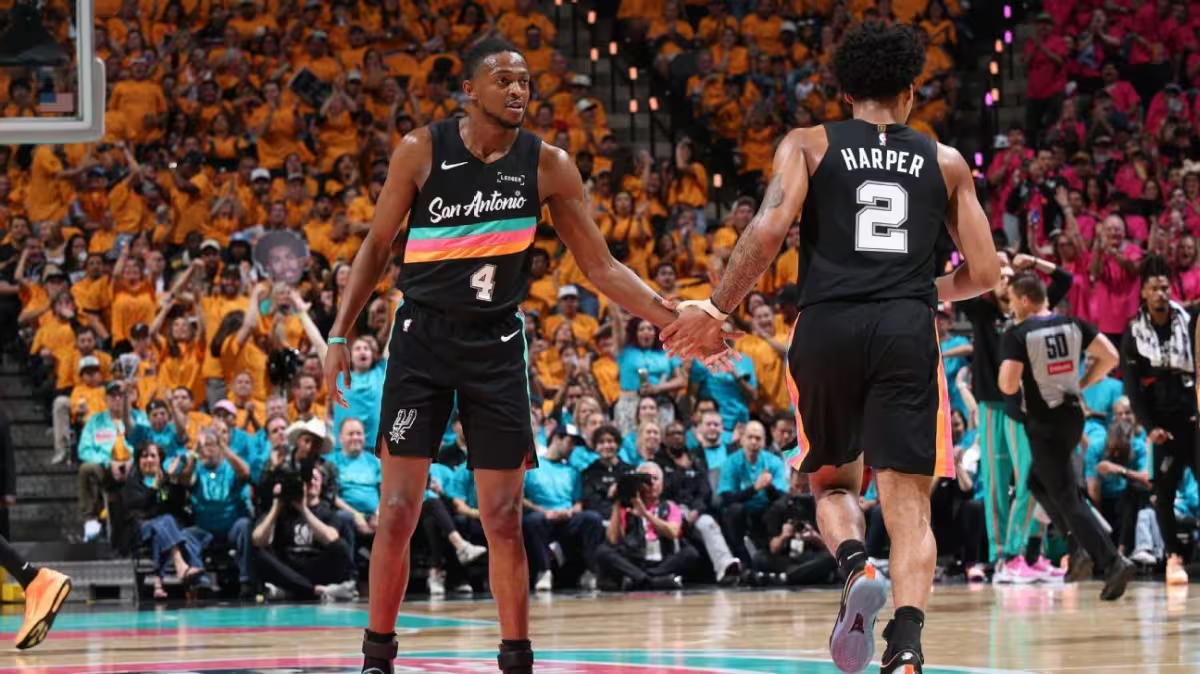
Outside the locker room, league chatter has surrounded Fox’s future with the Spurs, and the debate has become part of the coaching calculus in real time. Rival executives and media members say rookie guard Dylan Harper is too good to come off the bench for long and will eventually need to start alongside second‑year guard Stephon Castle. That view doesn’t only reflect Harper’s present form; it reflects a belief that his insertion into the starting lineup would change matchups and reduce the burden on a compromised Fox.
The tension is simple and sharp. Fox’s presence, even limited, preserves the rotational structure that got the Spurs to the conference final. Moving Harper into a starting role would signal a pivot — an acceleration of a youth movement in the middle of the postseason and an admission that the Spurs are willing to exchange some veteran polish for fresher legs. Both choices carry costs: one risks diminishing Fox’s effectiveness and perhaps his long‑term health; the other risks short‑circuiting the continuity that has defined San Antonio’s run.
Coaching staffs rarely acknowledge this calculus publicly, and the Spurs coach has not offered a definitive line on whether Fox will be protected or leaned on for every minute available. What is clear is that the injury timeline — first injured in the Western Conference semifinals against Minnesota, re‑aggravated in Game 6, forcing Fox to miss the first two games against Oklahoma City — has compressed what might have been an offseason conversation into an acute playoff decision.
The most consequential question now is not whether Fox can soldier through pain — he has made that choice and said he can — but whether the Spurs coach will commit to him as the team’s playoff fulcrum or hand the keys, at least part‑time, to a rookie many around the league say cannot remain on the bench. The answer will decide not only the balance of these six or seven games against Oklahoma City but how the Spurs shape their roster when the dust settles.