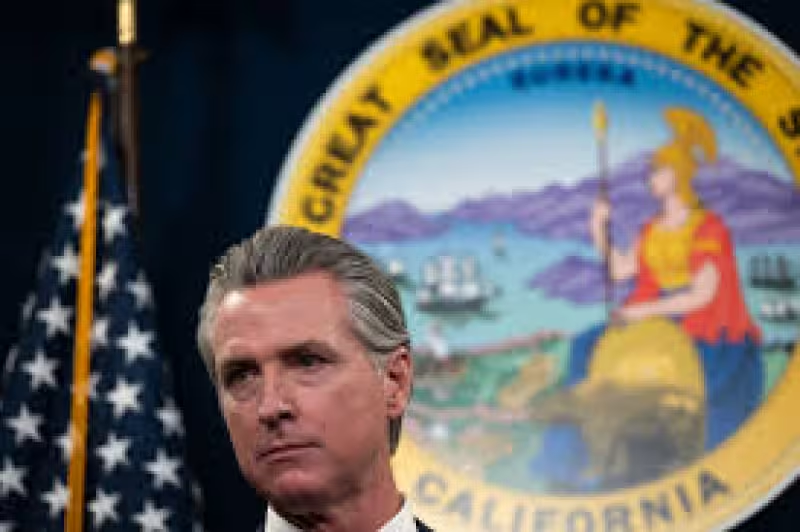
Gov. Gavin Newsom signed an executive order on May 21 directing California agencies to explore ways to blunt job losses tied to artificial intelligence, as the state wrestles with a wave of tech layoffs and growing pressure on elected leaders to act. The order asks agencies to study severance policies, subsidized employment and other ways to help displaced workers, and to report on how AI is reshaping the California labor market.
The move came a day after Meta laid off 8,000 workers, with chief executive Mark Zuckerberg citing AI in a memo to staff. Cisco and Block have also recently pointed to AI after cutting thousands of jobs. Newsom’s order adds studies of expanded job training, stock compensation, cooperative business ownership for workers and how unions are negotiating over AI.
The timing matters because California is where the fight over AI regulation is moving fastest, and Newsom is trying to show he is not ignoring the workers who are likely to absorb the first shock. The order followed two days after the state Senate passed the No Robo Bosses Act, which would prevent businesses from using decisions made by AI and other automated systems as the sole reason to fire or discipline a worker. Newsom vetoed a similar bill last fall, a decision that sharpened criticism from labor.
That criticism has not gone away. In February, AFL-CIO president Liz Shuler, members of the California Labor Federation and labor leaders in Democratic primary states said they would pull support for a Newsom 2028 presidential campaign if he did not do more to protect workers from artificial intelligence. California Labor Federation president Lorena Gonzalez welcomed the executive order but said it was not enough. “We are glad that Governor Newsom is acknowledging the potential harm of AI on workers, but it’s not enough to just study the issue, we have to take action now. Catastrophic job loss from AI is not inevitable, it’s a political choice,” she said.
The order is also part of a pattern for Newsom. He signed executive orders in 2023 and again last month that paired AI protections with encouragement for state agencies to use the technology, and this latest step follows the same balancing act: regulate the harms without shutting the door on the industry. That stance puts him in contrast with President Trump, who has pushed to keep states from regulating AI and on Thursday called off signing an executive order that would have sought testing of advanced AI models before they are used.
Newsom has now moved from acknowledgment to study, but not yet to a new set of binding worker protections. The pressure point is clear: if California is going to shape how AI affects jobs, the next test is whether the governor turns his findings into rules that change what companies can do, not just what agencies can examine.