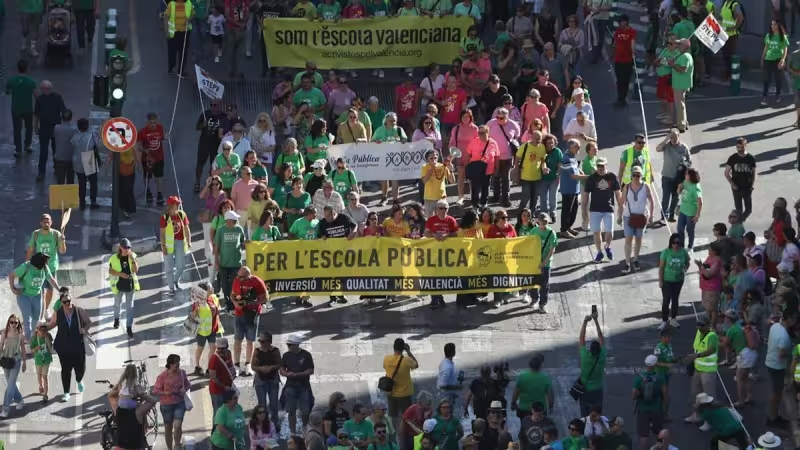
María Latorre, a school leader who resigned in solidarity last week, said teachers in the Valencian public system will press on as the strike enters its third week after unions announced a fresh calendar of mobilizations and will hand a new proposal to the regional education authority on Monday, May 25.
The coming week is heavy with actions. On Monday a union proposal will be delivered at the Conselleria de Educación headquarters in València and simultaneous concentrations are scheduled: at 10.00 in front of the Conselleria in València, at 12.00 before the Territorial Directorate in Alicante, at 10.30 in Elche’s plaza dels Algeps and at 11.00 in front of the Territorial Directorate in Castellón. Tuesday, May 26, will see decentralized events across the comarcas and symbolic activities including classes in the street, a tactic encouraged by the unions. A unitary demonstration in València will assemble at 11.00 on Wednesday, May 27, while a separate mobilization is set for the plaza del Ayuntamiento in Castellón that same day. Thursday will continue with local actions and proposed bike rides through towns, and if talks remain unresolved on Friday, unions plan assemblies at school centres.
The scale of unrest has already been large: last Friday’s march brought 35,000 teachers into the streets, and the Saturday demonstration drew more than 30,000 people. The protest wave culminated last Thursday when 250 school management teams resigned en bloc in support of the indefinite strike, a sign of the depth of discontent inside schools.
Teachers say the strike is driven by a long list of grievances: very high classroom ratios, insufficient staffing, excessive bureaucracy, loss of purchasing power, precarious contracts, lack of resources to meet diversity needs and deteriorating infrastructure. Latorre, who has publicly explained her decision to step down, said she resigned to back colleagues fighting for quality public education and because her school has gone the year without a dedicated educator. She added that her centre still awaits special-education staff and that a provisional support-teacher post has been removed — a role she described as vital for small rural networks that rely on a travelling teacher to help Infant classrooms.



Union organizers have framed next week’s program as an escalation intended to keep pressure on the Conselleria and to broaden community involvement. The union STEPV explicitly called for classes to take place outdoors as a visible action and asked supporters to accompany the mobilizations. Iolanda Segura, speaking for organizing assemblies, warned she would be prepared to walk away from the negotiating table for good if the administration does not respond to their demands.
That warning highlights the core friction: talks have not been formally resumed. There is no official convocation of a new negotiating table, and unions say they have not agreed when or under what conditions negotiations would restart. The unions will hand over a new written proposal on May 25, but whether that document leads to an immediate, structured dialogue remains unresolved.
On the ground, teachers report exhaustion and strain. "Teachers are exhausted," one educator, identified only as Daniel, said succinctly. The mass demonstrations, the wave of resignations by management teams and the unions’ decision to keep up decentralized and highly visible actions underline how little trust exists between staff and the administration.
Context matters: the huelga is indefinite and intended to force the Conselleria to unblock stalled talks over staffing, pay and working conditions. The actions are concentrated across València, Alicante, Elche and Castellón and rest on longstanding complaints about the deterioration of public education in the region.
Unless the Conselleria convenes a formal negotiating table and opens substantive talks, the strike will move into its third week with marches, local actions and assemblies already lined up — and with school directors and teachers prepared to maintain pressure until a credible response arrives.