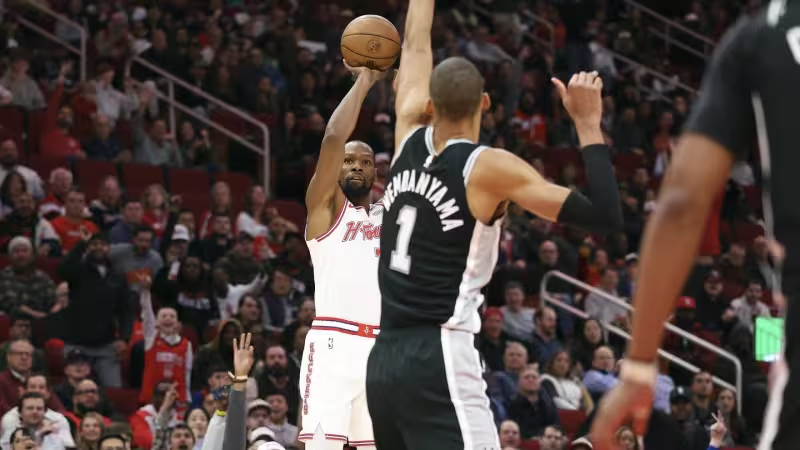
Jeff Teague said Victor Wembanyama has not surpassed Kevin Durant, bluntly rejecting a thread of public hype on both the Club 520 podcast and during a recent episode of 520 In the Morning. Teague framed the conversation as admiration mixed with perspective: “I’m gonna keep it real. I love Wemby because we ain’t never seen anything like him, but he’s not f**king with KD.”
The numbers that drive the debate are immediate. This season Wembanyama averaged 25.0 points, shot 51.2 percent from the field and 34.9 percent from 3-point range, and finished third in MVP voting. Teague used those figures as the launching point for a larger claim about lineage and standing in the game, saying flatly, “It’s not even possible.”
Durant’s early career is the reference point. In his third NBA season Durant led the league in scoring at 30.1 points, finished second in MVP voting, shot 47.6 percent from the field and 36.5 percent from 3-point range. Beyond that season, Durant is already top-five on the all-time scoring list — a career accumulation Wembanyama cannot yet approach.
That gap is what makes Teague’s comments land. Wembanyama’s efficiency this season is striking — higher field-goal percentage than Durant’s third year — and his defensive upside has been loudly praised. Teague acknowledged that upside even as he drew a line: “Defensively he’s gonna be the greatest defender we’ve ever seen … so let’s just stop that.”
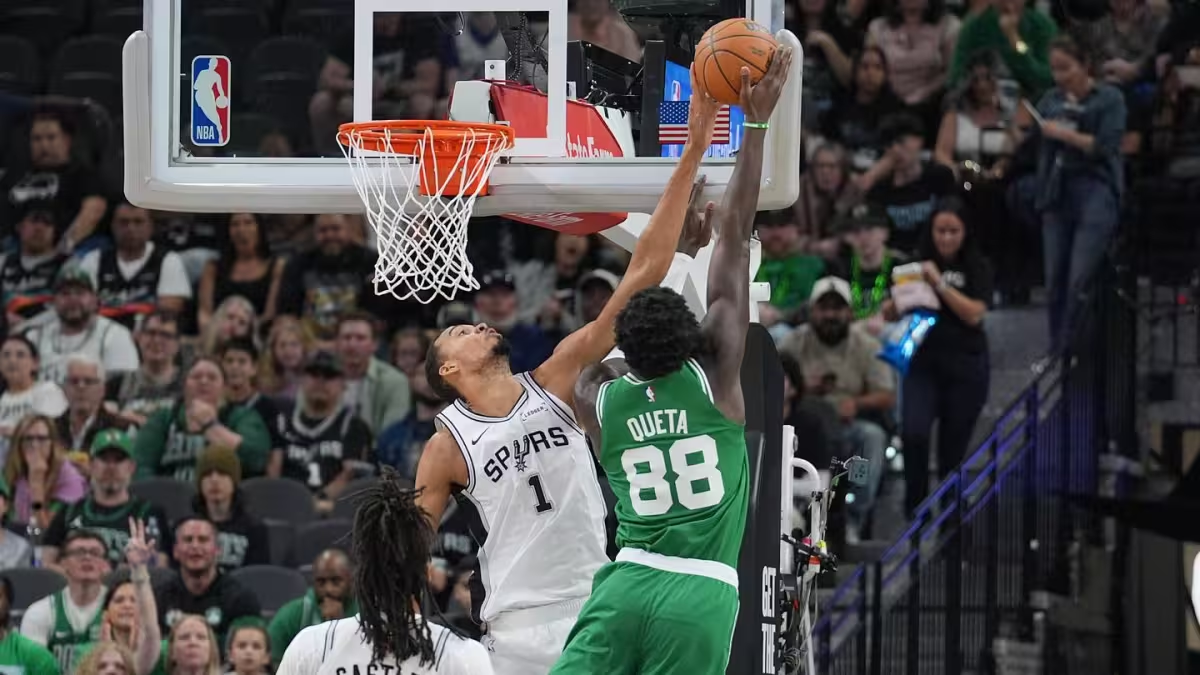
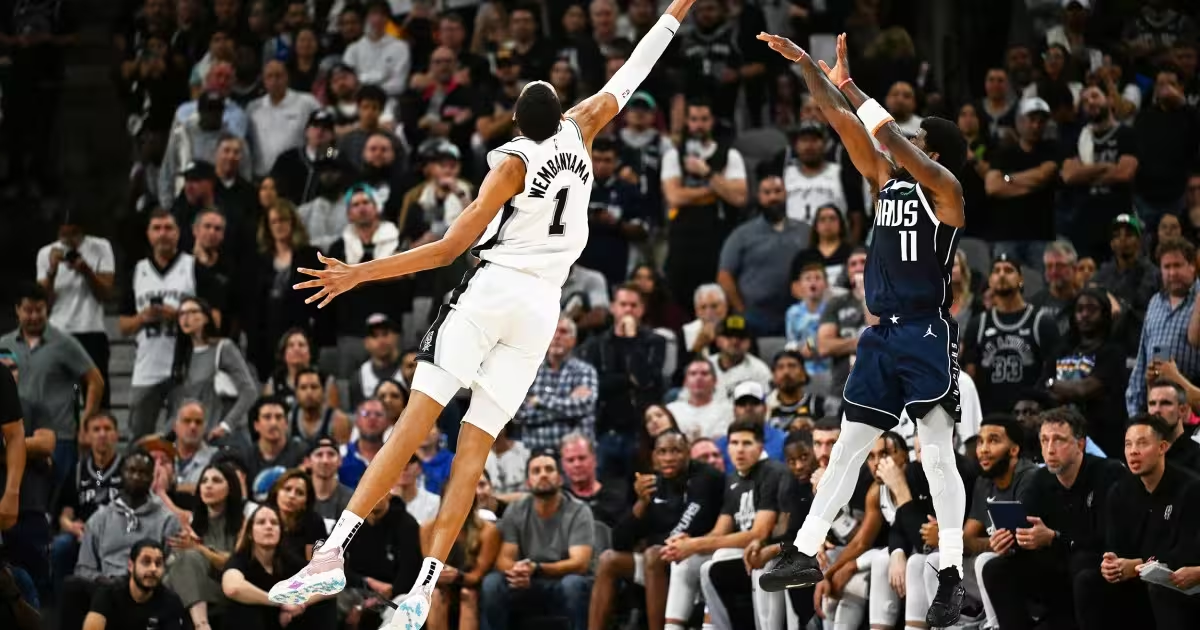
The context for Teague’s intervention is the Spurs’ playoff run, which pushed Wembanyama into wider orbit and prompted some voices to suggest GOAT-caliber potential. Teague’s voice complicates that narrative by separating peak talent from the multi-season production and scoring accumulation that built Durant’s standing. He made the point twice in public forums, refusing to let the moment of hype reframe a long career into a young player’s emergence.
The tension in the debate lives in the stats and the timelines. Wembanyama’s 51.2 percent shooting and third-place MVP finish as a young star are rare; Durant’s 30.1-point scoring title and second-place MVP finish in only his third season set a different benchmark. Efficiency versus volume, defensive ceiling versus scoring accumulation and longevity — those contrasts do not line up neatly, and Teague’s insistence that comparison is premature forces the argument into those hard distinctions.
There is also an emotional split. Fans and commentators who watched Wembanyama this season point to flashes that feel like a new epoch: a 7-footer with perimeter range and game-changing defensive instincts. Teague’s remarks acknowledge that electricity — “we ain’t never seen anything like him” — while insisting that electricity alone does not equal the career milestones and scoring legacy that define Durant’s place in basketball history.
Teague’s verdict is decisive: admiration for Wembanyama’s uniqueness, praise for an elite defensive trajectory, and a categorical refusal to accept that Wembanyama has already eclipsed Durant. Whether the rest of the basketball world follows him will depend on what Wembanyama does next; the single most consequential unanswered question is this: can Wembanyama translate his efficiency, defensive dominance and early acclaim into the sustained scoring and longevity it took Durant to climb into the top-five of all-time scorers?