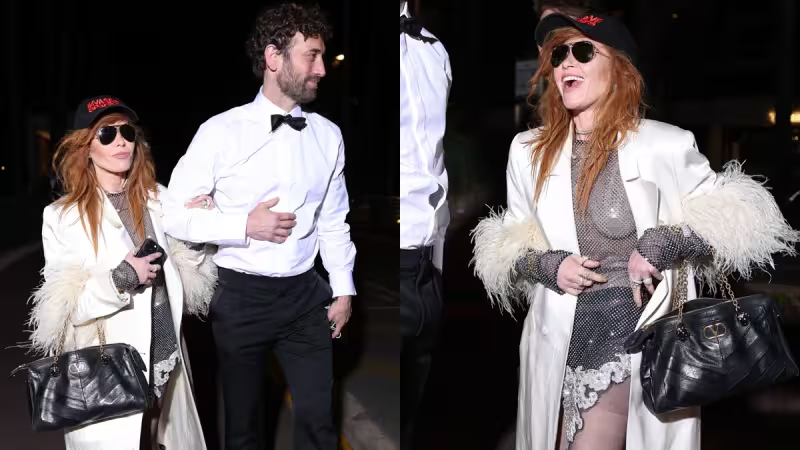
Natasha Lyonne was photographed alongside Matthew Avedon on Monday night, May 18, at the 2026 Cannes Film Festival wearing a sheer, see‑through outfit that left little to the imagination.
At the festival, Lyonne paired the translucent look with a long white coat she left mostly open, sunglasses, a black baseball cap, a Valentino bag and Dolce & Gabbana slides — an ensemble that mixed high glamour with streetwear ease. Later that evening she attended the Avedon after‑party presented by Don Julio with Imagine Entertainment and Vanity Fair in Cannes, France, where she swapped into a completely sheer, dark mini‑dress from Francesco Scognamiglio, knee‑high black boots, sunglasses and a matching black leather bag — a look in which she briefly “freed the nipple.”
The images are striking not only for their shock value but for the numbers behind them: Lyonne is 47 years old, the age often cited in fashion conversations about what is and is not deemed acceptable on major red carpets. She is best known now as the Poker Face star and as an Orange is the New Black alum; those credits followed her through the crowd as cameras tracked her movements from the festival promenade to the private party.
“Fashion is the great protector. It can help make you feel confident and it makes social interactions less intimidating. It’s almost impossible to be nervous in a great outfit. Sunglasses are also very helpful for this,” Lyonne said — words that landed in the middle of a night that read like a deliberate performance.
Context arrived after the photos. Variety reported that Lyonne will star in a new dark‑comedy thriller called Darlene alongside Jamie King, playing a character named Annie opposite King’s titular trailer‑park influencer. Production on Darlene is scheduled to begin in Louisiana this summer; the film is described as a high‑octane Southern Gothic fever dream that satirizes generational poverty, terminal narcissism and the modern hunger for digital immortality. Whether the Cannes looks were a personal statement, a publicity moment ahead of production, or simply a private taste in evening wear, they occurred while Lyonne prepares for a project that interrogates fame and performance.
The tension is in the mismatch between Lyonne’s words about fashion as protection and the nakedness of the outfits she chose. Her defense of sunglasses and a confidence‑building ensemble sits beside images of a deliberately exposed silhouette and a moment at the after‑party where she “freed the nipple.” It is a contradiction that reads less like confusion than calculation: clothing that is meant to shield and clothing that courts attention at once.
That contradiction matters now because Lyonne is entering production on a film about performative fame. The choices she made on May 18 give the public a small rehearsal of themes Darlene will reportedly explore — what people will do for attention, and how personal image becomes both armor and weapon. She showed up at Cannes not simply as an actress promoting work but as a figure whose public image dovetails with the subject matter of her next project.
There is also a practical question beneath the picture‑perfect chaos: Lyonne moved from a streetwise, daytime accessory mix into couture evening transparency within hours, attended a branded after‑party and then stepped away, all while remaining photographed and talked about. In Cannes, where the overlap between fashion and film is commerce, art and promotion, that pace shapes how projects are seen before cameras ever roll.
Here is the clearest takeaway: Lyonne used the night to do what she said fashion does for her — to make interactions less intimidating and to feel invincible — even as she used exposure to provoke. The result is a deliberate public act that previews the territory of Darlene and underlines how Lyonne’s off‑screen choices have become part of the story she will bring to the screen this summer.