A water photographer was bitten in the water just before 8.30am on Monday while documenting the men’s semi‑finals at the World Surf League’s New Zealand Pro in Raglan, forcing organisers to halt finals day and activate a code red.
Veteran lensman Ed Sloane was named as the photographer who was bitten near Manu Bay while Brazilian surfers Yago Dora and Italo Ferreira were competing in the men’s semi‑finals. The competition was stopped about 10 minutes in and the two surfers were extracted from the water on jet skis as medical teams responded.
“We activate the code red when it's a sea life attack on a surfer or a photographer. This time it was our beloved water photographer and thank God he's in good spirits. He's well considering what happened,” WSL official Renato Hickel said. Hickel added that the photographer suffered small puncture wounds and was taken to hospital by ambulance, and that organisers reported him in a stable condition.
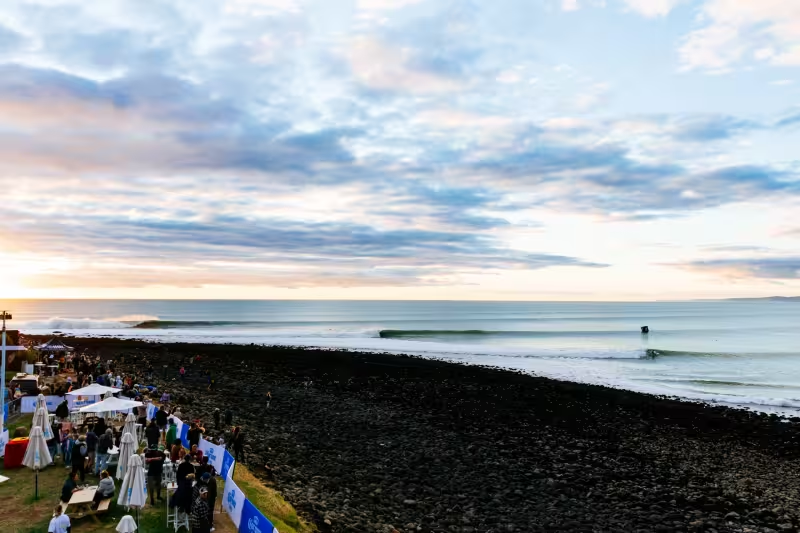
The scene on the west coast of the North Island drew hundreds of spectators to Manu Bay for the New Zealand Pro, the largest surf event New Zealand has hosted. Officials said the doctor on site was inclined to think the animal responsible was a sea lion rather than a shark, but Hickel stressed uncertainty: “At this stage we're not certain if it was a shark or a sea lion – the doctor on the scene was inclined to think it was a sea lion – nevertheless, very scary.”
Hickel said the surfers who witnessed the splash and the incident were shaken. “Nevertheless very scary. Italo and Yago were very shaken. They saw the splash and the incident, so another reason to put the event on hold,” he said. The WSL said this was the first time it had activated a code red at the New Zealand Pro.
Organisers said they were looking to resume Dora and Ferreira’s heat just after midday on Monday. “Hopefully we can wrap the event today,” Hickel said, outlining the immediate plan to restart the contest once medical teams and safety checks were complete.
Ten minutes into a day that had been scheduled to decide the event’s winners, the interruption underscored the thin line between a global sporting spectacle and the unpredictable risks of working in open water. Attacks on surfers and swimmers in the Raglan region are extremely rare, a fact organisers reiterated as they managed the response and the crowd on the shore.
The photographers and competitors who spend hours in the surf are a familiar part of contest life; Hickel called Sloane “our beloved water photographer,” and officials emphasised that Sloane’s condition was stable after transfer to hospital. Still, the episode left an immediate operational challenge: finish a marquee event while answering fresh questions about safety protocols that have now been used for the first time at the New Zealand Pro.
How quickly the contest resumes will determine whether the New Zealand Pro can be completed on schedule and whether the WSL’s newly tested code red procedures will be revised. For now, Sloane is in hospital, the semi‑final is paused until mid‑day, and a community that had gathered in force at Manu Bay is left to wait and watch.