The U.S. Embassy in Kyiv issued a security alert on Saturday warning of a potentially significant air attack that may occur within the next 24 hours, telling U.S. citizens to be ready to shelter immediately if an air alert is announced.
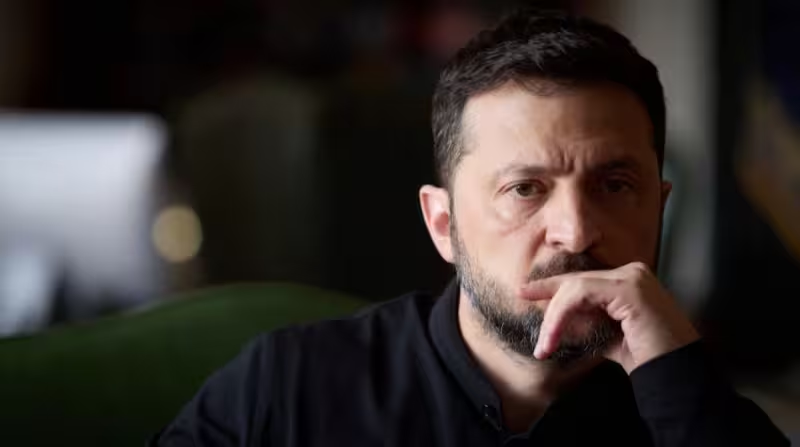
Ukraine’s president, Volodymyr Zelenskyy, had told the nation that intelligence — including information from Kyiv's American and European partners — showed Russia was likely preparing a strike with an Oreshnik intermediate-range ballistic missile and urged people to use shelters from the evening of 23 May onward.
In a blunt advisory posted by the embassy’s mission, officials said: "The U.S. embassy in Kyiv has received information concerning a potentially significant air attack that may occur at any time over the next 24 hours." The message went on to advise: "The embassy, as always, recommends U.S. citizens be prepared to immediately shelter in the event an air alert is announced."
The alert landed after Zelenskyy told the public that Kyiv’s intelligence services had received corroborating data and that the government was watching signs of preparations for a combined strike on Ukrainian territory, potentially including Kyiv, using various weapon types. "Our intelligence services reported receiving data, including from American and European partners, about Russia preparing a strike with the Oreshnik missile. We are verifying this information," he said.
That combination of a foreign mission security notice and a presidential briefing gives the warning weight: a named U.S. diplomatic outpost, a clear 24-hour window and a named weapon, the Oreshnik intermediate-range ballistic missile. Zelenskyy added a civilian appeal that spelled out what the government expected from people on the ground: "Russian madness truly knows no bounds, so please protect your lives – use shelters," he said.
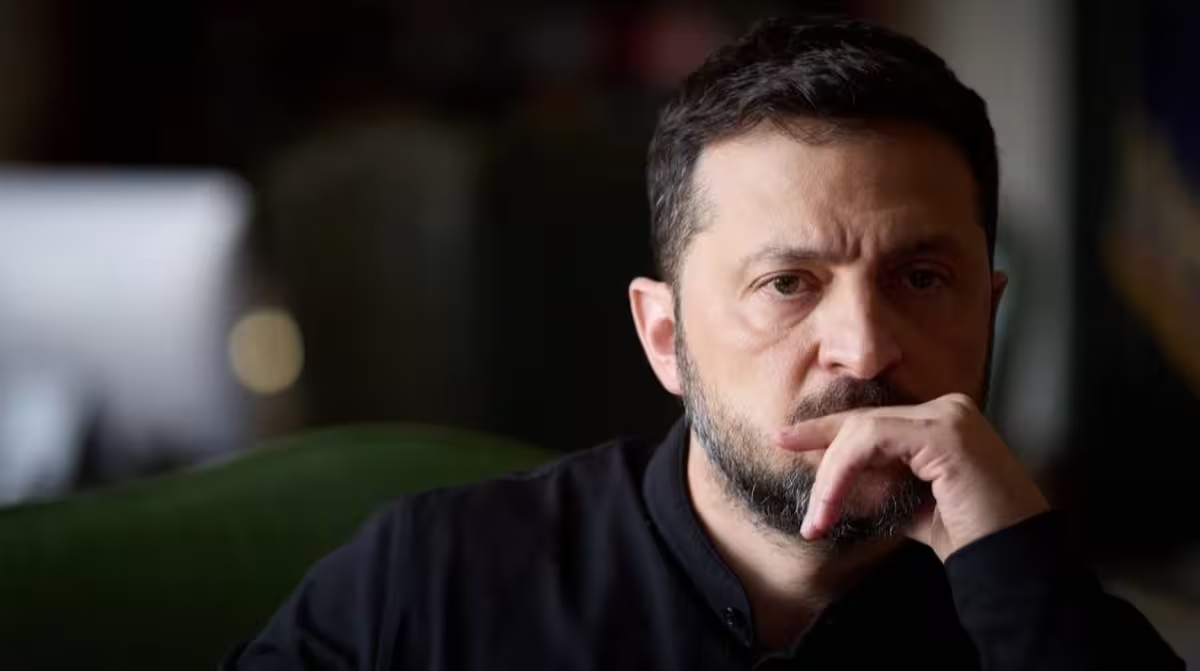
Context matters and comes after the immediate facts. The embassy message is a security advisory, not an operational confirmation of an attack; it says the mission "received information" and urges readiness. Zelenskyy framed that same stream of information as intelligence that must still be verified while warning of indicators pointing to coordinated preparations. Both the embassy and the president are urging the same simple precaution: be prepared to shelter at short notice.
The tension in this bulletin is the gap between warning and certainty. The embassy’s wording conveys urgency — a strike "may occur at any time over the next 24 hours" — while Zelenskyy explicitly described his government's work to verify partner intelligence and to ready air defenses. That leaves a narrow window in which public officials must balance the risk of false alarms against the catastrophic consequences of not alerting citizens if an attack is imminent.
For civilians and the international community the immediate consequence is practical: follow air-raid instructions. For Kyiv, the president said, the state response is already underway — preparing air defenses "as much as possible" and promising to "respond fully and justly to every Russian strike." The embassy, meanwhile, framed its advice for Americans in Kyiv as immediate and simple: be ready to shelter when an alert sounds.
The most consequential fact remains unresolved: whether the information prompting both the embassy alert and the president’s warning will prove to indicate an imminent strike. Until verification is complete, the defensible posture from officials is precaution. That means elevated alerts, repeated shelter guidance and, for those in Kyiv and elsewhere in Ukraine, a readiness to act on short notice if authorities announce an air alert.
In short, the day’s development is not a new battle; it is a heightened alarm. The U.S. Embassy’s security alert and Zelenskyy’s public warnings together convert a patch of intelligence into a civic instruction: prepare now, shelter at once if an air alert is announced, and expect officials to be verifying and responding while air defenses are readied.