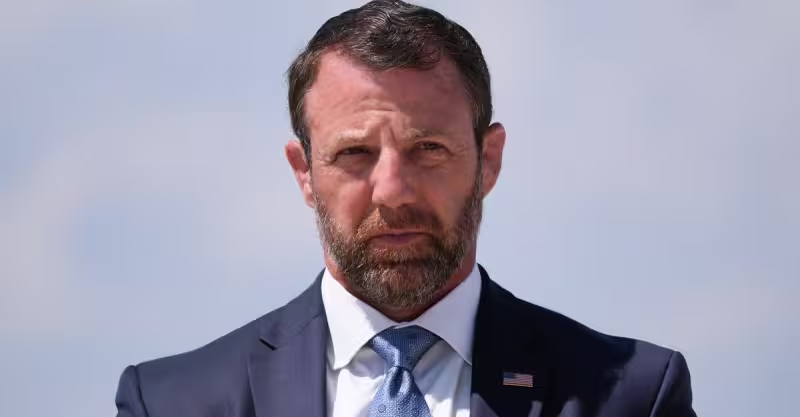
Homeland Security Secretary Markwayne Mullin has reiterated a threat to pull U.S. Customs and Border Protection officers from airports in sanctuary cities, a move that could jeopardize international flights and rattle the travel industry. The idea drew a fast rebuke from airlines and the U.S. Travel Association on Friday.
U.S. Travel said Mullin confirmed in a meeting with the trade group that he is considering withdrawing CBP officers, and warned the step would have devastating consequences for travel companies and communities that rely on international visitors. The association added that major airlines quickly condemned the proposal, underscoring how directly it would hit airport operations if federal screening staff were reduced.
The pressure point is not new. In early April, Mullin floated on the idea of cutting federal screening of international passengers and cargo at airports in cities with sanctuary policies. On Wednesday, May 20, 2026, he met with a small group of airline and travel-industry executives at Homeland Security headquarters in Washington and said he may reduce CBP staffing at major airports serving sanctuary jurisdictions. The airports under discussion could include Portland International Airport, JFK, Newark Liberty International Airport and Washington Dulles International Airport.
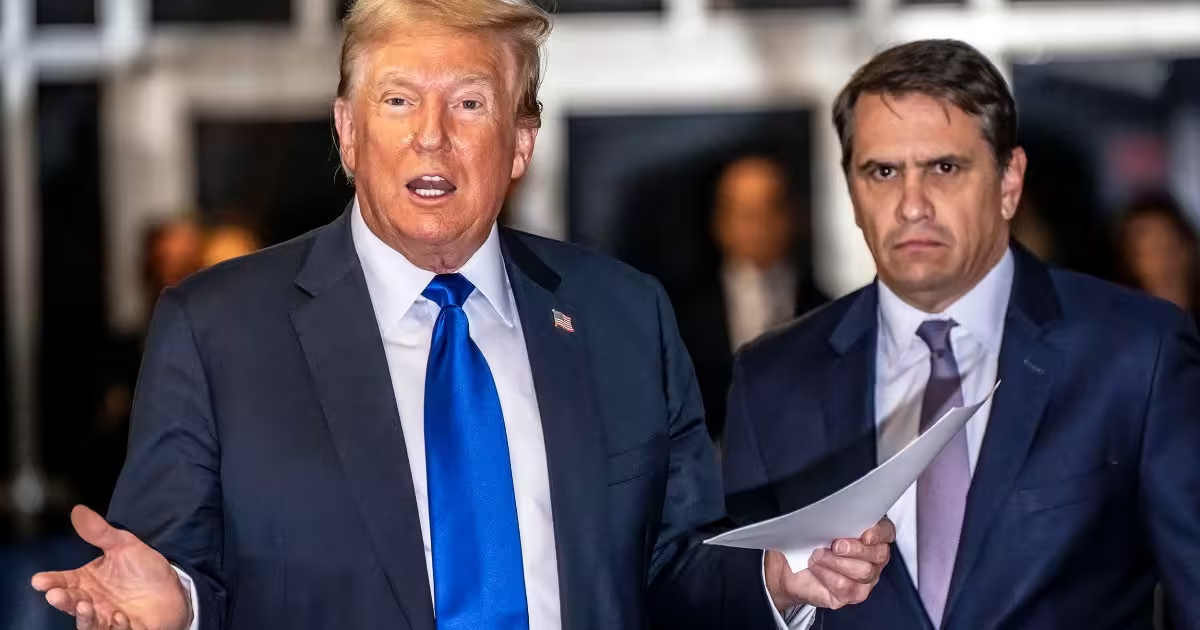
Transportation Secretary Sean Duffy said the idea does not make sense to him. Earlier this week, he told a Congressional hearing that he was not familiar with Mullin's remarks and wanted to learn more about the context, but he also said it would be a bad idea to start restricting travel based on political views. “We have people from around the world and around the country that need to be able to fly into all different kinds of places. We shouldn’t shut down air travel in a state that doesn’t agree with our politics,” Duffy said.
Mullin framed the issue in terms of cooperation with federal immigration enforcement, saying, “If they’re a sanctuary city and they’re receiving international flights, and we’re asking them to partner with us at the airport, but once they walk out of the airport, they’re not going to enforce immigration policy—maybe we need to have a really hard look at that.” He added, “I’m going to have to be forced to make hard decisions.”
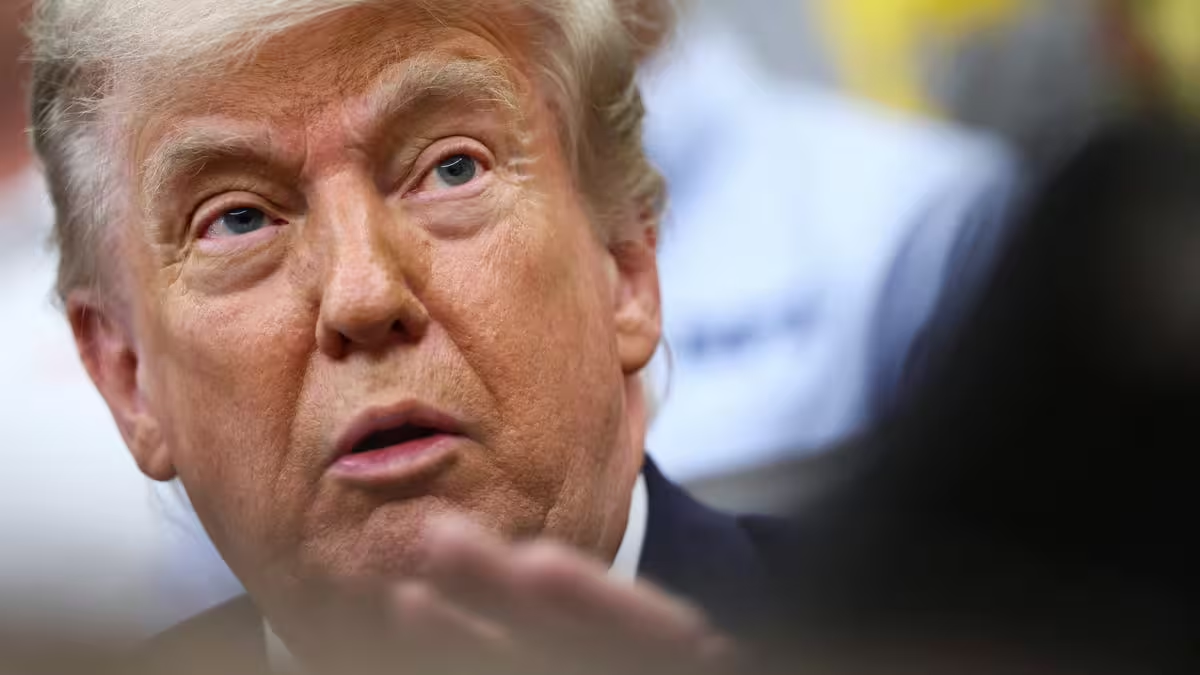
The clash builds on earlier threats by the Trump administration to pressure sanctuary cities, though there is no strict definition for sanctuary policies or sanctuary cities. The terms generally describe limited cooperation with Immigration and Customs Enforcement, and courts have rejected the idea of pulling funding as punishment. President Donald Trump has previously threatened to withhold money from cities that limit immigration cooperation, making the airport threat the latest version of a long-running political fight.
The question now is not whether the administration is willing to use transportation policy as leverage — Mullin's remarks suggest it is — but how far it can go before the threat collides with the practical reality of moving international travelers through some of the country's busiest airports.