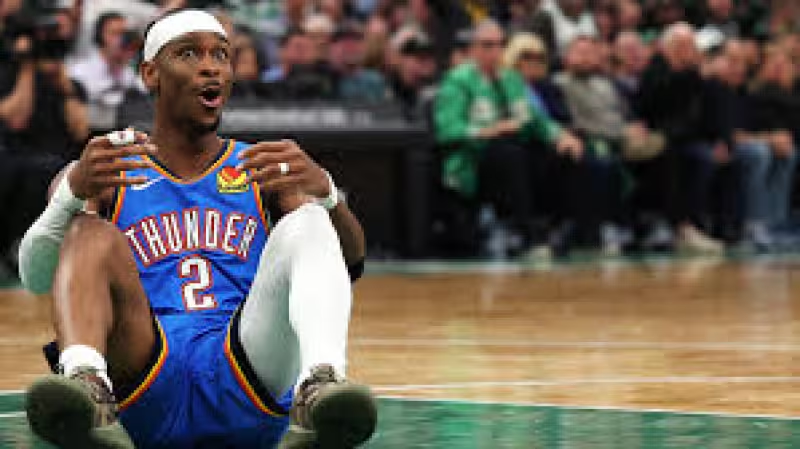
Tom Haberstroh of Yahoo Sports reviewed this postseason's playoff games and found that Shai Gilgeous-Alexander fell down 20 times on 187 field-goal attempts in which no foul was called, a 10.7 percent rate that was the highest among five stars Haberstroh tracked.
The numbers are stark. On plays that ended with a foul called, Gilgeous-Alexander hit the deck 19 of 37 times — 51.4 percent — far above the others in the comparison. None of the other four players exceeded 30 percent on foul-ending plays; James Harden was second with 12 of 41 such falls. On no-foul plays, Harden’s fall rate was 8.7 percent, Jalen Brunson’s 7.9 percent, Donovan Mitchell’s 7.6 percent and Victor Wembanyama’s just 0.6 percent. Mitchell registered the most falls on no-foul plays with 26, but he did so on nearly twice as many field-goal attempts — 342 to Gilgeous-Alexander’s 187.
Those splits carry through to overall figures this postseason: Gilgeous-Alexander fell on 39 of 224 shots, or 17.4 percent overall; Harden fell on 11.9 percent of his shots; Brunson 9.0 percent; Mitchell 8.4 percent; and Wembanyama 4.2 percent. Wembanyama and Gilgeous-Alexander were also the only two in the group with fewer than 200 field-goal attempts tracked, while Wembanyama was credited with falling just one time in 164 attempts.
Context sharpens the stakes. This postseason Gilgeous-Alexander averaged 9.8 free-throw attempts per game, second only to Paolo Banchero’s 10.6 attempts, and he had been among the league leaders in free-throw attempts during the regular season, finishing third behind Luka Dončić and Deni Avdija. Donovan Mitchell is the only player among the five Haberstroh tracked who ranks outside the top 20 in free-throw attempts per game in these playoffs.
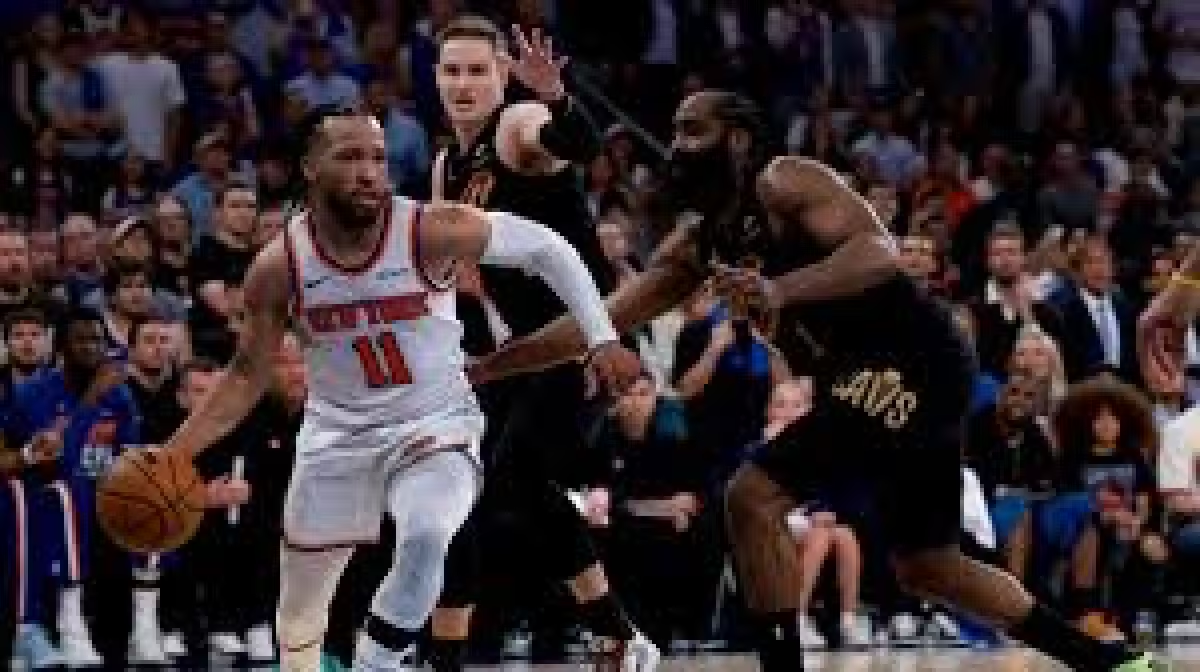
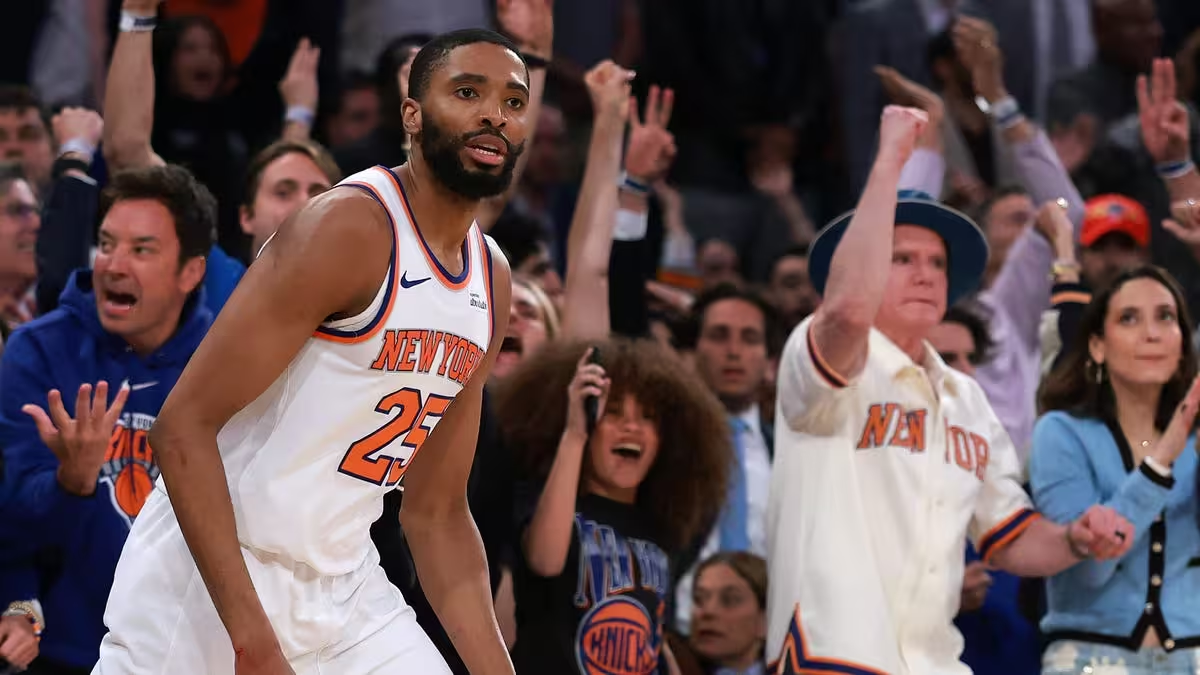
Haberstroh explicitly said the comparison was not an attempt to accuse Gilgeous-Alexander of flopping. That caveat matters because the picture is complicated: Gilgeous-Alexander’s style of play — attacking the paint and scoring with a refined mid-range game — lends itself to getting hit, and those collisions help explain a player who is both highly targeted for contact and among the leaders in free-throw attempts.
The tension in the numbers is immediate. Gilgeous-Alexander’s high fall rate on plays with a called foul (19-of-37) suggests he is effective at converting contact into whistles when officials rule there was a foul. But his 10.7 percent fall rate on no-foul attempts, the top mark in Haberstroh’s five-player comparison, leaves room for critics who point to film and wonder whether some of those falls are the result of embellishment or simply the after-effect of aggressive drives that do not draw a whistle.
No single statistic settles that debate. Mitchell’s 26 falls on no-foul plays show that volume can produce counts that rival Gilgeous-Alexander’s, and Wembanyama’s near-absence of falls — one in 164 field-goal attempts — demonstrates how differently players experience contact and how subjective the official’s judgment can be.
The central question now is which way public perception and officiating narratives move next: will this dataset recalibrate how referees read Gilgeous-Alexander’s drives, or will it harden the argument that his scoring style naturally produces both contact and the appearance of falling too often? The numbers Haberstroh compiled make the debate unavoidable, and they guarantee that every drive by shai gilgeous-alexander in the coming games will be watched with sharper eyes.