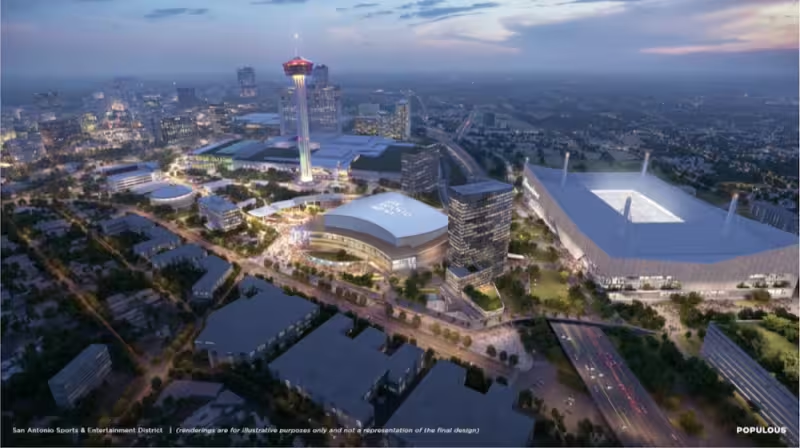
Spurs Sports & Entertainment this week hired a string of local and national contractors to build a new $1.3 billion downtown arena, a flurry of contracts that SS&E announced as the city moved ahead with millions more in consultant spending for the broader Project Marvel plan.
RC Buford, speaking as the vendor announcements were released, framed the slate of firms as part of a coordinated push: "We are bringing together the right partners to deliver something San Antonio can be proud of." SS&E named CAA ICON to oversee construction of the arena and surrounding development and tapped design and planning firms that include Overland International as arena designer, Sasaki to create a master plan for the sports and entertainment district, and Marquee Development to focus on the retail and hospitality elements.
SS&E also directed Pape-Dawson to lead environmental, civil and traffic engineering and surveying work, hired Stafford Sports for advisory and strategic planning services, retained Jorge Rodriguez Financial Consulting for financial consulting, and enlisted Hunton Andrews Kurth LLP for legal advice. Goldman Sachs will act as the project’s financial advisor. SS&E has not disclosed the value of those contracts.
Those private hires came as the San Antonio City Council agreed this week to spend $6.3 million in consulting fees tied to Project Marvel, on top of roughly $10 million the city has already paid in consultant contracts. The council had approved a term sheet with SS&E in August 2025; days before SS&E’s vendor announcements, the city awarded Accenture Infrastructure and Capital Projects a $6 million contract to coordinate and manage development as executive program manager and gave Municap a $350,000 job to conduct a cost-of-service study for the district.
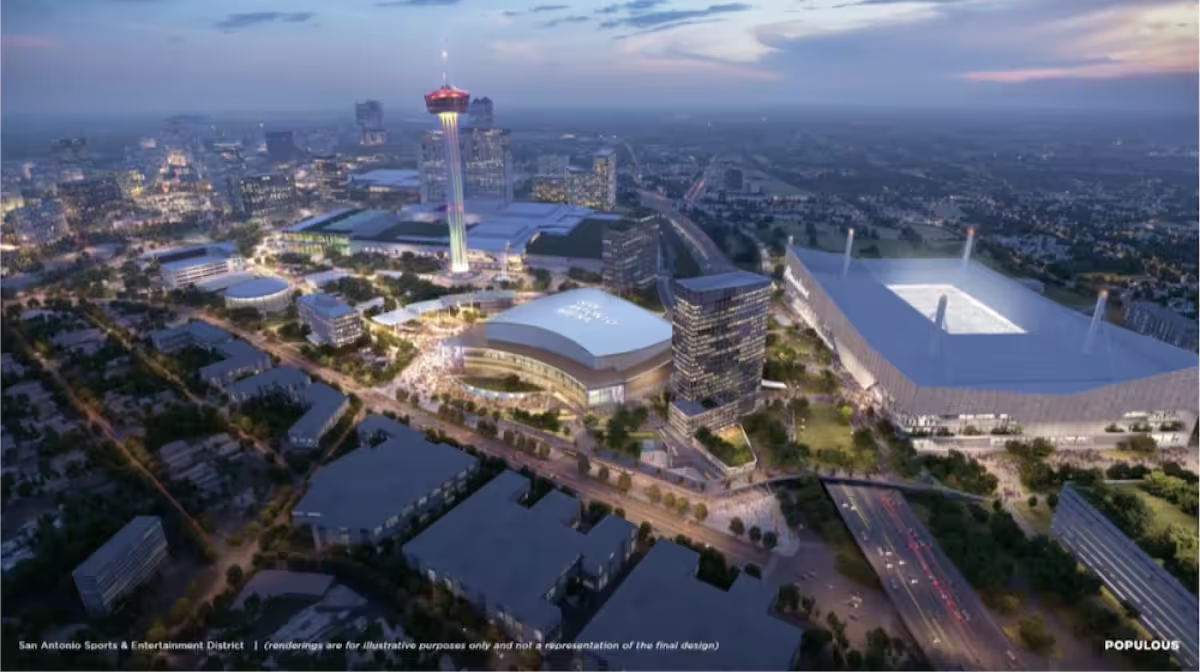
Project Marvel is envisioned as a $4 billion sports and entertainment complex at Hemisfair anchored by the new arena. But much of the broader vision for the district remains in limbo: the city has so far not purchased the land where the arena is to be built, and SS&E declined to disclose how much its announced vendor contracts will cost the private partner. That gap in public information leaves the financial picture incomplete even as public and private spending ramps up.
The sequencing has drawn sharp scrutiny. Geoffrey Proheter questioned why the city hired a consultant to study the cost of services after the council approved the term sheet with SS&E in August 2025, saying, "These are the sort of questions you ask before you make a decision, because now in hindsight, the fact that you’re asking afterward just kind of seems like you’re trying to play catch-up with this whole transparency, accountability business, and that is a foregone conclusion beforehand, even if that was the worst-kept secret." His critique highlights the friction between political momentum and customary fiscal safeguards.
The tension is practical as well as political: contractors are being engaged and a master plan is under development while the city still has not secured the Hemisfair parcel and has not made public the dollars behind SS&E’s vendor deals. For citizens and businesses tracking the effort — whether they land on headlines about the project or search a stray topic like an okc score and end up in local coverage — the present moment looks like an outline of a project with significant blanks.
What happens next is decisive. If the city purchases the site and the partners disclose contract values and a realistic financing plan, the contractor hires could translate into a rapid buildout of Project Marvel. If, instead, land acquisition stalls and spending continues without clearer public accounting, the current activity will look more like planning on paper than progress on a $4 billion development. The most consequential unanswered question is whether San Antonio’s elected leaders will demand the financial transparency needed to move the arena from announced partners to an executed project.