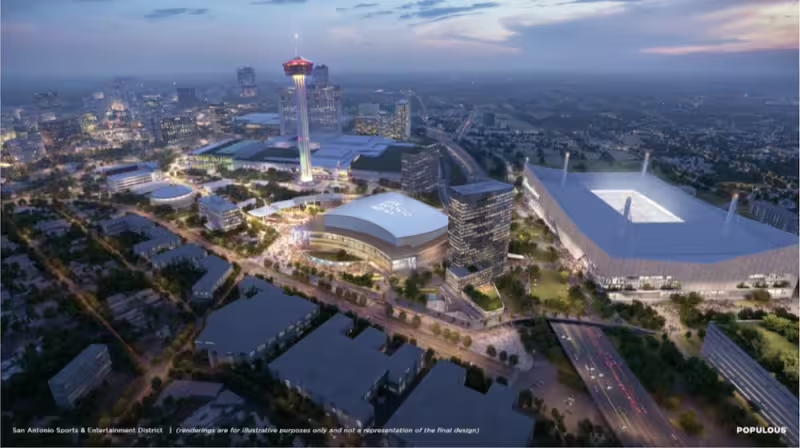
Spurs Sports & Entertainment hired a slew of local and national contractors this week to build a new $1.3 billion downtown arena, a flurry of agreements SS&E did not disclose the value of and that RC Buford defended by saying, "We are bringing together the right partners to deliver something San Antonio can be proud of."
The hires name-checked on SS&E paperwork and in city notices include CAA ICON to oversee construction of the arena and surrounding development; Pape-Dawson to lead environmental, civil and traffic engineering and surveying; Overland International as the arena designer; Marquee Development for surrounding retail and hospitality economic work; Sasaki to create a master plan for the sports and entertainment district; Stafford Sports for advisory and strategic planning; Jorge Rodriguez Financial Consulting and Hunton Andrews Kurth LLP for financial and legal consulting; and Goldman Sachs as the project's financial advisor.
The timing matters. The City of San Antonio has spent about $10 million in consultant contracts so far, and days before this article was published the San Antonio City Council agreed to spend $6.3 million in consulting fees tied to the effort. Accenture Infrastructure and Capital Projects received a $6 million contract to coordinate and manage development of the district as an executive program manager, while Municap was awarded $350,000 to perform a cost-of-service study for the district.
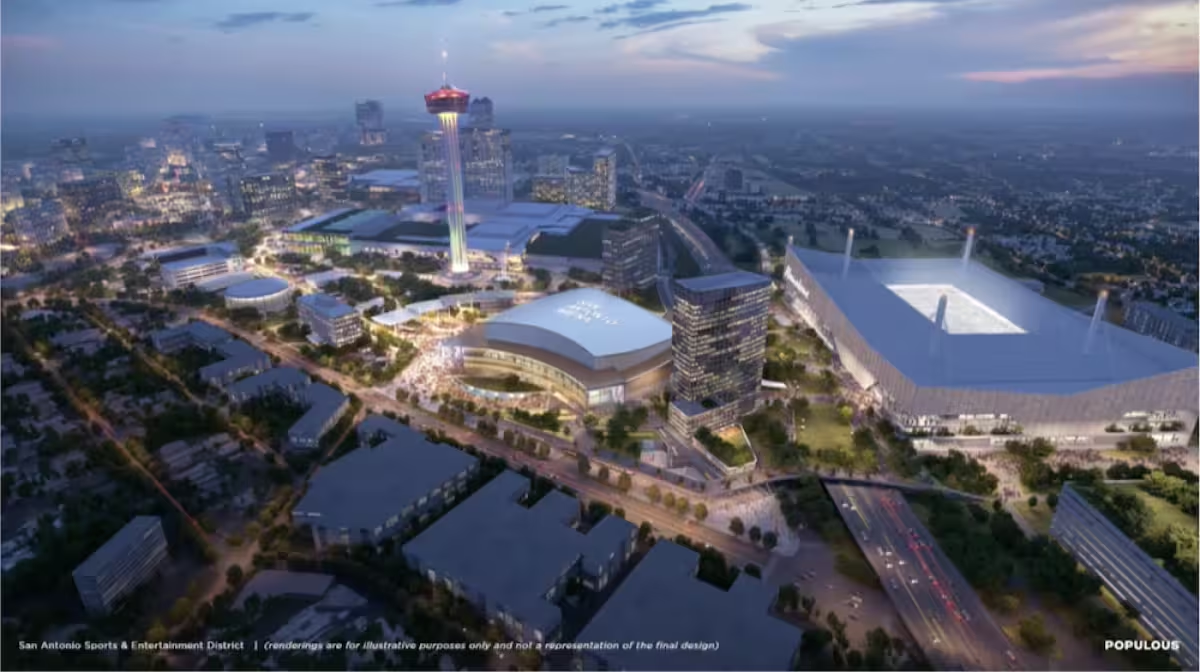
Those sums sit alongside a broader vision known as Project Marvel, described by officials as a $4 billion sports and entertainment complex at Hemisfair anchored by a new basketball arena. Yet the city has not yet purchased the land where the arena is set to be built, and much of Project Marvel remains in limbo even as contractors move from planning into payable work.
Context sharpens the political edge: in August the San Antonio City Council approved a term sheet with SS&E. Last week Geoffrey Proheter told local reporters that the timing of some of the city's spending raises accountability questions, saying in full, "These are the sort of questions you ask before you make a decision, because now in hindsight, the fact that you’re asking afterward just kind of seems like you’re trying to play catch-up with this whole transparency, accountability business, and that is a foregone conclusion beforehand, even if that was the worst-kept secret."
The friction is practical as well as political. The city and SS&E have mobilized firms to design, study and manage a development that rests on land the city does not own, and on a larger Project Marvel plan officials say is not yet settled. The council-approved $6.3 million and Accenture's $6 million engagement push the public side of the effort forward, while Municap's $350,000 cost-of-service work is billed to answer fiscal questions that critics say should have been settled earlier.
SS&E's procession of contractors and advisors buys the organization technical capacity and forward momentum: designers, engineers, planners, legal and financial counsel are in place and Goldman Sachs has been named financial advisor. But the sequence of decisions — term sheet in August, then consultant spending and then a cost-of-service study — is what Proheter and others describe as backwards.
The hires also prompt a practical question for the community: if the arena and the broader complex are completed as envisioned, where will san antonio spurs players and the franchise stage home games and related events? That is a contingent concern, tied to land acquisition and the unresolved elements of Project Marvel.
For now, the story is one of capability without closure. SS&E has assembled a roster of contractors and the city has committed millions to planning and program management, but the central deliverable — the acquisition of the site and a settled, fundable Project Marvel plan — remains undone. The work purchased so far strengthens the case that the project is advancing, but it does not guarantee the arena will be built on the ground San Antonio officials have not yet bought.