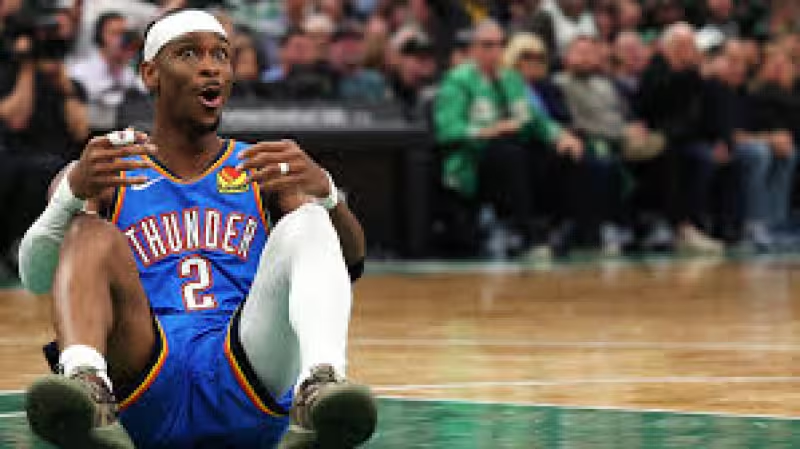
Tom Haberstroh of Yahoo Sports reviewed this season's playoff games and found Shai Gilgeous-Alexander fell to the floor 20 times on 187 field-goal attempts without a foul called — a 10.7 percent rate that led the five players Haberstroh tracked.
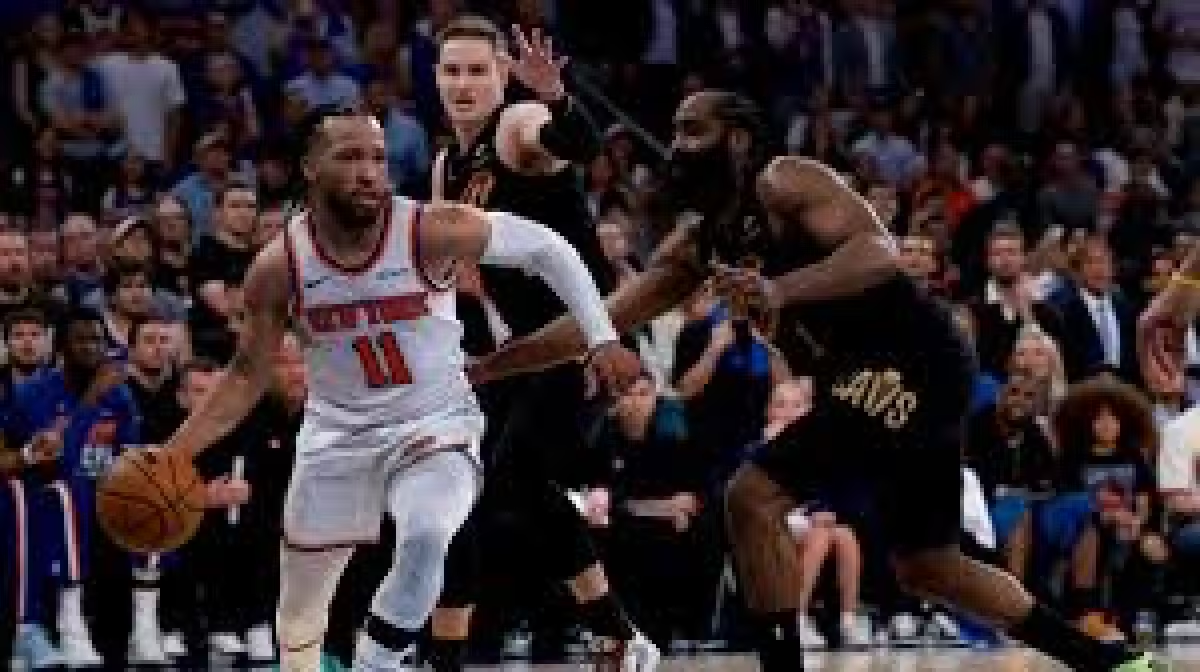
That figure is the clearest headline from Haberstroh's comparison. James Harden fell on 8.7 percent of non-foul field-goal attempts, Jalen Brunson 7.9 percent, Donovan Mitchell 7.6 percent and Victor Wembanyama just 0.6 percent. Haberstroh also noted that Donovan Mitchell registered the most non-foul falls, 26, but he needed 342 field-goal attempts to reach that total compared with Gilgeous-Alexander's 187.
The weight of the data grows when Haberstroh separates plays that ended with a foul call. Gilgeous-Alexander fell 19 times on 37 plays that produced a foul — that is, he fell on 51.4 percent of those foul-ending plays. By contrast, Harden fell 12 times on 41 foul-ending plays and Wembanyama fell seven times on 28; none of the other four players exceeded a 30 percent fall-down rate on plays that ended with a foul called.
Put another way across all shots tracked, Gilgeous-Alexander fell on 39 of 224 total shots, a 17.4 percent rate. Harden fell on 11.9 percent of his total shots, Brunson on 9.0 percent, Mitchell on 8.4 percent and Wembanyama on 4.2 percent. Wembanyama's sample also shows how rare some of these drops can be: he fell one time in 164 field-goal attempts in the same review.
Around the numbers sits additional context Haberstroh supplied. He stressed his analysis was not meant to accuse Gilgeous-Alexander of flopping, and he pointed to the player's style: attacking the paint and living as a mid-range specialist makes him more likely to get hit and to draw contact. That pattern shows up elsewhere in the stats — Gilgeous-Alexander averaged 9.8 free-throw attempts per game this postseason, second only to Paolo Banchero's 10.6 attempts, and he finished third in free-throw attempts per game in the regular season behind Luka Dončić and Deni Avdija. Donovan Mitchell was the only one of the five tracked who ranks outside the top 20 in free-throw attempts per game during these playoffs.
The tension in the numbers is immediate: Gilgeous-Alexander leads the five players on non-foul falls and registers a much higher share of falls on plays that are called fouls, which deepens a debate about how often he hits the floor relative to what referees are seeing. Haberstroh's own caveat — that the piece isn't an accusation of flopping — frames the friction: the raw counts are clear, but their interpretation is not.
What matters now is how teams, opponents and officials process those counts as the postseason continues. Gilgeous-Alexander's combination of the highest non-foul fall-down rate, a 51.4 percent fall rate on foul-ending plays and near-top free-throw attempt numbers this postseason creates a set of facts that will shape argument and officiating narratives going forward.
The single question sharpened by the review is this: given these specific patterns in shai gilgeous alexander stats, will officials view his contact and floorings differently in the next rounds, or will the split between how often he falls and how often fouls are called keep fueling the same debate?