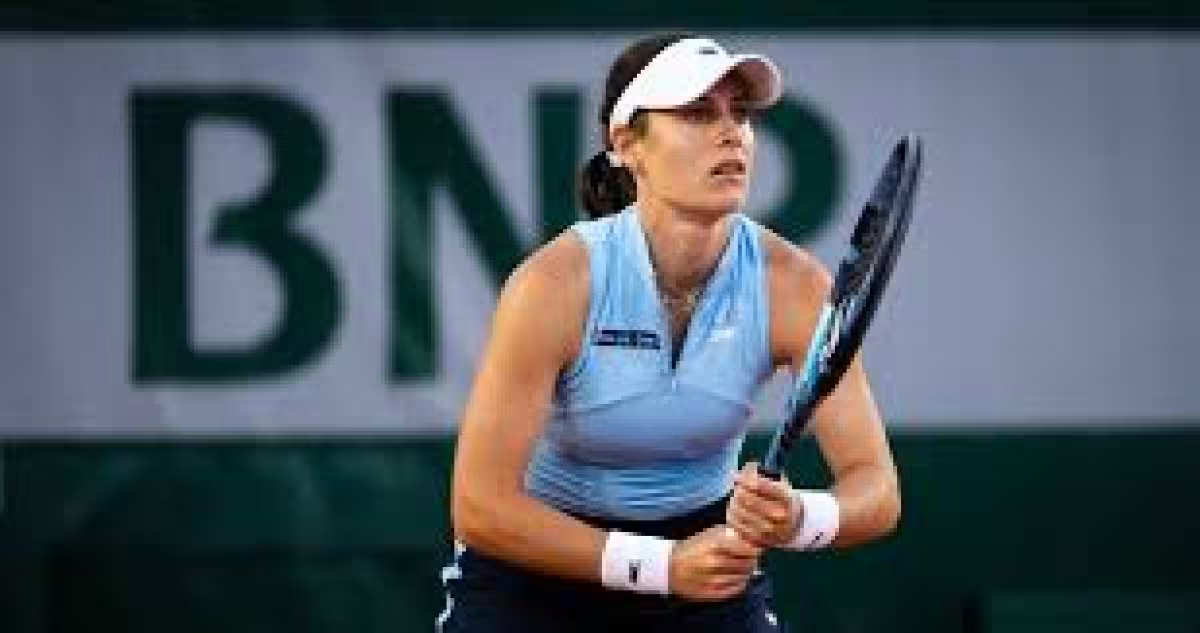
Oleksandra Oliynykova won her first main draw match at a major on Tuesday evening at Roland Garros, beating Russian qualifier Elena Pridankina 6-1, 6-2 in Paris.
The victory was the first Grand Slam match win of Oliynykova’s career and came against a player ranked No. 218 while Oliynykova is ranked No. 65. After the match she ran with a Ukrainian flag to her father, Denis — who is on leave from the Ukrainian Army and had traveled to Paris after being with her in Strasbourg last week — and told him what the day meant. "It was very important for me that my father saw my first Grand Slam win in real life," she said.
Oliynykova said the moment was intensely personal. "When I finished the match, I took the Ukrainian flag and I came to my father and I said, ‘You saw it! You saw my first win in a Slam.’ Yeah, that’s very special; my first match, I’m going to win it only once. I’m very happy," she added.
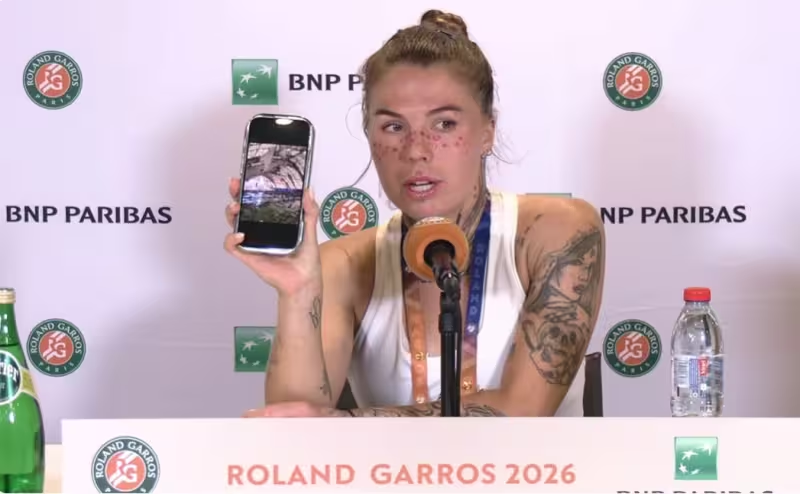
After celebrating, Oliynykova turned to the war at home. She showed an image on her phone of the Lyodovyi tennis centre in Kyiv and said the courts there had been hit by Russian bombs — an attack the club’s Instagram account said occurred on Sunday, May 24. Oliynykova described those courts as "the courts where I spent my childhood" and said, "I was practicing there for so many years," making clear the loss was not abstract but tied to her upbringing.
On the court she said she keeps to a professional routine: "For me, when I play, I’m professional and I’m doing my work. One day I can win; the other day I lose. And I mean, this is a part of my job. The thing is, it doesn’t affect me on the court." She added, however, that turning a match into a spectacle because of nationalities "is not fair."
The fairness she mentioned sits alongside sharper accusations. Oliynykova criticized Russian players who she says remain silent about the war and described some as tied to propaganda. "These players are part of the propaganda," she said, arguing that "by staying silent, they are supporting the regime" and that "many actively participate in propaganda through social media or by playing in tournaments linked to Gazprom." She warned that high-profile athletes can help normalize aggression for citizens at home and that "not enough is being said about these issues, and in the meantime, atrocities continue to happen."
That strand of criticism is not new: earlier in May, during the Italian Open, Oliynykova described tension with WTA officials over speaking about players she believes support Russia’s invasion. Her remarks in Paris tightened the mix of sport and geopolitics already surrounding tournaments and individual players: a first major victory now carries public scrutiny in two directions — the achievement on court and the platform it creates off it.
The match itself was decisive: Oliynykova broke early, closed out the first set 6-1 and finished 6-2, leaving little doubt on the scoreboard. Yet the scoreboard was only one frame of the night. Oliynykova used the moments after her win to point to bombed courts in Kyiv and to press the sport’s public figures to answer for what she called their silence or complicity.
She left Paris with a landmark result and a message she intends to keep delivering. "It was very important for me that my father saw my first Grand Slam win in real life," she had said, and then, returning to him in the stands with the flag, she repeated what mattered most in that instant: "You saw it! You saw my first win in a Slam."