
The Connecticut Sun sit 15th in the WNBA this season — dead last — and will leave Connecticut for Houston ahead of the 2027 season, a collapse that reads like a series of departures and missed chances in slow motion.
Jonquel Jones is one of the named figures whose choices and movement are woven through that slide. She opted out of the 2020 season to quarantine with family in the Bahamas, a decision the Sun, coach Curt Miller and CEO Amber Cox publicly supported. Before the 2023 season she asked to be traded despite having one year left on her contract; the team honored the request and sent Rebecca Allen to Connecticut while Natasha Howard went to the Dallas Wings, with Dallas sending Kayla Thornton to the New York Liberty and Ty Harris to the Sun.
The raw numbers underline how far the franchise has fallen: 15th in the 2026 WNBA season — dead last — after finishing only two spots higher than dead last last year. The Sun had been a championship-caliber team for about a decade before several players departed, and the relocation to Houston before 2027 marks the latest and most consequential turn in a decline that, in many ways, began years ago.
Veteran forward DeWanna Bonner framed the absence simply and plainly: "Obviously she's a great player, we miss her a lot," she said, summing up what fans feel when they trace the roster back through trades and opt-outs to the core that once kept Connecticut competitive.
There are small, telling details about the franchise’s infrastructure and priorities. The team once shared a practice facility with a child's birthday party while preparing for the playoffs — an anecdote that has become shorthand for a program that never upgraded around a decade of success. That contrast — sustained on-court competitiveness amid modest support off it — helps explain why the roots of the current crisis are buried in 2023 or earlier, not in a single bad season.
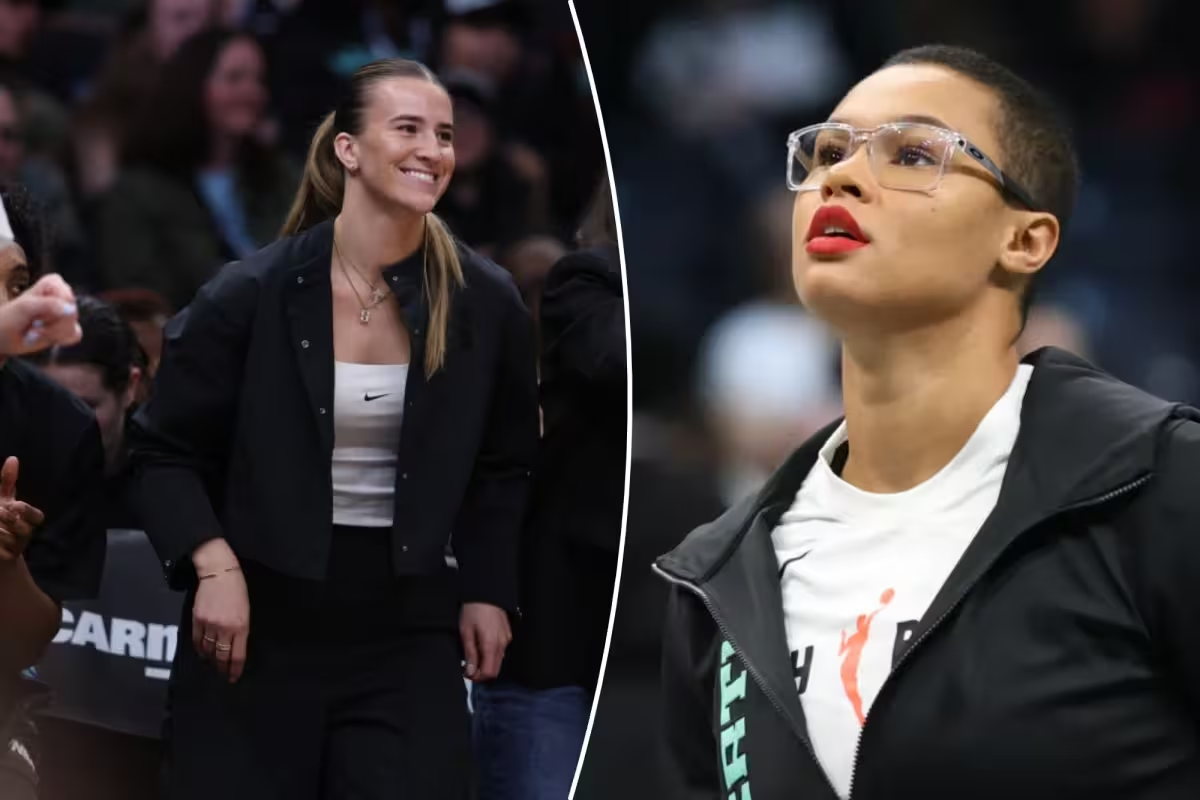
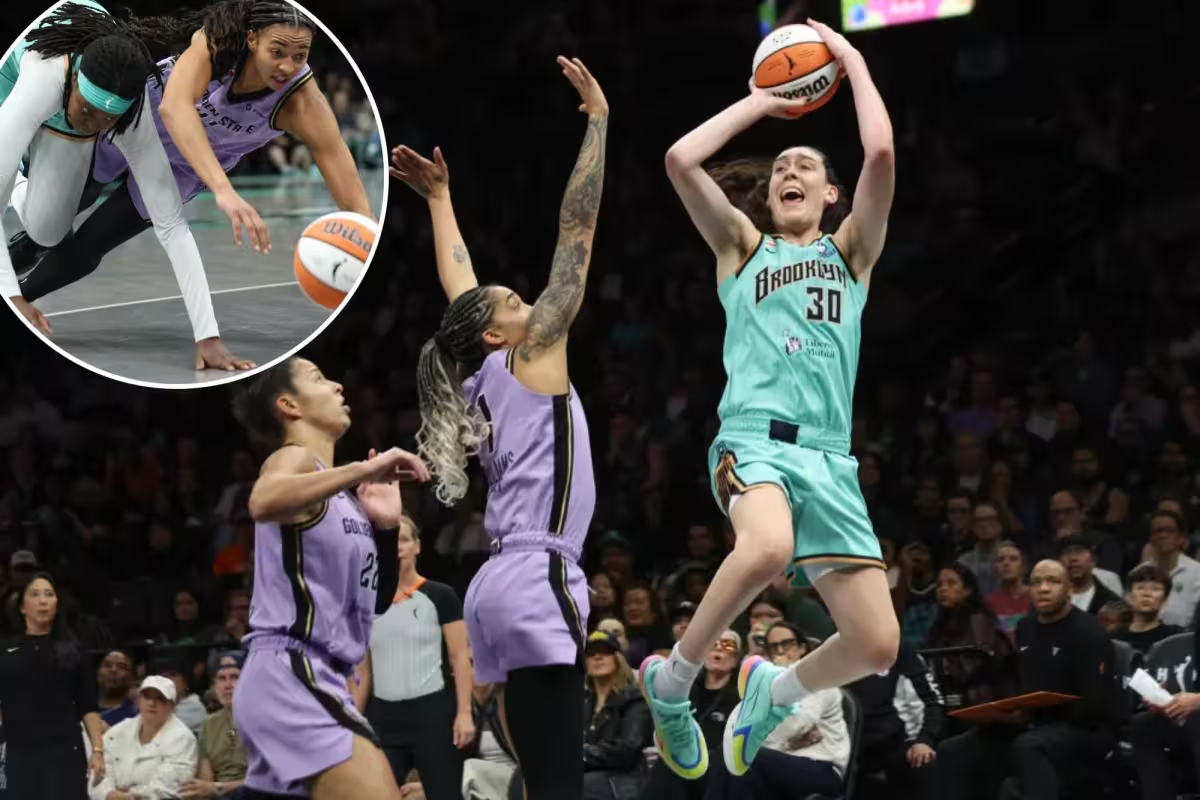

Meanwhile, the player market churned. Satou Sabally, who came to the New York Liberty as a free agent this offseason after one season with the Phoenix Mercury that included a run to the WNBA Finals and a concussion in Game 3, has been clear about her own reasons for moving: "where I wanted to be next. In an environment that encourages me and believes in me. I had to do that for my own protection also." She added that teams "wanted to keep their options open. We had respectful conversations." Sabally made her season debut last Thursday and had a 20-point game against Dallas on Saturday; she hoped to play against her former team, the Phoenix Mercury, on Wednesday night.
The Liberty themselves have been brittle — 3-4 with three straight home losses, and Sabrina Ionescu was out for the second straight game with a back injury. Betnijah Laney-Hamilton and Leonie Fiebich were expected to play against Phoenix, underscoring how personnel swings and health have reshaped rosters across the league as much as front-office moves have.
The trade that sent Jones away is precise and public: Rebecca Allen to the Sun; Natasha Howard to the Wings; Kayla Thornton to the Liberty; Ty Harris to the Sun. That transaction is one clear hinge in a broader narrative about a franchise that supported a star player’s personal decision in 2020, complied with her trade request in 2023, and yet watched its standing erode into 2026.
That erosion matters today because the franchise is not just losing on the court — it is leaving a market where it spent a decade as a contender. The move to Houston ahead of the 2027 season will not simply change arenas; it will test whether the Sun’s identity was tied to a run of players and local supporters, or to an organizational continuity that now appears broken.
The simplest conclusion the facts support is also the hardest to accept for Connecticut fans: the team’s decade of competitiveness has ended, at least in its current form. Whether the Sun’s Houston restart revives the franchise — or whether the departures that include Jonquel Jones prove irreversible — is the question that will define the next season.