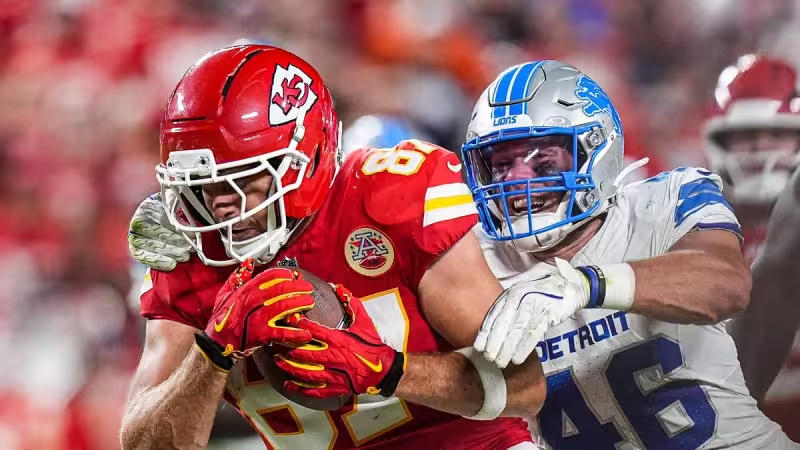
Jack Campbell signed a four-year extension with the Detroit Lions last week, a deal that makes him the second highest-paid linebacker in the NFL and adds $81 million in new money to his contract.
The contract carries an average annual value of $20.25 million, trailing only San Francisco 49ers linebacker Fred Warner’s $21 million AAV, and includes an $8.612 million signing bonus plus four option bonuses that total more than $50 million.
Under the terms, the Lions declined Campbell’s guaranteed fifth-year option before finalizing the extension — that option had been worth an estimated $21.925 million — then replaced it with a package of option bonuses of $11.89 million in 2027, $18.45 million in 2028, $5 million in 2029 and $15.4 million in 2030, and four void years for salary-cap purposes running 2031 through 2034.
The structure pushes money into later years while keeping near-term cap charges modest: Campbell was due to make $2,757,549 in the fall under his rookie contract, with a final-year cap hit of $4.684 million, but the new deal sets a $1.145 million base salary and a $4.794 million cap number for 2026 and a cash total of $9.758 million that year.
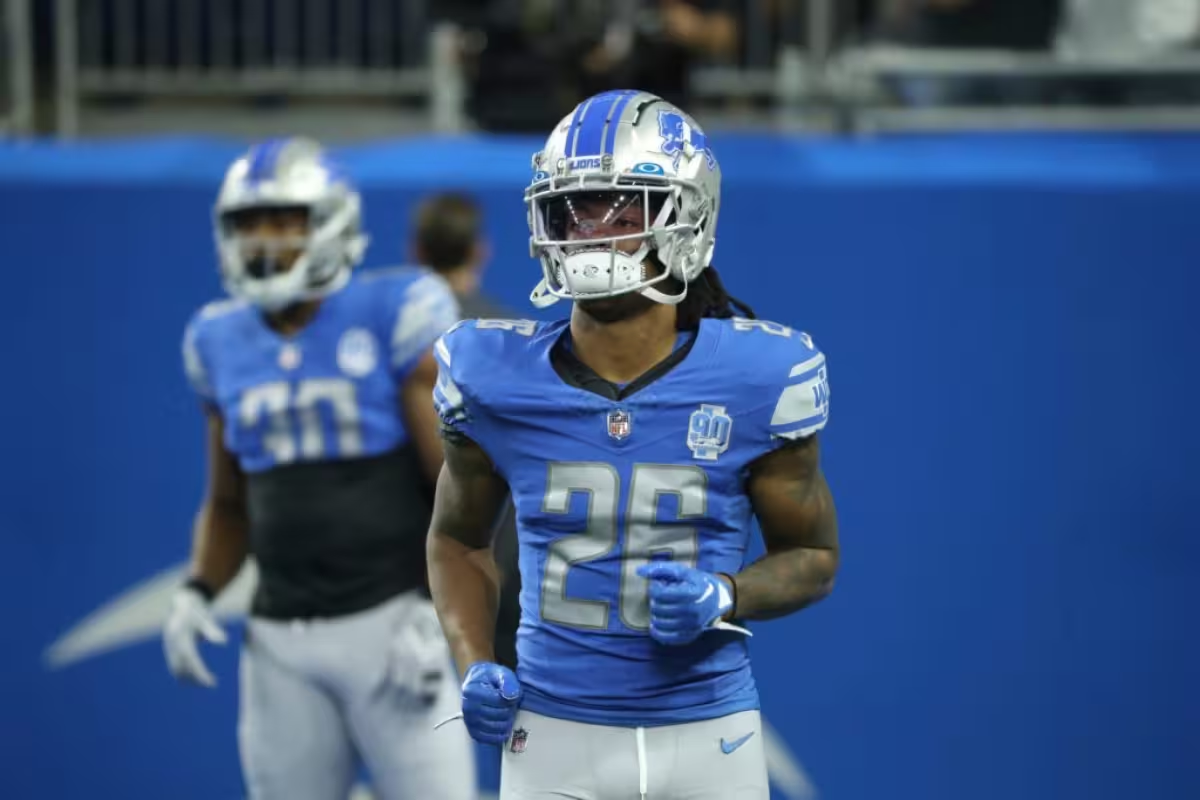
Numbers rise in succeeding seasons. The contract lists a $1.26 million base salary in 2027 with a $5.46 million cap number, a $1.305 million base in 2028 with a $9.275 million cap charge, and a jump to a $15.15 million base salary and a $24.12 million cap hit in 2029. The 2030 line shows a $2.75 million base salary plus the $15.4 million option bonus and a $100,000 workout bonus.
The deal’s option bonuses and void years are mechanics teams use to prorate large sums over multiple years; bonuses are spread for cap purposes, and the Lions have recently used similar structures in extensions for other draft picks, notably Aidan Hutchinson and Jameson Williams.
That cap engineering creates the tension. If Campbell’s contract runs its course with no restructures, the club would carry a $25.236 million dead-money hit in 2031 when the void years accelerate remaining prorations. The immediate benefit is clear — manageable cap figures in 2026–28 and a locked-in leader in the middle of Detroit’s defense — but the long-term cost is concentrated and heavy.
The practical effect is that Detroit traded the guaranteed fifth-year option and near-term certainty for a bigger upside in cash and status now, while placing significant financial risk into the back half of the decade. The $81 million in new money and the signing bonus reward Campbell immediately; the option-bonus schedule and four void years create a future bill the team will have to reckon with.
For Campbell, the deal converts him from a rookie on a bargain to a frontline linebacker with top-tier pay and a material guarantee in the near term; for the Lions, it secures a core defensive piece but sets up a fiscal decision point in 2029–31 when cap charges spike. The contract says the Lions are committing to Campbell now — the roster and cap decisions that follow will show how much of that future burden they are willing to accept.