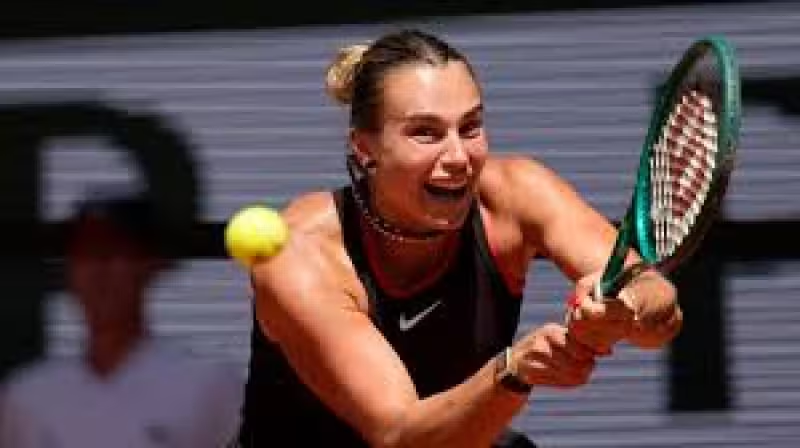
Aryna Sabalenka of Belarus beat Jessica Bouzas Maneiro of Spain in a first‑round women’s singles match at the French Open tennis tournament in Paris on Tuesday, May 26, 2026.
The win came with a small, visible aside: Sabalenka’s necklaces caught the sunlight as she moved across the court, a detail several spectators noticed even as she closed out the match.
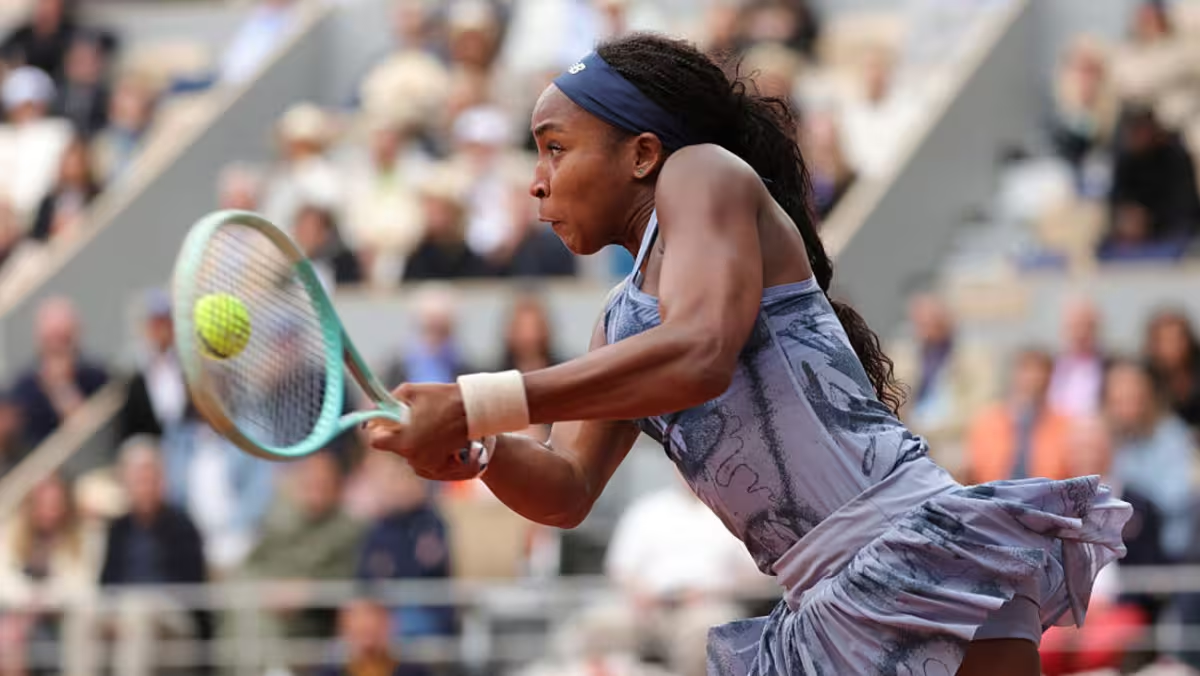
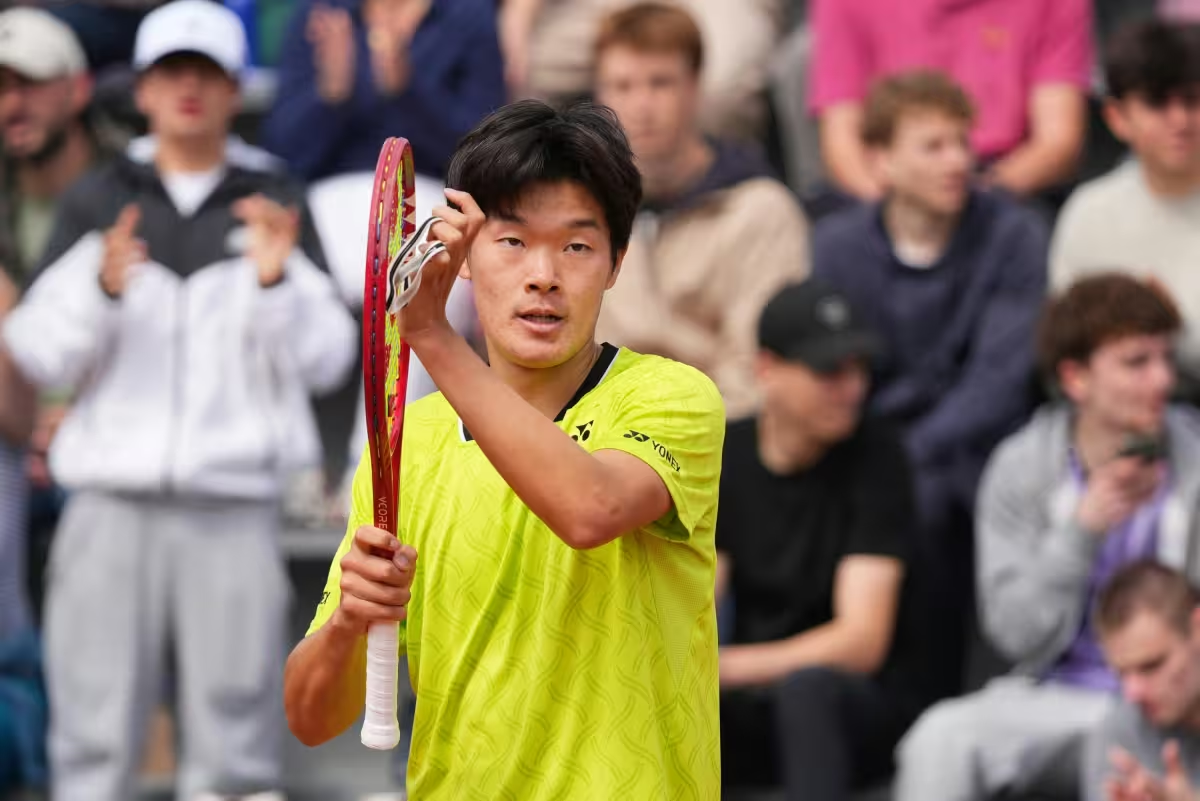
It was one of several opening‑day moments that mixed sport and spectacle at Roland Garros. Coco Gauff of the U.S. served to Taylor Townsend of the U.S. in another first‑round women’s singles match, Naomi Osaka of Japan returned to Laura Siegemund of Germany in her first‑round match, and Daniil Medvedev of Russia returned to Adam Walton of Australia in a men’s first‑round match — all played on Tuesday, May 26, 2026.
The day’s atmosphere underlined the dual character of a Grand Slam first day: intense focus on court and incidental details in the stands. Spectators fanned themselves with hand fans as the action unfolded, and small visual moments — the glint of a necklace, the shadow a tennis ball cast on the clay during Medvedev’s match — threaded through otherwise purely athletic narratives.
For Sabalenka, the necklaces were a side note to the result. The verified account of the day is simple: she won her opening match. That outcome is the metric that matters on a tournament day when dozens of seeded and unseeded players attempt to negotiate the opening obstacle and set a tone for the fortnight.
Putting the visual aside makes clear why the win mattered on Tuesday. First‑round victories at a major do more than advance a name on the draw; they preserve rhythm and buy breathing room for players who will have to navigate clay‑court movement and successive rounds. Sabalenka’s advance keeps her in the mix for deeper runs later in the tournament just as the other headline names — Gauff and Osaka among them — begin their campaigns.
There is tension in that juxtaposition. A Grand Slam match is a tightly defined sporting contest, but Paris on opening day is also an event where small, noncompetitive details get magnified. Spectators clutch hand fans to ward off heat; accessories catch light; a spinning ball throws a shadow that tracks a player's footwork. None of those images alter the official result, yet they shape how an afternoon is remembered.
The practical takeaway is straightforward. The jewelry that drew eyes did not alter the record sheet: Sabalenka won her first‑round match on Tuesday, May 26, 2026. The matches featuring Gauff, Osaka and Medvedev carried their own notes and moments — serves, returns and court shadows — but the scoreboard is the final arbiter on opening day.
If there is a simple answer to the question implied by a headline that pairs fashion and form, it is this: the french open sabalenka jewelry was a bright, talked‑about detail of a matchday scene, not a determinant of outcome. Sabalenka advanced, and the tournament moved on to its next set of matches with the same, stubborn clarity that only results provide.