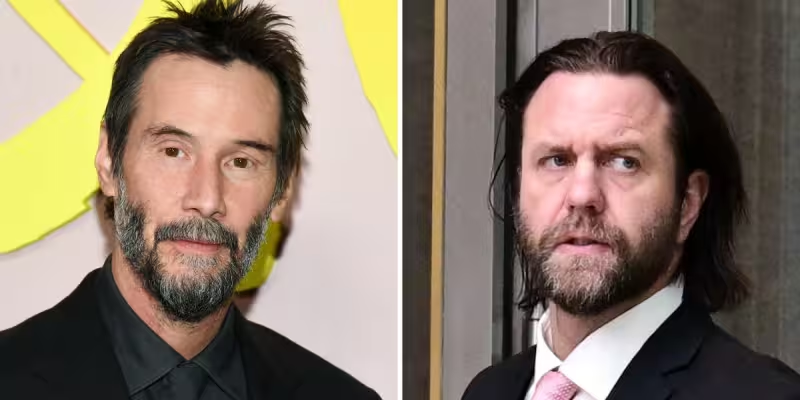
Keanu Reeves asked a federal judge to show leniency for Carl Rinsch, whose sentencing on a conviction for defrauding Netflix of $11 million is set for June 29. Reeves's letter, included in a Tuesday night sentencing submission to US District Judge Jed Rakoff, urges mercy while describing Rinsch as an artist and a friend.
Rinsch was convicted by a Manhattan federal jury after prosecutors said he took millions from Netflix to make an ambitious sci‑fi epic called White Horse and never finished it. At trial, prosecutors presented evidence that Rinsch diverted funds to luxury purchases, including more than 480 food deliveries from Postmates and Uber Eats and a $439,000 handmade Swedish mattress, along with other high‑end goods. Preliminary episodes and concept art for White Horse were entered into evidence, and a Netflix executive testified she greenlit the project after reading the script at Reeves's home.
In the letter to Judge Rakoff, Reeves wrote that Rinsch tends to "self‑sabotage" by pushing the boundaries of negotiated agreements and added, "I am, of course, not a therapist or psychologist." Reeves continued, "I write instead as an artistic peer of Carl's, and as a friend." He described White Horse as, "In my opinion, Carl is an exceptional artist and 'White Horse,' in the form in which I saw it, was a superb and visionary work of art, although unfinished," and said Rinsch has brought "creative inspiration" and "exceptional joy and warmth" to people around him.
Two paragraphs of Reeves's letter were redacted without explanation on the court docket, and records related to Rinsch's health have been redacted elsewhere on the file. Other friends who submitted letters described a troubled period during the making of White Horse, saying Rinsch had experienced "a period of severe psychological instability" and "a break from reality." Rinsch's brother wrote that he was "no longer reasoning clearly" during that time.
Rinsch testified at trial that Netflix abandoned White Horse after cost overruns and complications from the Covid‑19 pandemic, and that the bulk of the $11 million was meant to reimburse him for out‑of‑pocket production expenses. Prosecutors rejected that account and urged the jury to view Rinsch's spending as evidence of fraud.
Rinsch's lawyers have asked the judge to impose a sentence that does not include any prison time. Federal prosecutors are scheduled to file their own sentencing recommendation in June. Netflix is also seeking civil remedies: the company asked the court to order Rinsch to pay $3.4 million in legal fees for a related dispute and an additional $500,448 for its costs in helping prosecutors prepare the criminal case.
The competing submissions create the central tension for Judge Rakoff: letters that humanize Rinsch and describe mental health struggles sit beside a detailed financial record prosecutors say shows deliberate misappropriation. Matthew Rosengart said he "was pleased simply as a friend and artist" to see peers step forward, while Rinsch's lawyer, Daniel McGuinness, said his client "is deeply grateful to Mr. Reeves and to all the friends and family who stepped forward to paint a fuller picture of who he is beyond the facts of this case" and described Rinsch as "a remarkably talented man of strong character who confronted extraordinary challenges in the period leading up to these events."
What happens next is clear on the docket: sentencing on June 29, with prosecutors' recommendation due in June and Netflix seeking significant fee awards. Reeves's endorsement may humanize Rinsch and give the judge more context about his character and creative gifts, but it does not erase the conviction, the jury's findings, or Netflix's restitution demands. Given the detailed spending allegations, the pending prosecutorial filing and the company's multimillion‑dollar claims, Reeves's plea for mercy is likely to influence sentencing as a mitigating personal factor rather than to eliminate the risk of prison time entirely.