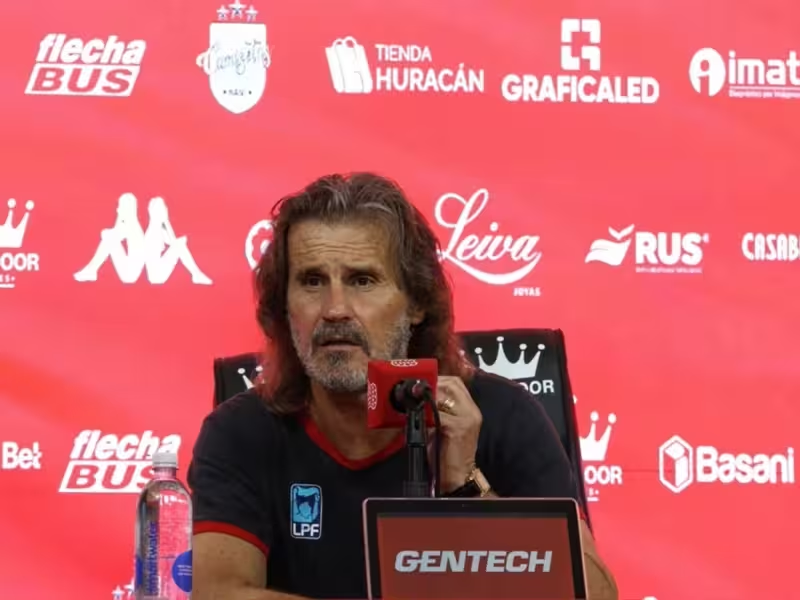
Renato Gaúcho returned to coach Vasco da Gama from the field as the club hosted Barracas Central at São Januário on Wednesday, May 27 at 19:00 Brasília time in the sixth and final round of Group G of the Copa Sudamericana.
The fixture arrived with clear arithmetic: Olimpia led Group G with ten points, Vasco and Audax Italiano both had seven, and Barracas Central sat on three points and had already been eliminated. Barracas made its debut in the Copa Sudamericana in this edition of the tournament and entered São Januário having recorded two defeats and three draws in the group stage.
Vasco could only finish top of the group in a narrow scenario — it had to beat Barracas and hope Audax Italiano defeated Olimpia away by no more than two goals. That combination was the club’s only route to first place; otherwise the standings left Vasco chasing second or whatever finishing place its result produced.
The match carried practical complications for both teams. Vasco arrived on the back of three losses in a row and without any available right-backs, forcing the coach to use Tchê Tchê in the right-back position. Cuesta returned to the starting lineup in defense and Cuiabano started at left-back. Paulo Henrique was out with an ankle sprain, Puma missed the trip with a foot infection, and João Vitor Mutano was serving a suspension.
Barracas Central, which had finished ninth in Group B of the Argentine Apertura and been left out of that competition’s final phase, also started the night with selection troubles. Rúben Insúa did not have Nicolás Capraro or Morales available because both were suspended, while Damián Martínez returned as an option after serving his suspension. Esteban Ostojich of Uruguay was the referee assigned to the game.
The contrast between the teams set a clear narrative friction. Barracas had nothing to play for in terms of advancement — it had no chance to qualify for the next round before its final match against Vasco da Gama — and could treat São Januário as an end-of-group experiment. Vasco, by contrast, needed both a positive result and an outside outcome in Santiago to change its fate. That made the home side’s task not only tactical but probabilistic: winning alone was not enough to guarantee the top spot.
The use of Tchê Tchê at right-back underscored how thin Vasco’s resources were on the flank, and the return of Renato from a suspension to coach from the field amplified the sense of urgency. A coach back in the dugout facing a compact fixture list, absent specialists and a recent string of defeats creates a pressure point that numbers alone do not capture: even if Vasco solved its local problems on the pitch, it still needed Audax to do the rest.
For Barracas Central the campaign was already a milestone regardless of the result. This edition marked the club’s first international competition, and while the group-stage return — two defeats and three draws — meant an early exit, the experience of continental fixtures will be part of the club’s record going forward. For Vasco, the match was more of a crossroads: a win might make for a tidy finish to the group, but without Audax beating Olimpia by the narrow margin required, Vasco could not claim the summit.
Given the injuries, suspensions and the club’s string of losses, Vasco’s prospects of finishing top were always contingent and, by the numbers on the eve of the match, remote. Renato’s return removed one uncertainty, but the broader puzzle demanded a favorable result elsewhere — a likelihood the club could not control from São Januário.