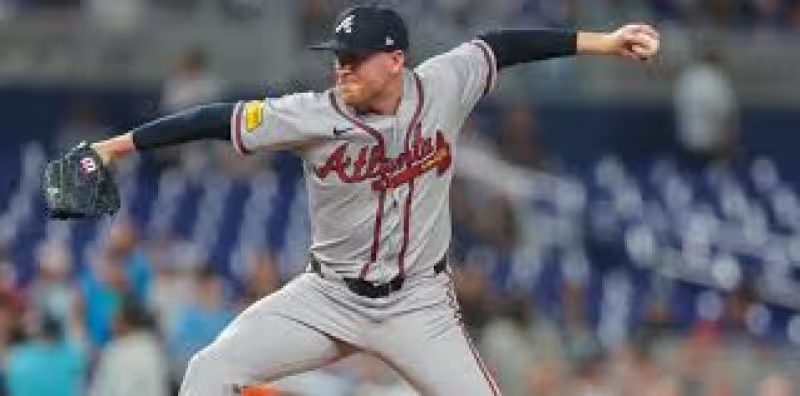
Aaron Bummer was released by the Atlanta Braves on Tuesday, May 19, 2020, at 12:08 p.m. ET, a day after he issued five walks and allowed six earned runs in one inning during a blowout loss to the Marlins.
The left-hander’s departure came as the Braves moved quickly to reconfigure a bullpen that had just endured a lopsided defeat. In a corresponding roster change, the club added Dylan Dodd to the bullpen and reinstated him from the injured list after he returned from a rehabilitation assignment.
The night that pushed the decision was unmistakable on the stat line: five walks and six earned runs in one inning, the kind of outing that swings a team’s short-term calculus. The Braves also added RHP Víctor Mederos to the roster while sending RHP JR Ritchie to Triple-A Gwinnett following last night’s game, moves that reshuffle options behind the plate for the immediate stretch.
Financially, the cut did not come cheap. The Braves will eat a substantial amount of money remaining in the final year of Bummer’s three-year contract, effectively paying through a deal they chose to terminate early rather than keep him on the roster while he tried to regain form.
Context for the move sits squarely on recent performance: Bummer had struggled with consistency over the past month, and Monday’s outing crystallized concerns for a team that preferred to clear the roster spot rather than wait. The timing — a release the day after the rough appearance — makes the connection plain between the on-field failure and the administrative response.
That sharp line between performance and payroll is the tension behind the transaction. Releasing a veteran left-hander who was still owed money in the final year of a multi-year contract shows the club elected roster performance over sunk cost. At the same time, the Braves’ commitment to absorb a substantial portion of that remaining salary highlights the uneven choices teams make when short-term results and long-term contracts collide.
The practical fallout is immediate. Dylan Dodd’s arrival to the bullpen is meant to provide fresh arms; his reinstatement from the injured list after a rehab assignment puts him back into the mix at once. Víctor Mederos enters as another option, while JR Ritchie heads to Triple-A Gwinnett, reducing the big-league relief corps by one and sending a different message about who will be trusted in high-leverage situations.
By releasing Aaron Bummer and bringing in Dodd and Mederos while sending Ritchie down, the Braves made a decisive bet: they are willing to absorb payroll consequences to reset a bullpen now judged insufficient. The clearest consequence is simple and immediate — the club has chosen new arms over a veteran it still owed money to, and those arms will carry the burden of proving that the move was necessary.