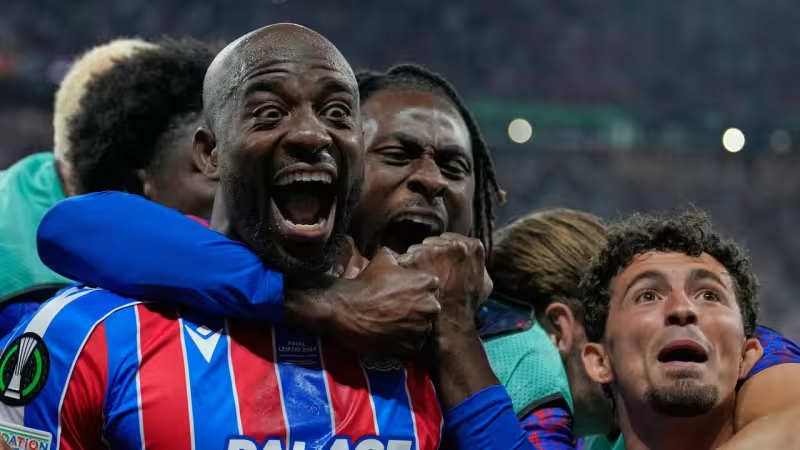
Crystal Palace won the Conference League after beating Rayo Vallecano in the final played in Leipzig on Wednesday, and Oliver Glasner said afterward, "Wir sind 90 Minuten davon entfernt, Geschichte zu schreiben."
The victory came in the club's first European final and in a match staged in Leipzig — the first time the city has hosted a European final. Rayo Vallecano reached a European final for the first time in 25 years, a milestone that follows the club's prior ban from European competition in 2013 because of an ongoing insolvency case.
Crystal Palace's route to the Conference League was unusual. The club had originally qualified for the Europa League by winning the FA Cup in 2025, but UEFA excluded Crystal Palace from the Europa League and moved the club into the Conference League because of John Textor's multi-club ownership links involving Crystal Palace and Olympique Lyon. UEFA gave Olympique Lyon the Europa League place because Lyon had the better league finish. Palace and John Textor missed the deadline to place the shares into a trust, the club appealed to the Court of Arbitration for Sport and lost, and the team ended up contesting and winning the Conference League instead.
The stakes were not only sporting. Steve Parish put the administrative decision into blunt terms: "Es ist, als würdest du im Lotto gewinnen. Dann gehst du gehst zum Schalter - und bekommst den Gewinn nicht" and added, "Ich glaube, niemand im Fußball will so etwas sehen: Klubs, die sich rechtmäßig für einen Wettbewerb qualifiziert haben, werden aufgrund der lächerlichsten Formalität, die man sich vorstellen kann, von diesem Wettbewerb ausgeschlossen." Those remarks underscored how the trophy on the field arrived against a backdrop of off-field exclusions and appeals.

There was also a contrast in conditions between the two finalists. Rayo Vallecano's season had been marked by infrastructure problems and disruption: players said they had not been able to train on the club grounds for three months, a league match against Oviedo was postponed in February because a newly laid pitch proved unplayable, and the derby against Atlético was moved to Leganés. Rayo's run to a first final in a quarter-century came despite that turmoil.
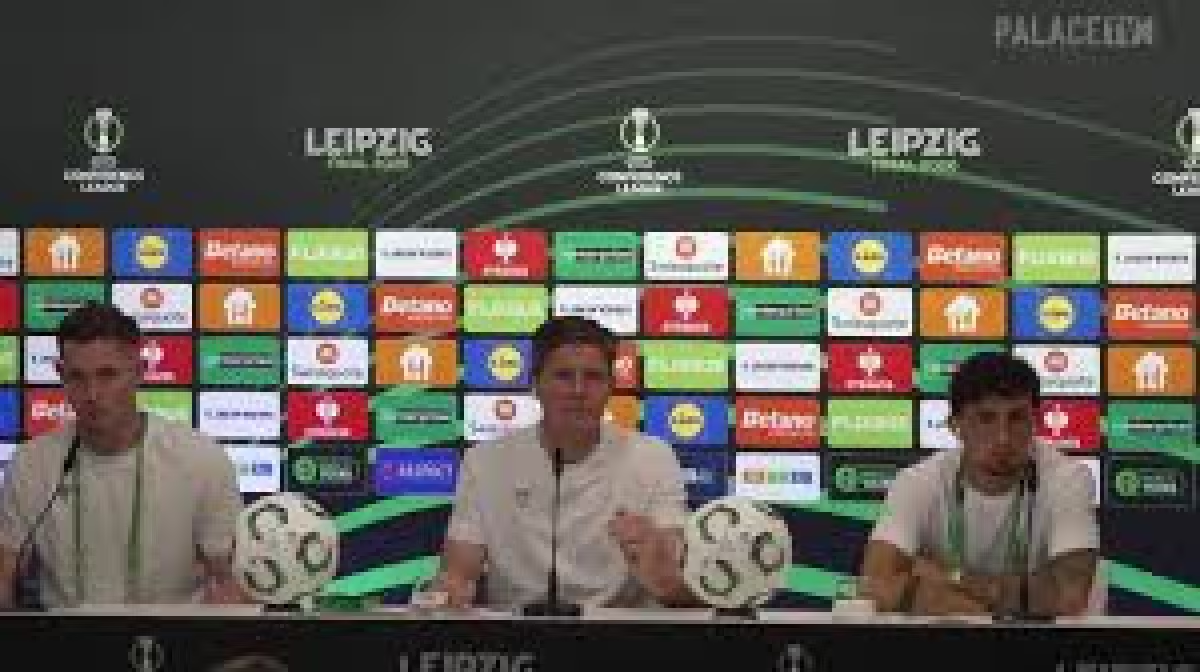
Glasner had framed the final itself as an unknown challenge before kickoff, telling reporters, "Das ist ein unbekanntes Gelände, ein europäisches Finale." That sense of the unfamiliar was literal — Leipzig hosting a European final for the first time — and figurative for both clubs, each carrying recent, unusual experiences into the match.
The tension of reward and denial ran through the night: a club that had earned a Europa League spot by winning a domestic cup had its European destination altered by governance rules and missed deadlines, yet still lifted a continental trophy. Rayo Vallecano, with its fragmented infrastructure and a history of exclusion from Europe in 2013, reached this stage against the odds and fell just short.
After the final, Glasner closed on a note that tied the sporting achievement to the work behind it: "Das ist ein Moment, den wir uns gemeinsam erarbeitet haben." For a club redirected into a different competition by off-field rulings and for an opponent emerging from years of difficulty, the line captured the particular weight of winning in Leipzig — and the human effort that produced it.