
The Supreme Court on May 26 rejected Florida’s attempt to sue California and Washington over commercial truck driver’s licenses issued to people who entered the country illegally, turning away the case without comment. Florida had asked the justices to take the lawsuit directly, an unusual move that left the state with no lower court ruling to lean on and no immediate path forward.
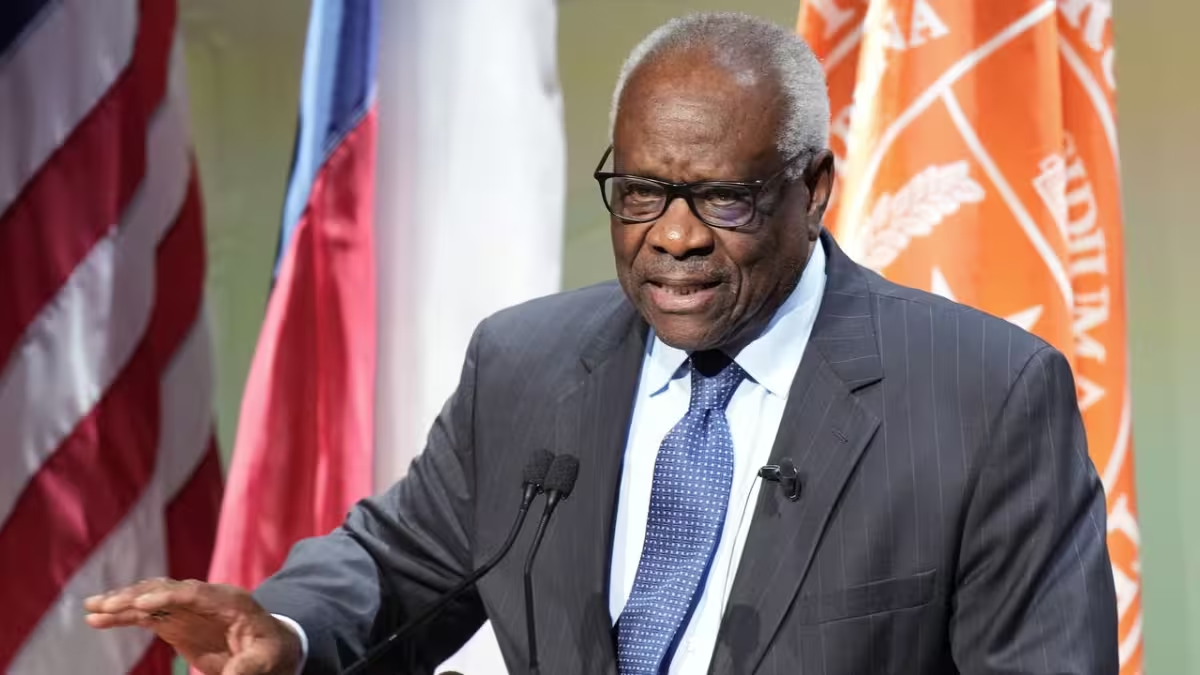
Justice Clarence Thomas wrote that the court declines to even hear Florida’s claims, even though it has nowhere else to bring them, and Justice Samuel Alito said he would have heard the case. The dispute grew out of a fatal crash in Florida in August that killed three people, and it centered on whether Washington and California allowed undocumented immigrants to get commercial licenses that let them drive large trucks across state lines.
Florida said Harjinder Singh first received a commercial driver’s license from Washington and then another from California before the crash. Singh has been charged in connection with the collision and has pleaded not guilty. The federal government has said he illegally entered the United States from Mexico in 2018, a detail that turned the case into more than a fight over licensing rules and made it part of a broader argument over immigration enforcement.
That broader fight is exactly why the case drew so much attention. It became a political flashpoint tied to immigration policy and commercial-driver regulation, with Florida using an interstate-dispute procedure rarely seen in this kind of conflict. Washington argued the matter should have been handled by the federal agency that sets commercial driver’s license standards, not by the Supreme Court in the first instance. Iowa and 16 other states filed a brief backing Florida, showing how quickly the issue spread beyond one crash and one state’s borders.
Washington Attorney General Nicholas Brown called the lawsuit a political stunt, not a real claim, and asked a sharper question about where such interstate disputes should end: Can states bring nuisance claims against each other in this court alleging that lax vaccination policies or firearm restrictions in one state are causing harm in another? Florida Attorney General James Uthmeier said California’s and Washington’s decisions to endanger their own citizens is reprehensible, and added that commercial drivers routinely cross state lines, endangering citizens of other states.
The ruling leaves Florida without the Supreme Court forum it wanted and keeps the focus on the underlying crash case and on how states regulate commercial licenses for people living in the country without legal permission. During the State of the Union address this year, Donald Trump urged Congress to bar states from granting commercial driver’s licenses to people who lack legal permission to live in the United States, a demand that now lands with more force after the court declined to intervene. The justices did not explain why they turned Florida away, but the result is clear: the state’s bid to turn one deadly August crash into a direct constitutional fight ended the moment the court refused to hear it.