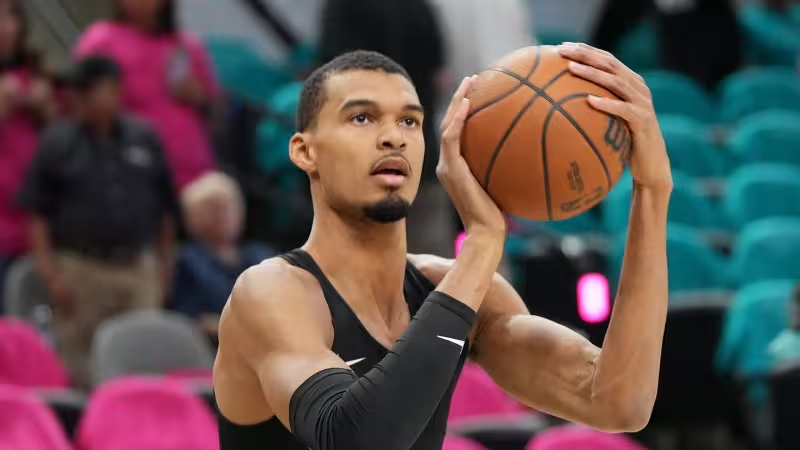
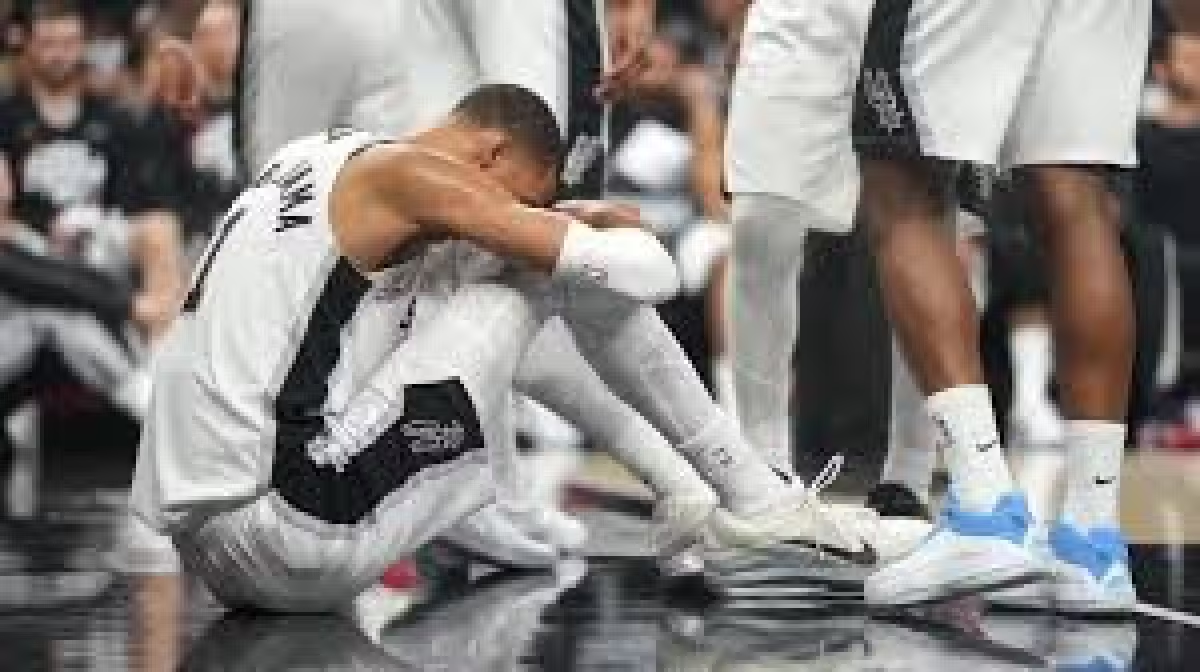
Victor Wembanyama, after a 41-point, 24-rebound Game 1, is being schooled in live fire — and Draymond Green wrote on Friday that Oklahoma City is teaching a lesson he knows well.
“OKC is teaching a valuable lesson,” Green wrote on Threads, pointing to how the Thunder responded to Wembanyama by fouling him constantly and trying to see what they could get away with. Some observers even called Wembanyama the best player in the league after that first game; Green framed the physical response as a deliberate tactic to interrupt a rising star.
Green tied that tactic straight back to what his team endured. “One that teams started doing against us many years ago,” he wrote, adding: “They can only call but so many jersey grabs when Steph runs.” Green continued, “So people just started grabbing him.” The implication was plain: known countermeasures against unique offensive gifts often turn messy when league rules and officiating lag behind the strategy.
Those words recall a sequence in Curry’s career that matters today because it shows how a star adapts. Stephen Curry showed in the 2013 playoffs that he was capable of dominating on the biggest stage, but Golden State fell to the Spurs in the 2013 conference semifinals and Curry went 14-of-39 over the final two games. The cumulative effect of the physical defense seemed to wear him down.
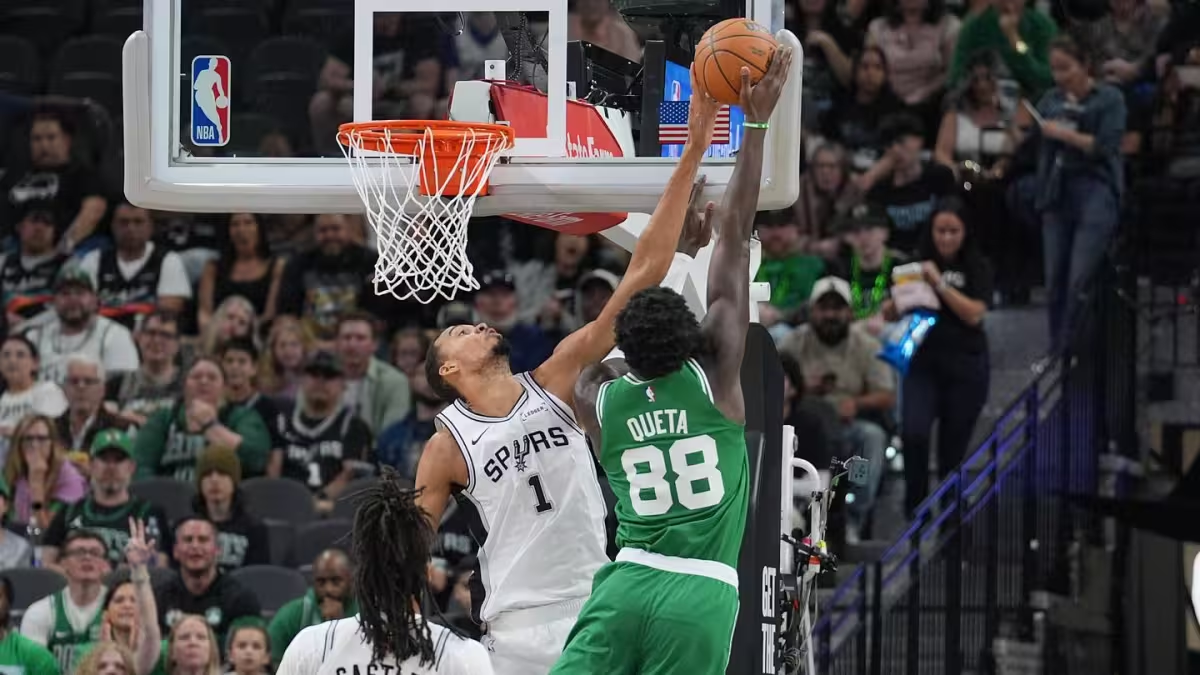
Golden State’s next postseason steps read like a training manual in response. Curry averaged 23.0 points per game in Golden State's 2014 playoff loss against the Clippers, a series in which he was not as aggressive offensively as he would be later. By the 2015 playoffs he reacted better to physical defenses from the Grizzlies and Cavaliers, and the Warriors won their first title in 40 years.
Green drew the parallel explicitly and without nostalgia: “He learned to play through it and became one of the greatest ever on the biggest stages.” Then he applied the lesson to Wembanyama directly: “Wemby has to learn how to play through it, because teams are going to keep grabbing and holding him. Not going to change.”
The weight of those lines comes from detail: 41 points and 24 rebounds are the kind of numbers that force opponents to invent answers. The Thunder’s strategy — fouling and testing the boundary of what officials will let slide — is a practical response, not a theory. Teams have long used physicality to slow uniquely skilled players; Green is arguing that persistence and adaptation are the only antidote.
The tension is immediate. Curry’s arc offers both a warning and a blueprint. In 2013 the physical plan blunted his impact and helped lead to a series loss; by 2015, after learning to absorb contact and counter it, Curry and the Warriors climbed to a championship. But Wembanyama is at the start of that story, and the rules and refereeing tendencies that Green criticized do not change overnight.
The clear conclusion: Wembanyama’s dominant stat line in Game 1 proved he can carry a team, but the way Oklahoma City responded makes the next step obvious. If he learns to play through illegal grabs and constant fouls the way Curry eventually did, he can blunt the tactic. If he does not, opponents will keep relying on the same rough blueprint that once tried to stop Stephen Curry.