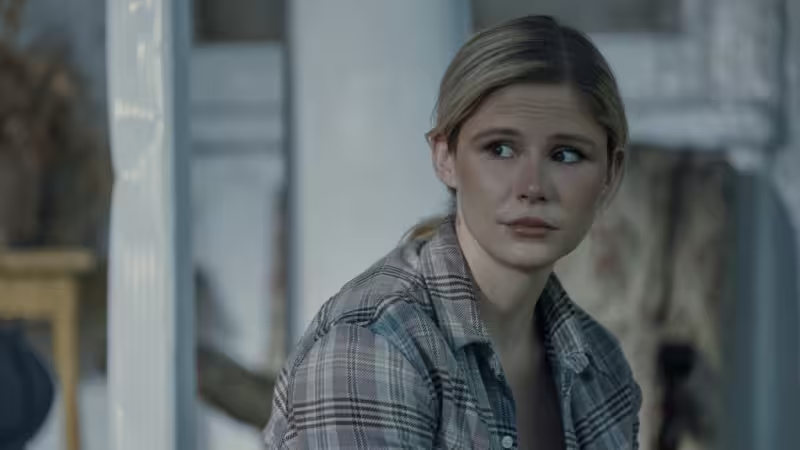
Erin Moriarty opened up in an op-ed for Time about nearly losing herself to an undiagnosed illness while filming the fifth and final season of The Boys, saying doctors eventually referred her to a neurologist as her symptoms accelerated.
She writes bluntly about the scale of the experience: "Eventually, my doctors referred me to a neurologist." By that point, she says, "I was preparing myself for the possibility that I was dying. I was in so much discomfort that the idea of death felt like a potential relief. Death felt less terrifying than living in that state indefinitely."
The numbers and dates are simple but sharp: Moriarty says the symptoms began while she was filming the final season in 2025; in June she revealed she had been diagnosed with Graves' disease, and she says the diagnosis occurred a month before that June post. The autoimmune disorder affects the thyroid gland; she says that after beginning treatment "within 24 hours" she "felt the light coming back on."
That turnaround is the human weight behind the essay. Until the diagnosis, Moriarty says the symptoms remained "still undiagnosed" while she worked on a series at its most visible moment and that doing so exacted a specific price. "These symptoms struck me as I was filming the final season of The Boys and more in the public eye than ever. I was going through the physical hell of chronic illness on a public stage. Doing it in private is emotionally damaging enough, but to have my physical symptoms be speculated about, trivialized, and dismissed was devastating."
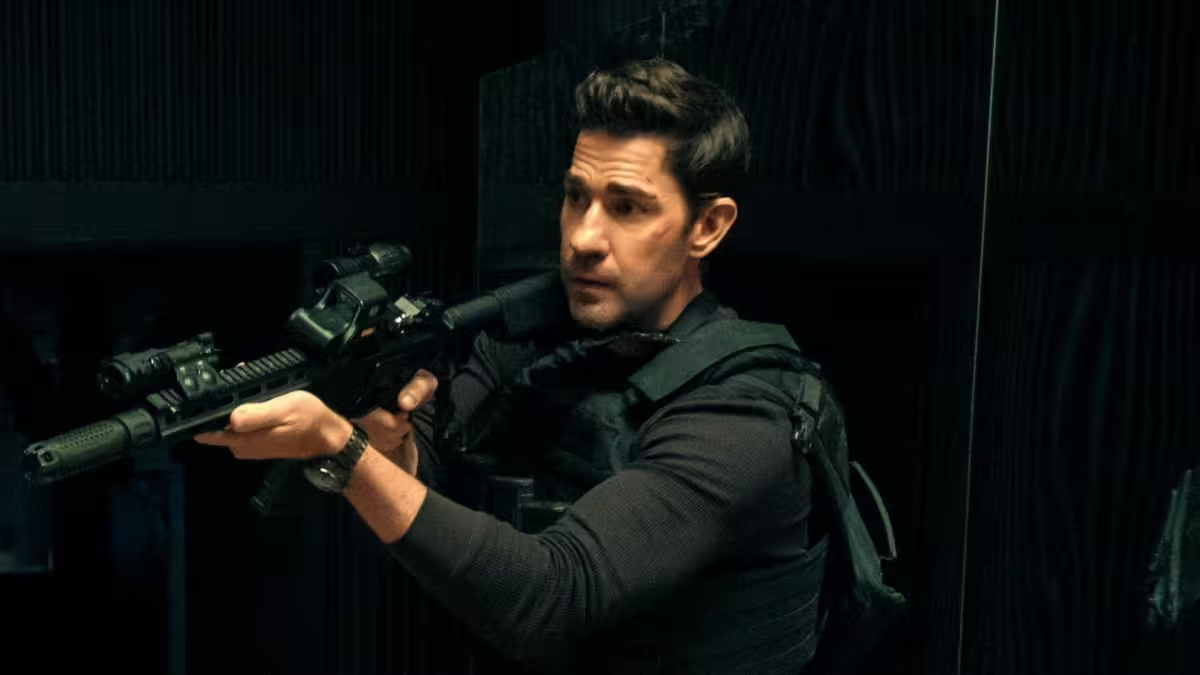

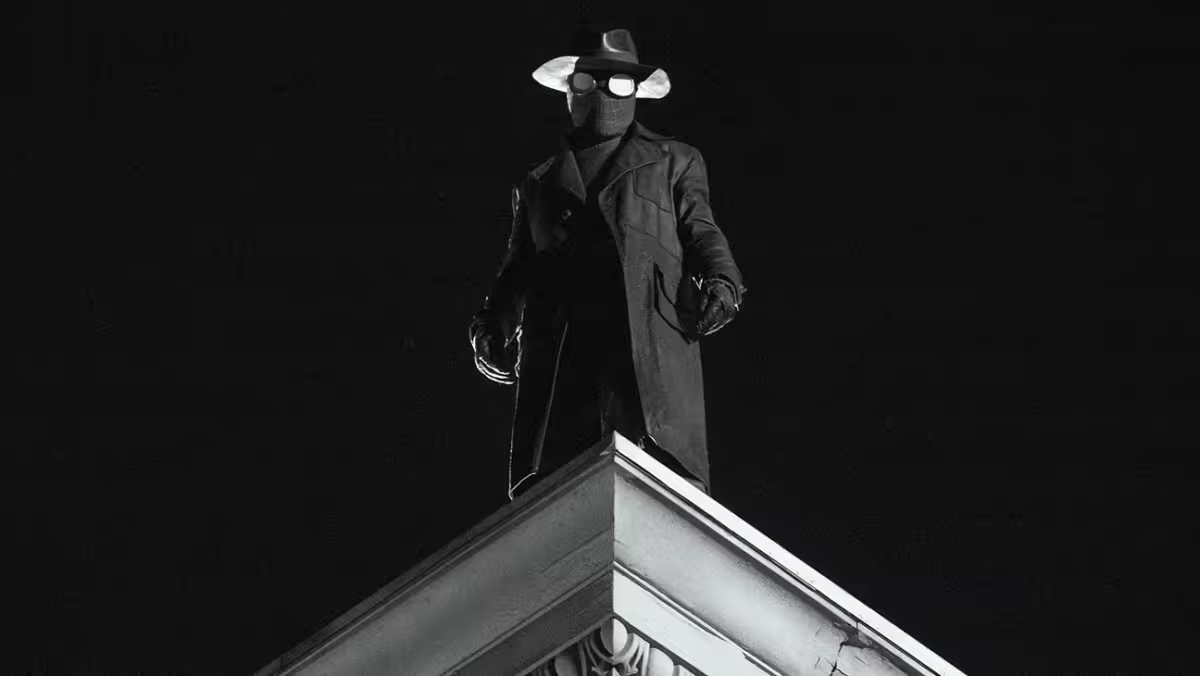
The context makes the toll clearer: Moriarty had spent years building a character fans know, and she says the illness tore at that work. "has meant more to me than I can ever articulate. But while filming our precious final season in 2025, I lost her. I lost myself," she writes, and later: "The symptoms of my illness, still undiagnosed, created a distance between me and the character I had spent years pouring myself into."
The friction in her piece is not between diagnosis and treatment — that arc is straightforward — but between what audiences saw and what she lived. Public scrutiny turned private suffering into rumor and dismissal; the symptoms themselves were cruelly incompatible with performance. "My memory was failing me. My body felt unfamiliar. My emotional presence, something I had always protected and valued fiercely as an actor, became increasingly difficult to access," she says, capturing the contradiction of working at the height of visibility while losing basic access to self.
Moriarty does not hedge responsibility. She writes, "One thing I can say: if I hadn’t chalked it all up to stress and fatigue, I would’ve caught this sooner." That admission sits beside the more urgent injunction she offers other people who notice small changes: "If yours is dimming, even slightly, go get checked. Don’t ‘suck it up’ and transcend suffering; you deserve to be comfy. Shit’s hard enough as is."
The lesson she draws is clear and immediate: the worst part of her illness was not only the physical pain but the public disbelief that followed it, and the relief once treatment began was dramatic. Her final claim answers the deeper question her story raises about whether recovery was possible — yes: within 24 hours of beginning treatment, she says she "felt the light coming back on." That, she suggests, is reason enough for anyone sensing their own light dimming to seek care.