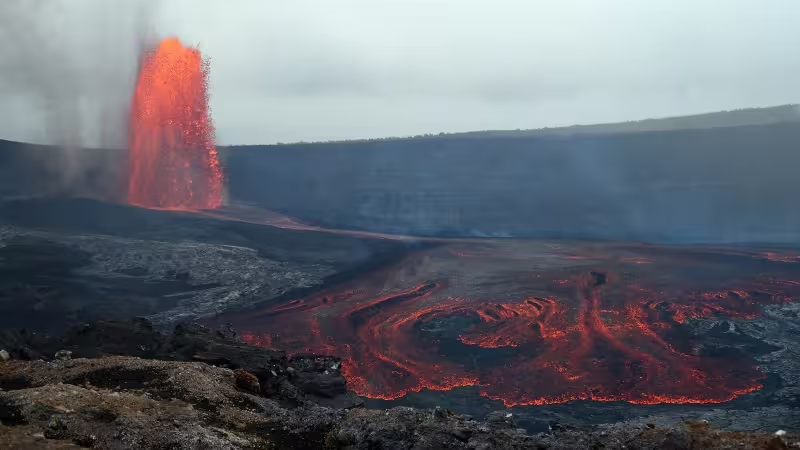
The U.S. Geological Survey said Kilauea could start erupting again over the holiday weekend, with model forecasts pointing to episode 48 of the current eruption series between Sunday and Tuesday. The Hawaiian Volcano Observatory said the volcano is already showing signs of imminent activity, while glow was visible from both eruptive vents in Halemaʻumaʻu crater on Thursday.
Low-level seismic tremors are still continuing even though the eruption is on pause, and the USGS said a new lava fountaining episode is likely because of the rapid return of inflationary tilt and the glow from both Halemaʻumaʻu vents. The agency has issued a code yellow for Kilauea, a sign that the volcano is being watched closely but has not yet crossed into the highest alert levels.
The forecast matters because this eruption series, which began in December 2024, has already produced dozens of bursts from the summit. Some episodes sent lava fountains as high as 1,500 feet, a reminder that the next outbreak, if it comes, could be dramatic and fast-moving rather than a slow build.
Episode 47 began on May 14 and ended abruptly nine hours later, with lava fountaining from the north vent. Tephra fell within Hawaiʻi Volcanoes National Park during that episode, while fine ash and Pele's hair fell outside the park. The USGS has also warned that volcanic fragments such as pumice, scoria and reticulite can fall on the ground within one to three miles of the vents, and that pieces have been known to reach Highway 11 west of Hawai'i Volcanoes National Park.
That risk is why the area of Hawai'i Volcanoes National Park around the Kilauea caldera has been closed since 2007 because of instability, ground cracking and rockfalls. The next eruptive burst is now being watched not because it is certain, but because the signs around Kilauea are lining up fast enough to make a new episode more likely than not.