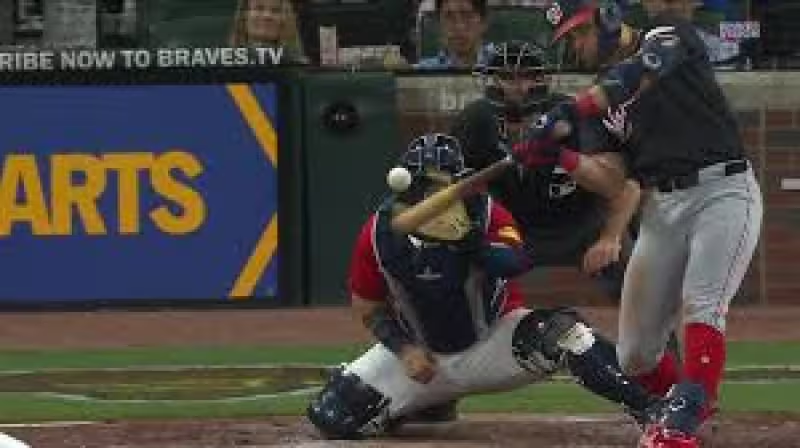
Chadwick Tromp delivered two key RBI in extra innings to give the Atlanta Braves a walk-off victory over the Washington Nationals in the 11th inning.
The late rally ended a game that featured the top two scoring offenses in MLB thus far and leaned on small, decisive moments. Tromp’s clutch plate appearances supplied the margin the Braves needed after an early exchange of power and strategic pitching changes: Bryce Elder started for Atlanta and struck out James Wood to open the game, while Mauricio Dubón doubled on the first pitch he saw in the first inning. Curtis Mead supplied the game’s first run with a no-doubt home run on a full count.
The path to the 11th was shaped by Washington’s unconventional opener plan. The Nationals used Richard Lovelady in an opener-style role before bringing in Miles Mikolas early; Mikolas carries a 6.91 ERA. That sequence tested the Braves’ lineup repeatedly and set the stage for extra innings, where Tromp produced the decisive swings that completed the comeback.
Those two key RBI in extra innings were not just dramatic— they mattered in the larger pattern between these teams. Dating back to 2018, the Braves have won seven of their last eight season sets against the Nationals and went 80-49 in that timeframe. A walk-off win in the 11th extends that edge and reinforces Atlanta’s dominance in the matchup, even when Washington experiments with opener tactics and deploys veteran arms early.
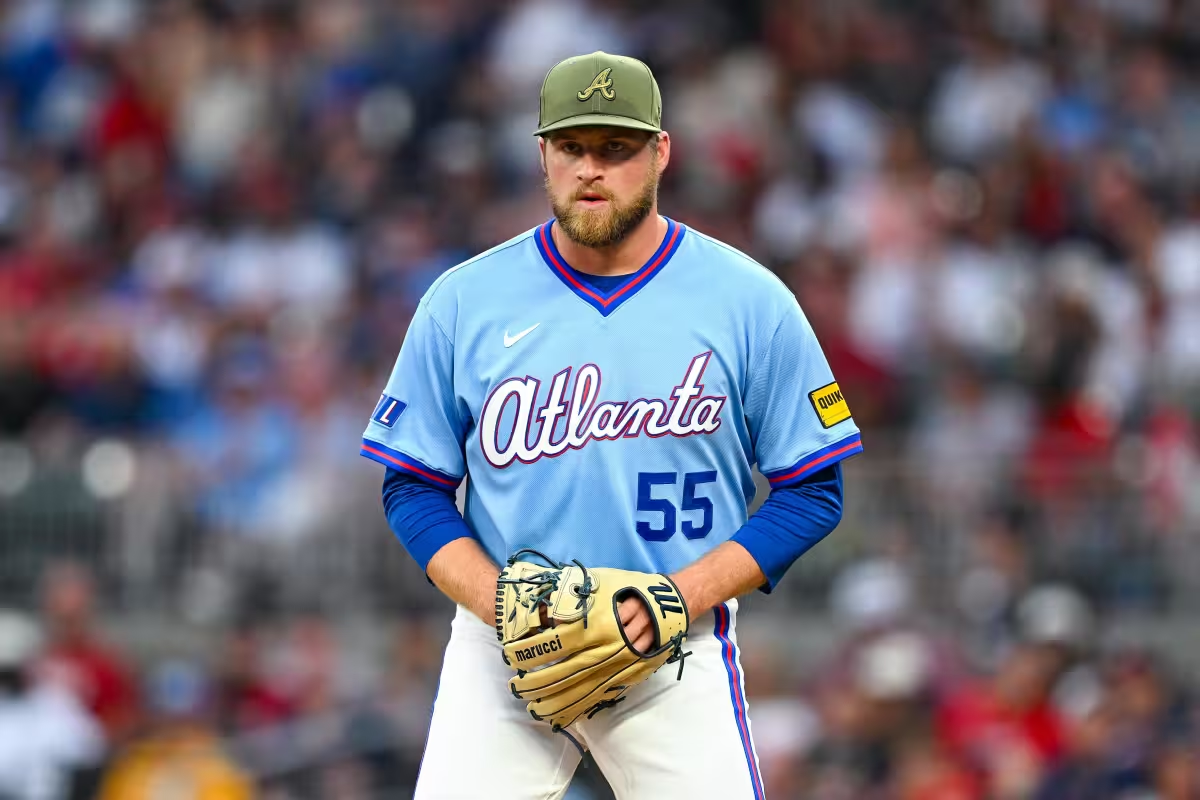
On the mound, Bryce Elder’s start showed the Braves trying to control tempo from the first pitch. His first-inning strikeout of James Wood set a tone, but Washington’s opener approach and a midgame homer by Curtis Mead kept the scoreboard tight. Mauricio Dubón’s first-pitch double in the opening frame underscored how quickly the game could swing, and it did—slowly—toward extra innings. In the 11th, Tromp’s plate work supplied the two runs that finished the game.
The tension in the game came from a clash between expectation and execution: a meeting billed as a showdown of the league’s two most productive offenses turned into a contest decided by managerial gambles and situational hitting. The Nationals’ choice to use Lovelady as an opener and then turn to Mikolas—who has a 6.91 ERA—left questions about which approach would contain Atlanta’s firepower. Meanwhile, the Braves continued to lean on depth and timely contributors, with Elder initiating the outing and role players like Dubón and Mead creating windows that Tromp ultimately exploited.
For the Braves, the win is a simple, clear increment in a recurring pattern. For the Nationals, it is a reminder that unconventional deployment of arms can prolong a game but does not guarantee control when opponents convert in extra innings. Tromp’s two key RBI in the 11th stand as the practical answer: when the game tipped into the late frames, the Braves had a hitter ready to finish it.
This result tightens the narrative between the clubs rather than changing it. Atlanta’s season-series advantage dating back to 2018 is now one more game reinforced, and the walk-off finish will be the play replayed by Braves fans. If anything, the most consequential takeaway is straightforward—Tromp’s extra-inning heroics removed the uncertainty from a matchup of high-powered offenses and left the Nationals with the same question that has trailed them through multiple seasons: how do you stop Atlanta when late-game at-bats land?