A federal judge on Monday declined to block President Donald Trump’s executive order targeting mail-in ballots, saying Democrats were moving too soon to stop a plan that has not yet been put into effect. U.S. District Judge Carl Nichols said the challengers had not shown any present harm from the order.
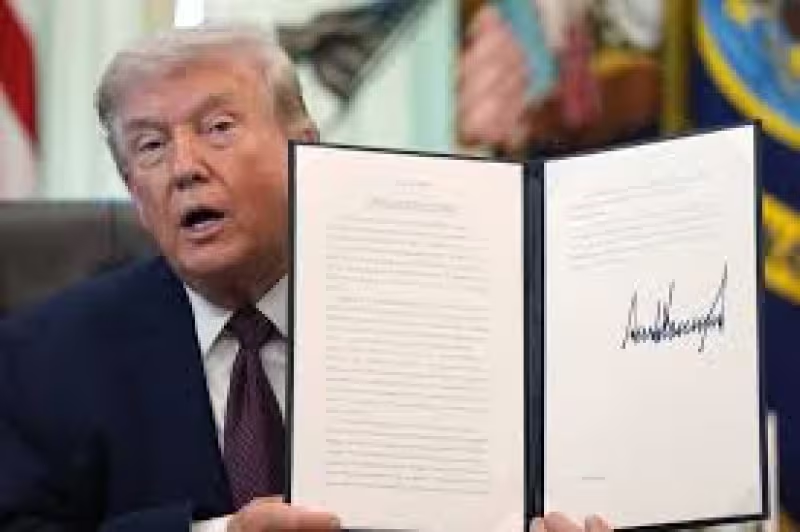
Trump signed the executive order on May 31, setting in motion a proposal to create a federal list of citizens eligible to vote and to ask the U.S. Postal Service to mail ballots only to those approved voters. The order says it would “enhance election integrity” through the U.S. Mail, a phrase that reflects Trump’s long-running assault on mail-in voting.
In a written ruling, Nichols said the plaintiffs “have not suffered any harm at present” because the executive order does not command them to do anything and no agency has yet acted in a way that could injure them. Democrats who filed the challenge, including Senate Minority Leader Chuck Schumer, argued the order was unconstitutional because it intrudes on states’ rights to regulate elections.
The judge had already signaled doubt at a May 14 hearing, when he pressed challengers on “how DHS is going to compile the list” and said, “We don’t know, sitting here today, whether any of these steps are going to take place.” The Department of Homeland Security is supposed to create “state citizenship lists” using federal citizenship and naturalization records, Social Security records and other federal databases, which would then help election officials verify voter rolls and determine who is eligible to vote.
That sequence matters because the legal fight is unfolding before the machinery behind the order has even started to move. Nichols said the challengers may return with a fresh request for an injunction once federal agencies begin implementing the plan, leaving the court open to a new fight if the order starts to affect states or voters.
The ruling also fits a broader pattern. Trump has repeatedly attacked mail-in ballots and pushed the debunked claim that they fueled widespread voter fraud in the 2020 election, even though he himself used mail-in voting to cast a ballot in a March Florida special election for a district that includes Mar-a-Lago. With November’s midterm elections approaching, the order keeps alive a fight over who controls elections and how far the White House can go to shape the vote by mail.
Heather Williams called the move “voter suppression” and “a desperate move by Trump to steal the next election,” saying in a statement that it was “a blatant attempt by the president to undermine states’ control over election administration for his own benefit—which is a direct attack on the Constitution and our democracy.” For now, Nichols has answered the immediate question in Trump’s favor: the order stands, but only because the government has not yet taken the steps that would give the lawsuit something concrete to block.