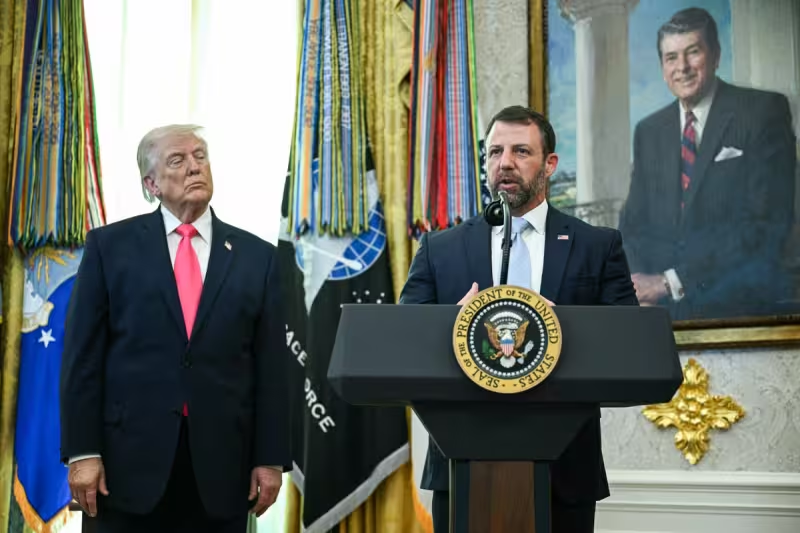
Homeland Security Secretary Markwayne Mullin is two months into the job and already drawing praise from Republican lawmakers who say the department feels different under his leadership. North Carolina Sen. Thom Tillis said there was “no comparison” between Mullin and Kristi Noem, while New York Rep. Andrew Garbarino said the new secretary has been easier to reach and more responsive than his predecessor.
Tillis said, “Markwayne’s making all the right choices,” adding that Mullin is “relying on [border czar Tom] Homan” and is “cutting out the red tape” left behind by Noem and Corey Lewandowski. He said he had seen “a sea of change in the way that they’re being treated, and the respect the career staff are being given,” a signal that the internal mood at the Department of Homeland Security has shifted after a turbulent stretch.
Trump removed Noem from DHS in March after a little over a year in charge, ending a tenure that had become a source of headaches for the White House. The president had grown weary of the “constant chaos” around her, and her stewardship of the illegal immigration crackdown had drawn outrage, especially after she labeled dead protesters “domestic terrorists” and refused to apologize when that claim proved wrong. Mullin was named to replace her, giving the administration a chance to reset one of its most politically sensitive departments.
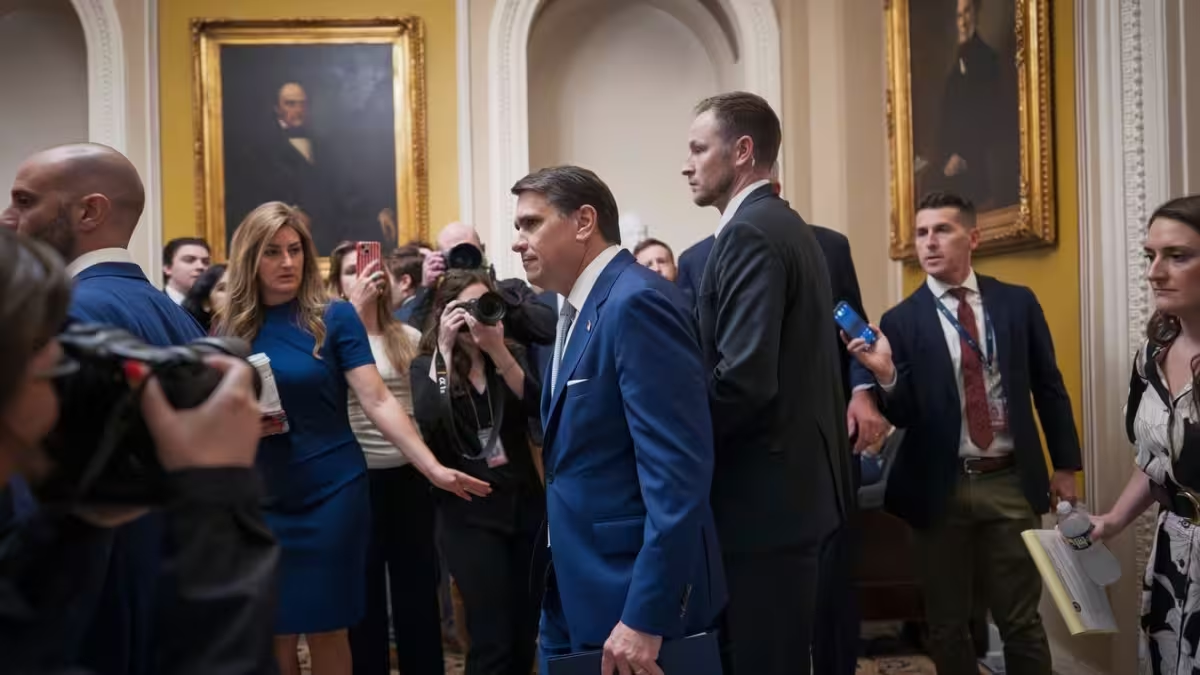
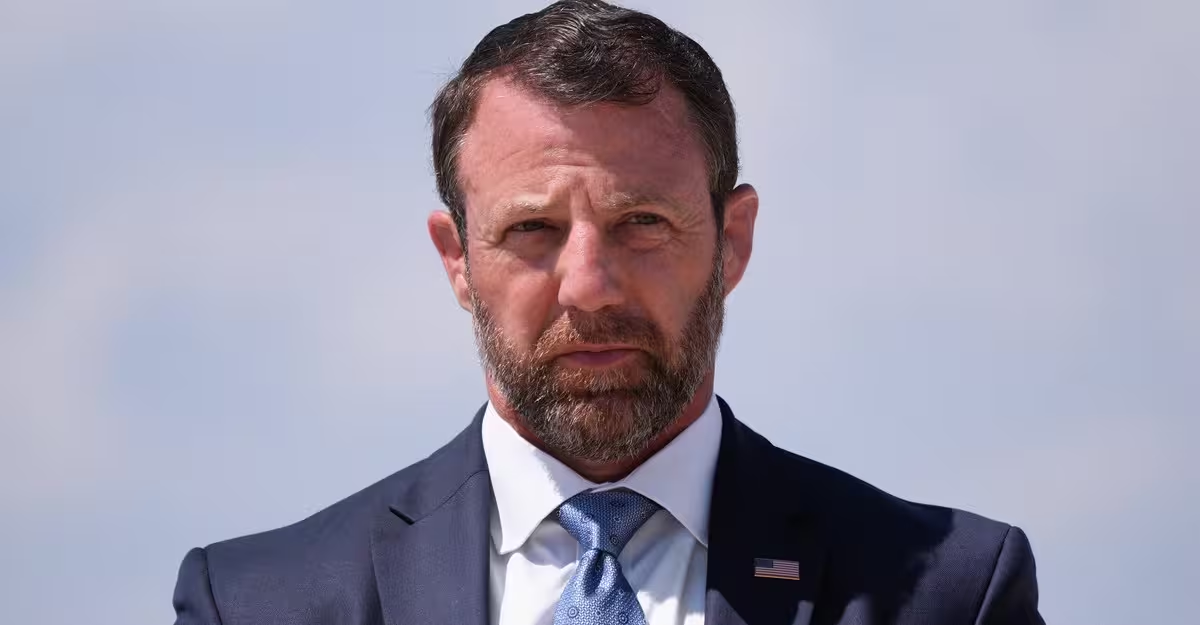
For Republicans on Capitol Hill, that reset is already visible in how Mullin is handling relationships with Congress and the department itself. Garbarino said, “He’s got a good team around him, and the communication since he’s been secretary has been wonderful, very easy to get a hold of, very easy to get response from him and his team.” He added that Mullin “doesn’t want to embarrass the president,” and is working hard to keep lawmakers informed. Tillis said Mullin was reinstating people who had been fired arbitrarily and removing barriers he said had been added under Noem and Lewandowski.
Democrats described a more limited picture. Mississippi Rep. Bennie Thompson said he had had little to do with Mullin and still considered him “an unknown commodity.” Michigan Sen. Gary Peters said he had not yet heard from him. New Mexico Sen. Martin Heinrich said the two “have an open line of communication,” but noted that had not been the case with Noem. The split underscores the early shape of Mullin’s tenure: Republicans say the department is calmer and more orderly, while Democrats are still waiting to see whether that tone turns into a more substantive shift in policy and oversight.
For now, the main measure of Mullin’s first two months is not a sweeping new border plan but the absence of the kind of turmoil that shadowed Noem. That alone has won him credit from allies who say the department is running with less noise, fewer fights and a clearer chain of command. Whether that calm holds — and whether Democrats decide they know enough about him to engage more fully — will define the next phase of his run at DHS.