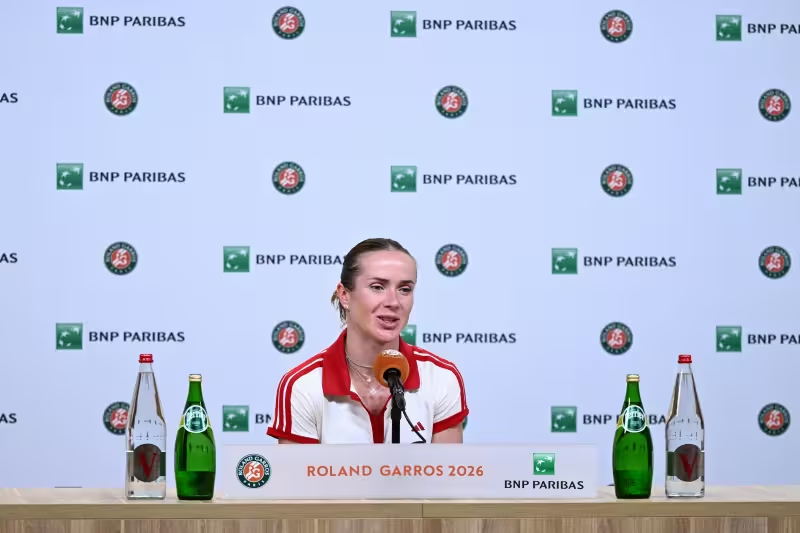
Elina Svitolina arrives at Roland-Garros calmer than she once was, seeded seventh and riding the momentum of a third Rome trophy that saw her beat three top-four seeds, including Elena Rybakina, Iga Swiatek and Coco Gauff in three sets.
The 31-year-old, heading into her 13th campaign in Paris and a five-time Roland-Garros quarterfinalist, was due to open her campaign against Anna Bondar — the same player who beat her in Madrid earlier in May. Svitolina said the draw and the recent loss do not change how she plans to approach the fortnight: "I think it's still early to say, because I need to start the tournament well," she told reporters.
Her Rome run was the weighty proof that her clay form is real: three Rome trophies now sit on her résumé and she did it by taking three-set wins over some of the tour’s biggest names. That sequence, and her age and experience, give credibility to her insistence that the pressure has eased. "But now I'm more calm, I would say, because at that time eight years ago, it was more of, OK, now I need to win Roland-Garros," she said. "Now I'm more calm about it."
Svitolina has been clear about how she plans to temper expectation. "Of course, I feel like I'm in good form, but for me it's all about trying to enjoy this journey and not put too much pressure on myself and not just think too much about what can happen," she said. She lists the practical goals plainly: "It's just all about preparation, mental preparation, and physical preparation." And again: "Now, I’ve always been saying physicality and really [being] mentally fresh are the goals, because when I'm ready to fight, when I'm ready to be physically strong on the court, I can play good tennis."
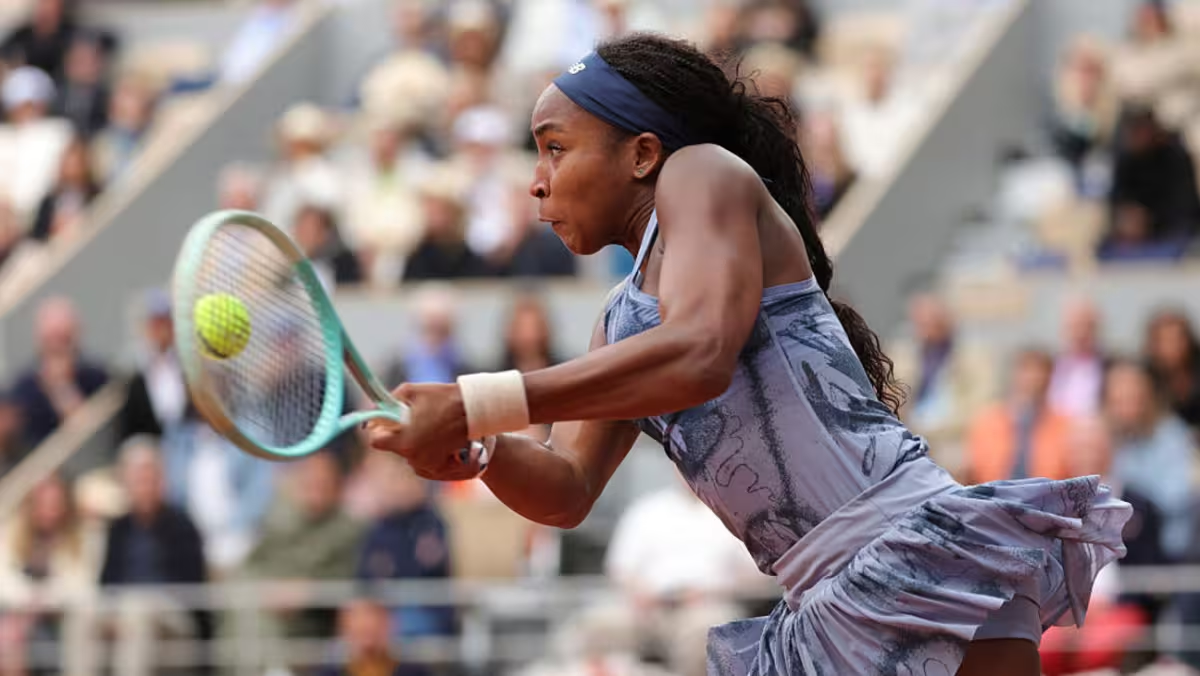
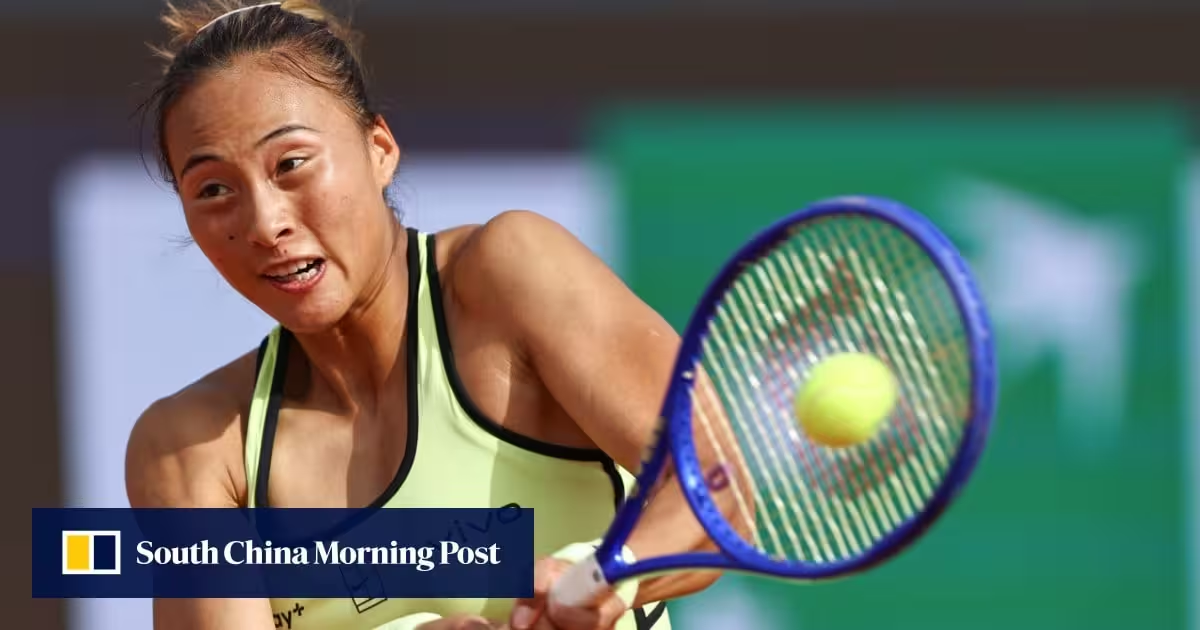
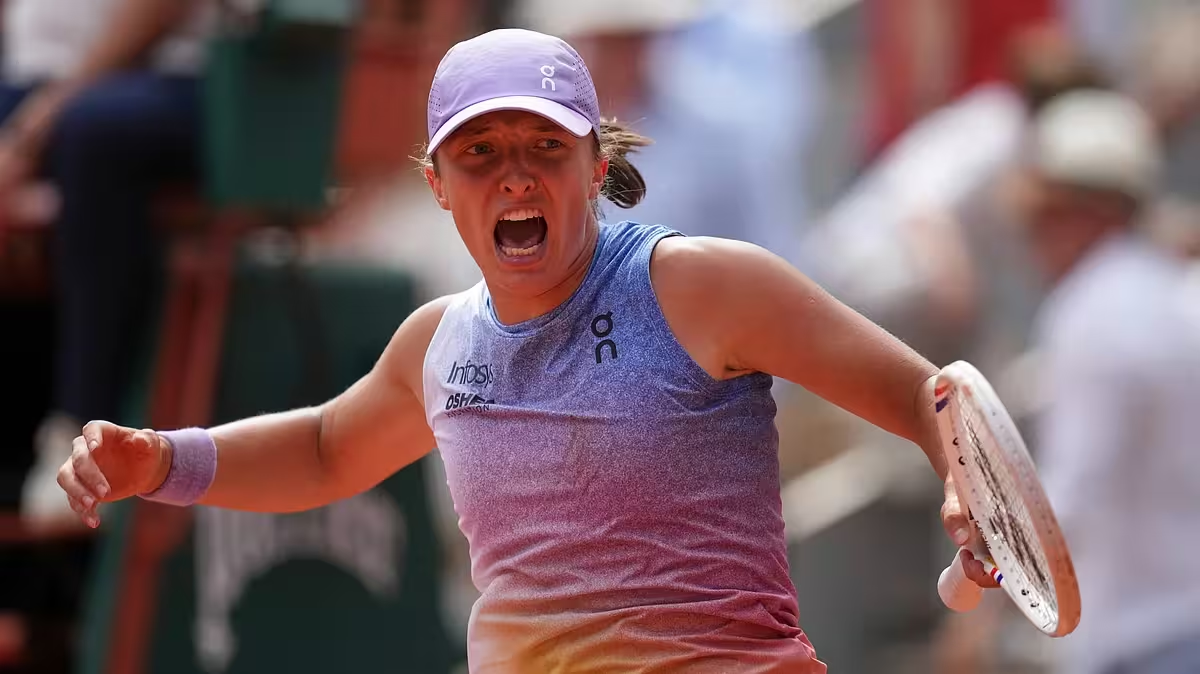
Context matters here. Svitolina has proven herself one of the in-form clay players after Rome, and she arrives in Paris with history: five appearances in the Roland-Garros quarterfinals. The feat she most covets — a first Grand Slam title — has proved elusive, and only five women since 2000 have followed a Rome victory with a Paris title, a statistical bridge between the Italian capital and the red clay of Roland-Garros that underlines how rare the double is.
That rarity sharpens the tension beneath Svitolina’s calm. She speaks of acceptance — "I think now I'm just more fine with the way that my career, it is how it is. It's OK if I don't win a Slam" — and even stakes her happiness on that acceptance: "I think my career, even if I finish tomorrow, it’s OK." Yet form and mindset are not the same thing when a tournament begins. The immediate reminder of vulnerability is the Madrid loss to Bondar, which turns Svitolina's opening match into a smaller, urgent test of whether the Rome surge and a new, looser mentality can survive a re-match.
There is also a human layer to the fortnight: Svitolina will be in Paris to support Gael Monfils in his final Paris run, a reminder that this tournament exists beyond titles and rankings. She returns to the courts with a compact, steady thesis: enjoy the process, be physically prepared and keep mentally fresh. "And if something happens, I will be fine with that, and I'll be still a happy person and will live my life good if I don't win a Slam," she said.
That acceptance is the story going into Roland-Garros. The sharper question left by her Rome hat-trick is not whether she wants a major — she clearly does — but whether the calmer Svitolina can translate three-set wins over the game’s best into a sustained run in Paris, beginning with a tricky opener against a player who recently beat her. If she does, the quiet confidence she keeps talking about will mean more than words; if she falters, the old urgency that once defined her career will feel, for now, like a choice left behind.