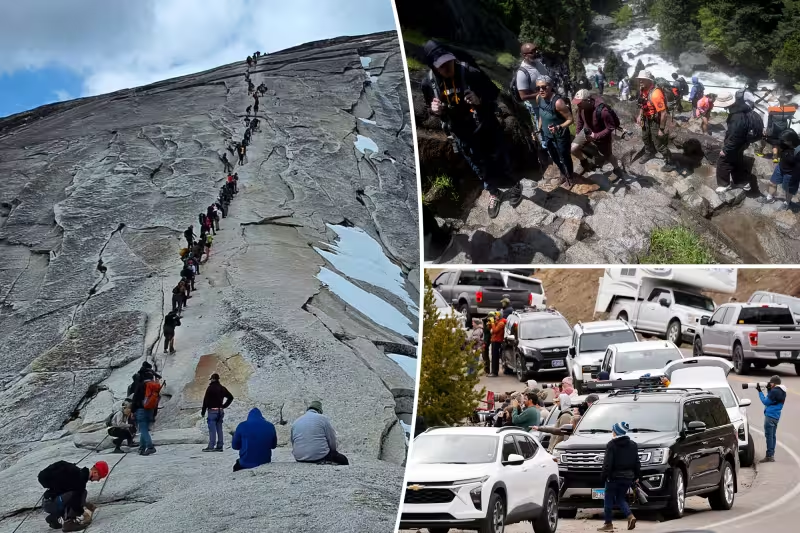
Yosemite National Park will not require entry reservations in 2026, ending a season-wide system just as the park heads into the stretch when most of its visitors arrive. The change comes after the park saw backups of up to 90 minutes at entrance stations over the first weekend of May and parking inside Yosemite Valley fill before noon.
Superintendent Ray McPadden said the park reached the decision after a comprehensive evaluation of traffic patterns, parking availability and visitor use last year. He said a season-wide reservation requirement was not the most effective approach for the coming season, even as the park prepares for the months when congestion is most likely to return.
Yosemite was the 13th-most visited national park last year, with almost 4.3 million visitors, and nearly 75% of those trips came between May and October. That makes the park’s move part of a broader shift at major western parks. Arches, Glacier and Yosemite announced in February that they were either getting rid of or scaling back vehicle reservations for 2026, signaling a retreat from a system many managers had used to control crowding.
The pressure on Yosemite is already showing. In March, visitation rose about 45% from a year earlier and reached its highest March total since 2016. Peak traffic at the park usually begins in spring and stretches into early fall, which means the crowds that appeared in May are likely a preview of what is ahead.
Visitors who arrived after 11 a.m. over the first weekend of May were directed to overflow areas or told to loop around the valley floor until they found a space. Andrew Tyler said he could not imagine what the park would be like in the summertime and added that it was just going to be mobbed. Michael Tyler said it was early in the season and that the park was fine, though he expected a whole other story in a couple of weeks. Lauren Koncz described the day as a little rough.
Park officials say they are not leaving the system to chance. Yosemite is using real-time traffic monitoring to respond quickly to congestion hotspots and is urging visitors to plan trips early, especially on weekends and holidays. It is also steering people toward areas outside Yosemite Valley, including Tuolumne Meadows, Wawona and Hetch Hetchy.
The decision, though, sits on top of an old problem: Yosemite’s infrastructure has not changed to match the no-reservation system. Limited parking capacity and shuttle services remain in place, and John Buckley said crowding on Saturdays and sometimes Fridays and Sundays pushes the park beyond what its parking lots can handle, leading to vehicles squeezed into roadsides and a crammed-together visitor experience. He said McPadden has made it clear that he personally sees it as desirable to have even more visitors to Yosemite rather than managing visitation to reduce vehicles, crowding and congestion. He added that the real test will come from Memorial Day through the peak summer season.
McPadden said the park is committed to visitor access, safety and resource protection, and will keep active traffic management strategies in place to maintain a good visitor experience. He said targeted management offers the flexibility to address the busiest days while preserving open access when the park is operating well within capacity. For travelers planning a Yosemite trip this summer, the message is clear: there will be no reservation line to get in, but the park is still likely to fill up fast when the weather and the calendar turn peak.