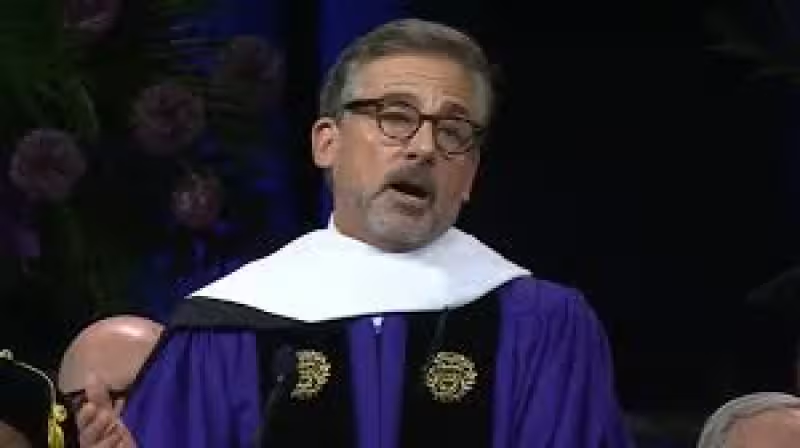
Steve Carell delivered Northwestern University’s 2025 commencement address to the Class of 2025 and opened by calling the invitation "an honor, a privilege, and an enormous pain in the ass."
He announced his subject plainly: "My topic this morning is kindness. So please just shut up and listen." What followed was a 2025 speech that mixed blunt humor, self-deprecation and practical advice — from donating time or money to returning your shopping cart in the parking lot — and an energetic mid-address dance break that punctured any formal expectation for a college commencement.
Carell undercut the usual speaker’s authority repeatedly. "Anything that I say here today is very likely conjecture, falsehoods, or simply made up," he told the graduates, and later: "I am not that smart nor gifted in any way." He even joked about how people perceive him: "I am kind. Or at least that seems to be a common misconception about me." Those lines landed amid concrete counsel: "Remember that kindness isn’t a weakness. It is a very potent strength," he said, and he warned that "Envy is an enemy of kindness."
The weight of the address came from those contradictions. Carell mixed aphorism with anecdote — including an invented early-1800s example about an Illinois farmer named Ezekiel Davis lending a milking cow — then pivoted to tiny, human actions: donate time or money to a worthy cause and "put your shopping cart back when in the parking lot." He urged active listening and mutual respect as daily practices, framing them as habit-sized ways to practice the larger ideal he called kindness.
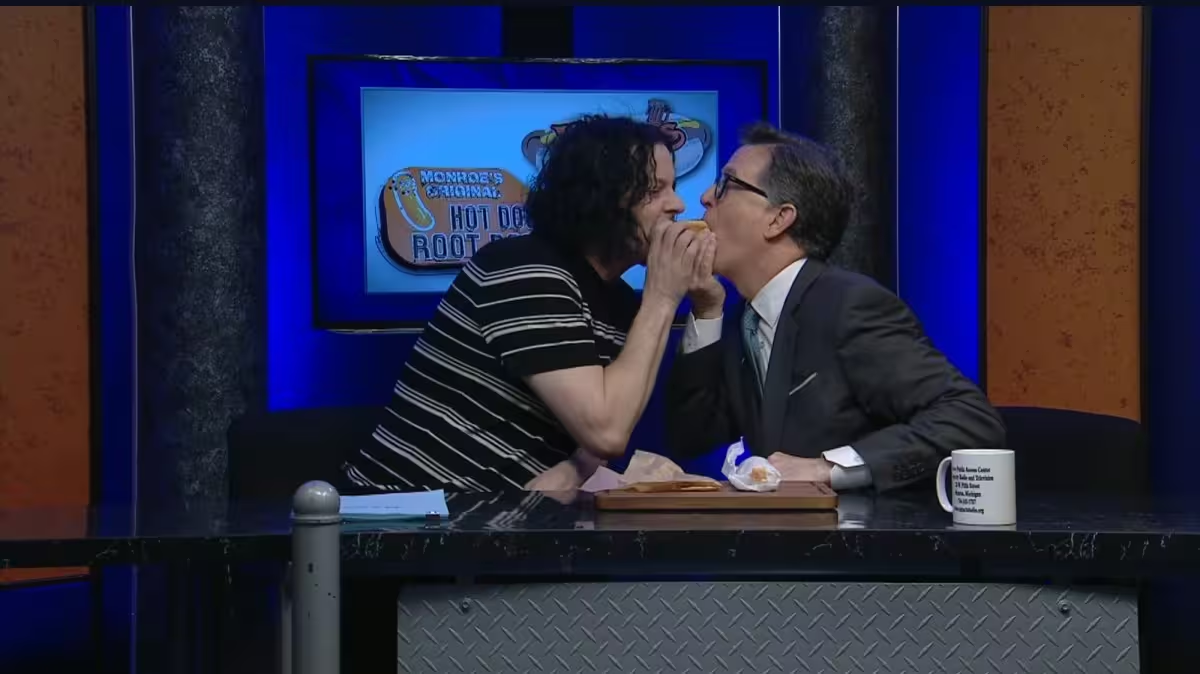
Carell also offered a candid ledger of personal grudges. He said he had held a grudge against an unnamed actress for 18 years after she was extremely mean to him at the Academy Awards, and that when he ran into the same actress again last year she was horrible to him again. Despite the sting, he concluded that in "99% of the cases, grudge-holding is completely a waste of time." He used the example to show how envy and resentment erode the very kindness he was advocating; at one point he name-checked a friend — Stephen Colbert — in illustrating envy’s corrosive effect.
Context arrived after the argument. The speech was the keynote for Northwestern University’s 2025 commencement ceremony. One source says Carell is also starring in a new HBO TV series called Rooster, a detail that helps explain why his words — delivered by a familiar screen presence who simultaneously disavowed expertise — are likely to get picked up again in cultural conversation.
The tension in the room came from the mismatch between the speaker’s disclaimers and the clear prescriptions he offered. Carell insisted frequently that what he was saying might be "conjecture, falsehoods, or simply made up," and that he is not especially learned, yet he spent the hour laying out small, actionable habits: listen, show mutual respect, give, and stop letting envy dictate behavior. He closed the loop by punctuating advice with humor — an energetic dance break mid-address — which made the practical advice feel like something to try rather than doctrine to accept.
For graduates weighing how to move into the next stage of life, the takeaway was straightforward and practical: kindness as strategy. Carell recommended gestures as ordinary as returning a cart and as consequential as donating time, and he framed them as defenses against envy and resentment. His repeated self-demotion — the jokes about not being smart, the claim that people are mistaken about his kindness — worked to strip the speech of sermonizing and leave behind a list of small, testable behaviors.
By the time he stepped away from the podium, the answer to the question his blunt opening posed was clear: yes, Steve Carell asked the Class of 2025 to "please just shut up and listen," and he used that quiet to argue, with equal parts levity and conviction, that ordinary acts of kindness and the discipline of listening are the clearest measures of a life well begun.