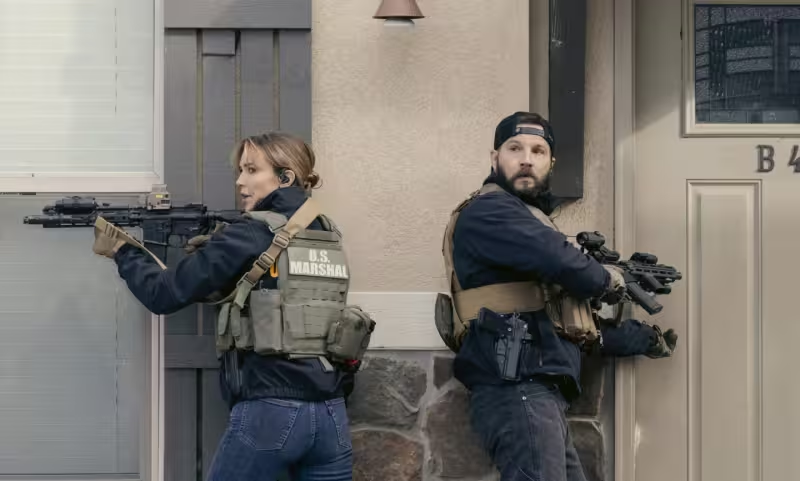
The Marshals season finale, titled "Wolves at the Door," ended on Sunday, May 24 with two members of Kayce Dutton’s unit ambushed and a wealthy rancher exposed as the architect of a wider attack.
Cal and Belle were set upon by gunmen working for the Weaver family in the final moments of the episode, and Tom Weaver was revealed as the mastermind behind attacks on Broken Rock chairman Rainwater. Kayce Dutton refused Weaver’s offer to buy his East Camp ranch and then rode off with Weaver’s daughter Dolly while Tate left with Tom Weaver, unaware of the violence waiting ahead.
The cliffhanger earned its bite from a single, worrying line from the show’s lead actor: Logan Marshall-Green told reporters he could "confirm he is alive, but not necessarily unscathed," a rare on-the-record assurance that Cal survives the finale’s ambush but may not come through it whole.
Context makes the moment heavier. Marshals is a CBS Yellowstone spinoff built around a procedural heartbeat — a new bad guy each week — and the finale pushed that format into serialized danger by setting up Tom Weaver as a season two villain over a land dispute involving East Camp. Deadline reported that the episode also served up another firefight and a romance with "Romeo and Juliet vibes," while Yahoo noted the episode aired on CBS on Sunday, May 24 and that Weaver wants East Camp after Dutton refused to sell.
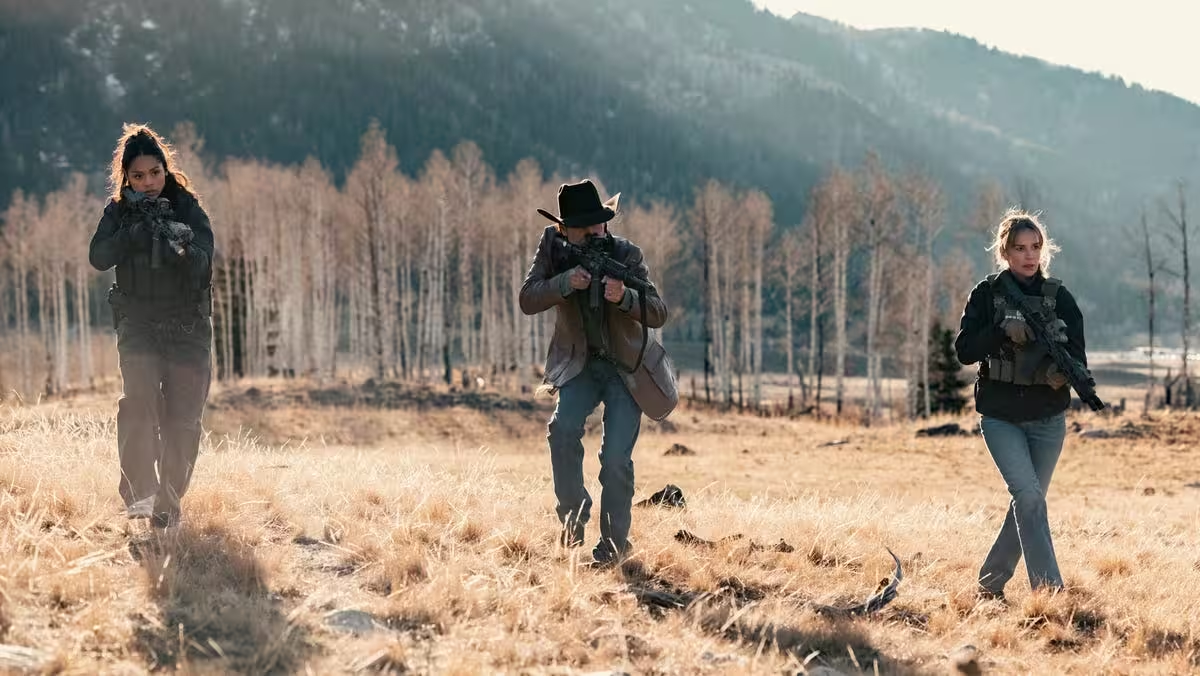
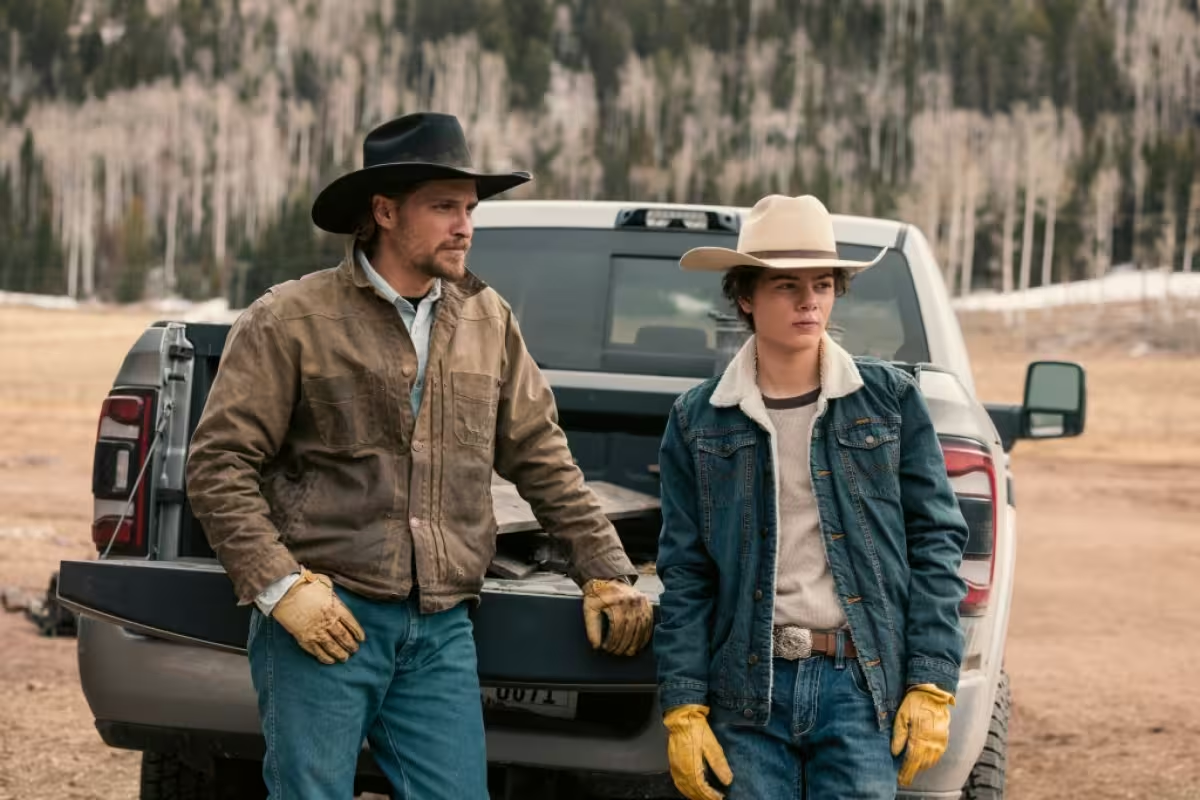

The personal threads complicate the procedural setup. Dolly Weaver’s lines to Kayce — "Who cares about Texas, my heart’s in Montana," — create an immediate entanglement between protector and family that produced one of the episode’s sharpest tensions: Kayce declined to sell, then left with the daughter of the man who ordered the ambush. Deadline also reported that Deputy U.S. Marshal Andrea Cruz could exit and that her will-they-or-won’t-they arc may yet spill into season two, underscoring how the show is blending case-of-the-week elements with ongoing relationship stakes.
Production signals reinforce narrative urgency. Kebbel confirmed she will return: Arielle Kebbel said, "I am a part of season two, yes," and added that "We start filming [season two] with a pick up of that [finale] moment." Marshall-Green, who has read at least the opening scripts, told interviewers there will be immediate updates on Tom in season two’s episode one, a promise that the next season will answer the most pressing questions quickly.
The tension inside the story is simple and deliberate: the show establishes a villain who covets East Camp, then separates Dutton from the people he is meant to protect. Tate heads off with Tom Weaver and does not know the threat ahead; Kayce rides away with Dolly, whose loyalties are now a plot point; Cal and Belle lie ambushed and wounded. That gap — protector split from protectees while the enemy moves — is the engine the writers primed for season two.
There is also a small, quieter note the show acknowledged on finale night: a tribute remembered Lenny Hancock Jr., a moment tied to the episode’s airing and to the program’s community presence on and off screen (see Lenny Hancock Jr remembered in Marshals season finale tribute after his death —
What happens next is already partly on the record: filming has begun and the first episode of season two will pick up the finale’s fallout immediately, with Kebbel returning and Marshall-Green promising close attention to Tom Weaver’s arc in episode one. The clearest, least sentimental conclusion the finale forces is this: Cal survives but is likely injured, Kayce’s refusal to sell has made him the target of an escalation, and season two will open by answering whether that choice cost anyone their life or simply sharpened the battlefield.