
Spirit Airlines crashed into Chapter 11 bankruptcy this month, and the industry’s sharpest observer of who still flies is blunt about what it means: Henry Harteveldt said, "We are seeing far fewer people flying who earn less than $100,000 a year than we were before the COVID pandemic."
The collapse of a 34-year-old budget pioneer lands at the same time legacy carriers are rapidly refitting their product lines to court wealthier customers. Delta Air Lines is expanding its premium cabin offerings, reducing the availability of true economy rump rests and fitting its newest planes with lie-flat business class cabins and premium economy seats that often cost hundreds on top of an economy fare. United Airlines is widening its Polaris premium cabins and testing stripped-down basic business fares. JetBlue will add new domestic premium cabins called Mini Mint. American is increasing its arsenal of premium seats and prioritizing its Flagship Suite business class product at the expense of economy. Southwest plans to open airport lounges and add premium extra legroom seats.
The scale of the market shift is compact but consequential. Research shows the top 10% of earners now account for half of all consumer spending in the U.S., and Harteveldt said, "What airlines are seeing is that those making over $175,000 a year are much more willing, not only to fly, but to trade up to the premium products." That math explains why carriers are betting a lot of metal and cabin space on passengers who will pay for a lie-flat and a better meal.
For decades Spirit pioneered ways to reduce the cost of a ticket, pushing a model that unbundled the fare and sold cheap seats to mass-market travelers. More recently, the big brands beat Spirit and the other discounters at their own game, taking the stripped fares, ancillary fees and ancillary revenue concepts and folding them into far larger networks and loyalty platforms. The result: the pure low-fare niche has thinned even as carriers stack premium options into every new aircraft order.

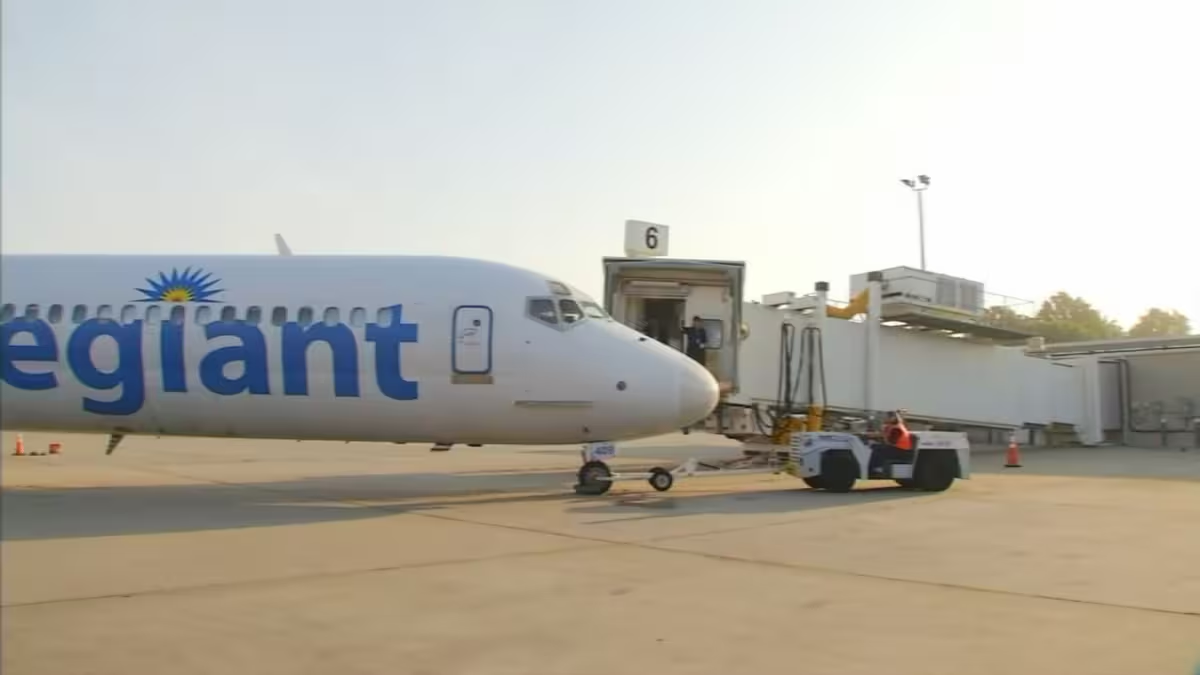
Harteveldt pointed to another, quieter shift: "There are even slightly fewer people who earn between $100,000 and 150,000 flying. Because if people are paying more for rent, if their mortgages are higher, their credit card interest rates are higher, their food costs are higher and their everyday living expenses are higher, they have to manage their budgets far more carefully." That reduction in middle-income flyers tightens the margin for the old discount playbook and pushes airlines to squeeze more revenue per seat from those who can pay.
The context is broader than aviation. Retailers and hotels are likewise tilting toward higher-spending customers, and industry executives increasingly treat economy seats as loss leaders that introduce travelers to a revenue mix of bags, seats, upgrades and loyalty perks. The shift reframes what "affordable travel" looks like: not a broadly available coach seat, but a set of optional extras that only some passengers will buy.
The tension is sharp and visible. Airlines publicly promise mass-market access even as they reduce the number of true, cheap coach experiences. Spirit’s Chapter 11 filing dramatizes that contradiction—the carrier pioneered low fares but was outmaneuvered when the big brands adopted discount tactics and then leveraged premium cabins to capture higher-margin demand. That leaves consumers who rely on low fares with fewer safe bets and drives competition higher up the cabin map.
What happens next should matter to anyone who flies. Expect more of the same: new aircraft filled with premium seats, more segmented fares and fewer genuinely low-cost coach options. The commercial logic is plain and Harteveldt’s final point is straight: "We are seeing far fewer people flying who earn less than $100,000 a year than we were before the COVID pandemic." If carriers continue to design their fleets and fare structures around that reality, the industry will become more profitable but less accessible to lower- and middle-income travelers—and that will be the story passengers have to live with long after the bankruptcy filings are closed.