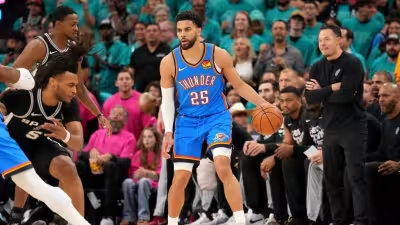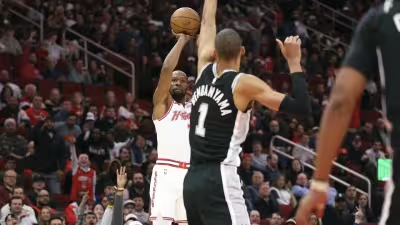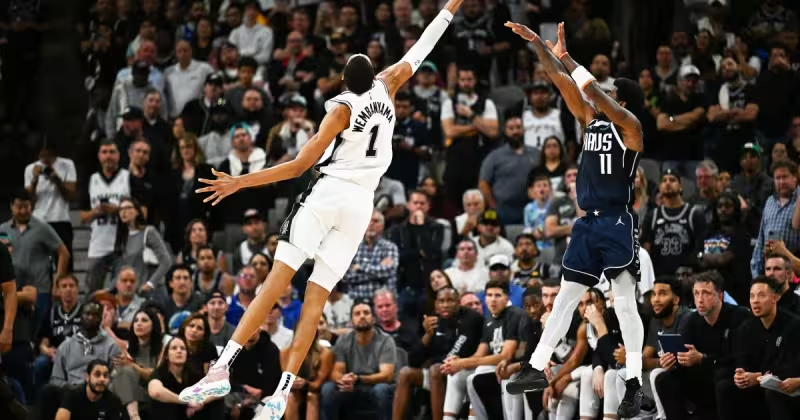
Victor Wembanyama, the 22-year-old 7-foot-4 center with an 8-foot wingspan for the San Antonio Spurs, dominated Game 1 of the Western Conference finals against the Oklahoma City Thunder, scoring 41 points, grabbing 24 rebounds and recording three blocked shots in a contest that ran to double overtime. He capped a historic night by drilling a 3-pointer from a few feet shy of half court to tie the game in the waning seconds of overtime.
The raw numbers underline the moment. Forty-one points and 24 rebounds in a playoff double-overtime game is the stat line that turned heads; the three blocked shots and that floor-length 3 made the performance feel like a blueprint rather than a one-off. Reggie Miller said Wednesday night that the outing put Wembanyama "on the global map," adding, "If you saw that game, the only thing I could compare it to was the first time Michael Jackson moonwalked across the stage at the MTV Awards. The world knew him after that." Shaquille O’Neal weighed in bluntly: "I think [Wembanyama] is the first perfect big man that’s ever been created," and later, "I don’t usually enjoy the way the big men play now, but I accept the way he plays. … It’s perfect."
This moment matters now because the Spurs were set to play Game 3 on Friday night in San Antonio and hoped to take a 2-1 series lead. The timing makes the performance less a footnote and more a turning point: one extraordinary outing can tilt home-court dynamics and the pressure on both teams in an early conference-final swing game.
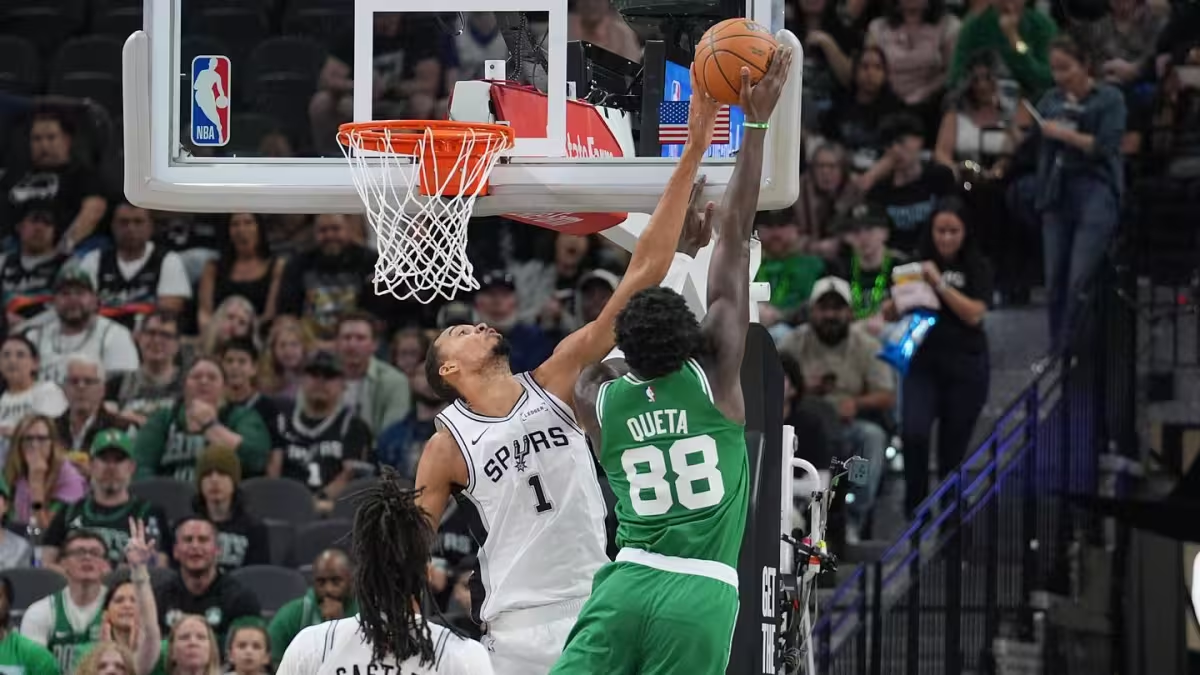
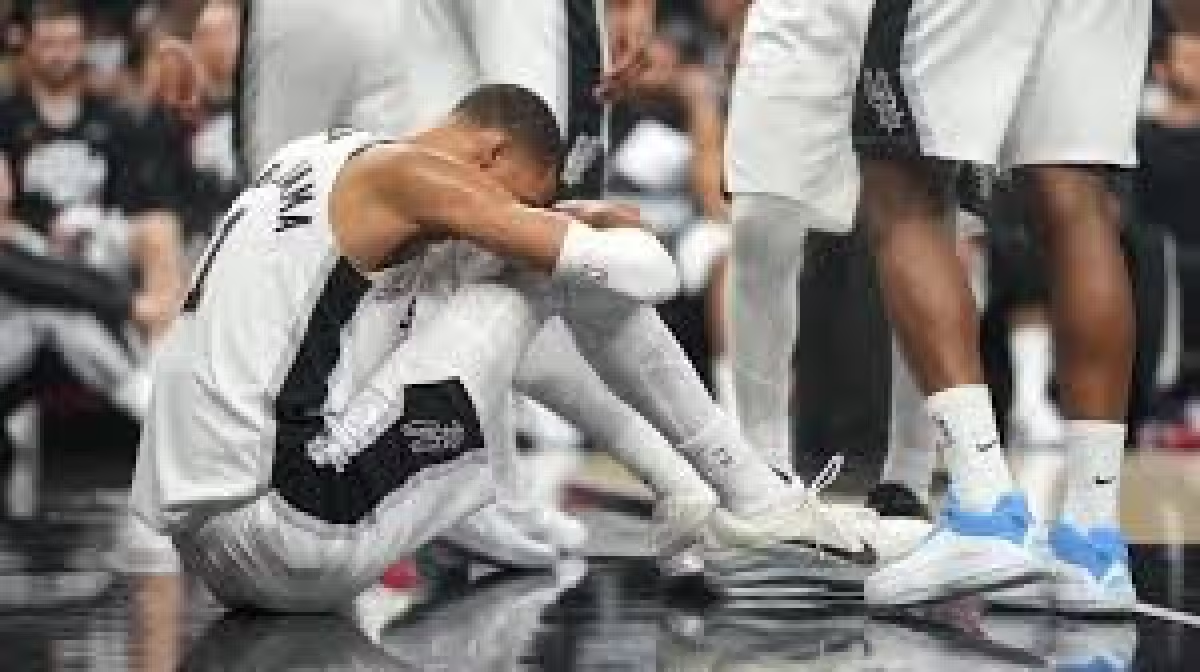
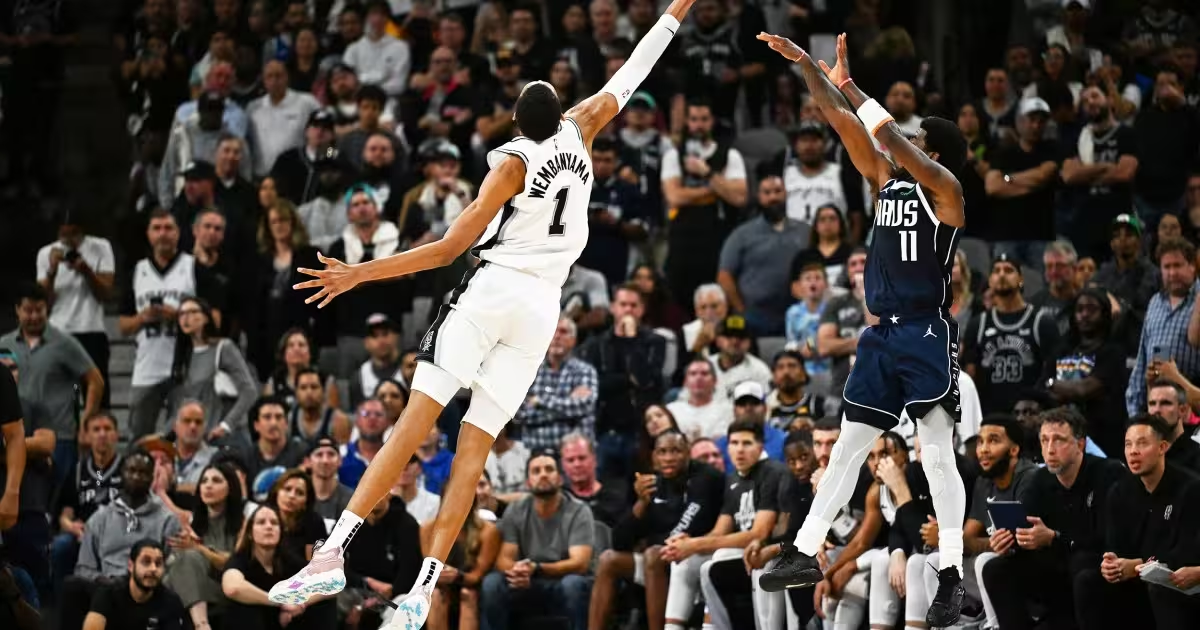
Context helps explain why the reactions ran so large. League and college basketball have rewritten rules before in response to singular big men: George Mikan and Wilt Chamberlain were so dominant in the post in the 1950s and 1960s that the NBA widened the key twice in 14 years, and the NCAA outlawed dunking from 1967 to 1976 because Lew Alcindor altered what teams could defend. Those are not idle historical asides; they are precedents for how the sport adapts when a player reshapes the court.
The tension is simple and immediate. Wembanyama’s skill set — rim protection, floor-stretching 3-point shooting and the length to affect nearly every possession — reads as something the sport has not seen at this scale from a 7-foot-4 player. Yet the Spurs did not convert that single-game brilliance into a settled series lead before Game 3; they still needed to prove it could be sustained across multiple high-stakes matchups. At the same time, the historical memory that rules and strategies change when a big man dominates hangs over the narrative: extraordinary performances invite adaptation from opponents and, occasionally, from the game itself.
The clearest question now is immediate: can Wembanyama and the Spurs translate the double-overtime masterpiece into a repeatable advantage in Game 3 in San Antonio and seize the 2-1 edge they were chasing? If Friday night answers that with another dominant showing, the league conversation about his place in basketball history — which has already drawn Shaquille O’Neal’s superlative and Reggie Miller’s global comparison — will move from hypothetical to consequential in this postseason.