Shota Imanaga watched the calendar tick and the scoreboard get uglier — the Cubs have lost nine of their last 11 games since April 9 and open a three-game series against the Astros at Wrigley Field on Friday hoping to stop the skid.
The weight of that stretch is stark: Chicago has been outscored 59-31, is batting.182 over those 11 games and has scored three runs or fewer in nine of them. The power numbers have not disappeared — the Cubs have outhomered opponents 20-7 during this stretch — but the hits and runs have. The team entered the weekend in second place, 1 1/2 games behind the Brewers after Milwaukee took three straight from Chicago this week.
The Astros arrive wounded and equally fragile. Houston is 4-8 since April 9, batting.186 while averaging 1.9 runs per game in that span. They sit 11 games under.500 and third in that division, and are missing key arms: Hunter Brown and Cristian Javier are out with shoulder strains and Lance McCullers was placed on the injured list this week with shoulder inflammation. Yordan Alvarez put the blunt assessment plainly: "I think right now we’re struggling a little bit," he said.
Context matters here: the Cubs had held first place since the first day of the month before sliding into second. The series at Wrigley comes with wind expected to blow in for all three games, according to the app Wrigley Winds — a detail that could blunt the impact of the Cubs’ recent home run advantage and make both teams rely even more on timely contact.
There is a tension between the power numbers and the run production. Chicago’s 20 homers in the stretch sit against a lineup that is otherwise failing to reach base. Pete Crow-Armstrong and Ian Happ each have just four hits in their last 37 at-bats. Dansby Swanson is 5-for-34, Moises Ballesteros 1-for-18, and Matt Shaw is hitless in 14 at-bats in limited play. The one exception on offense the last 11 games has been an opposing-player note: Alex Bregman is batting.286 in this span with 12 hits in the Cubs' last 11 games, a reminder that not every run drought reflects only the home team’s failures.
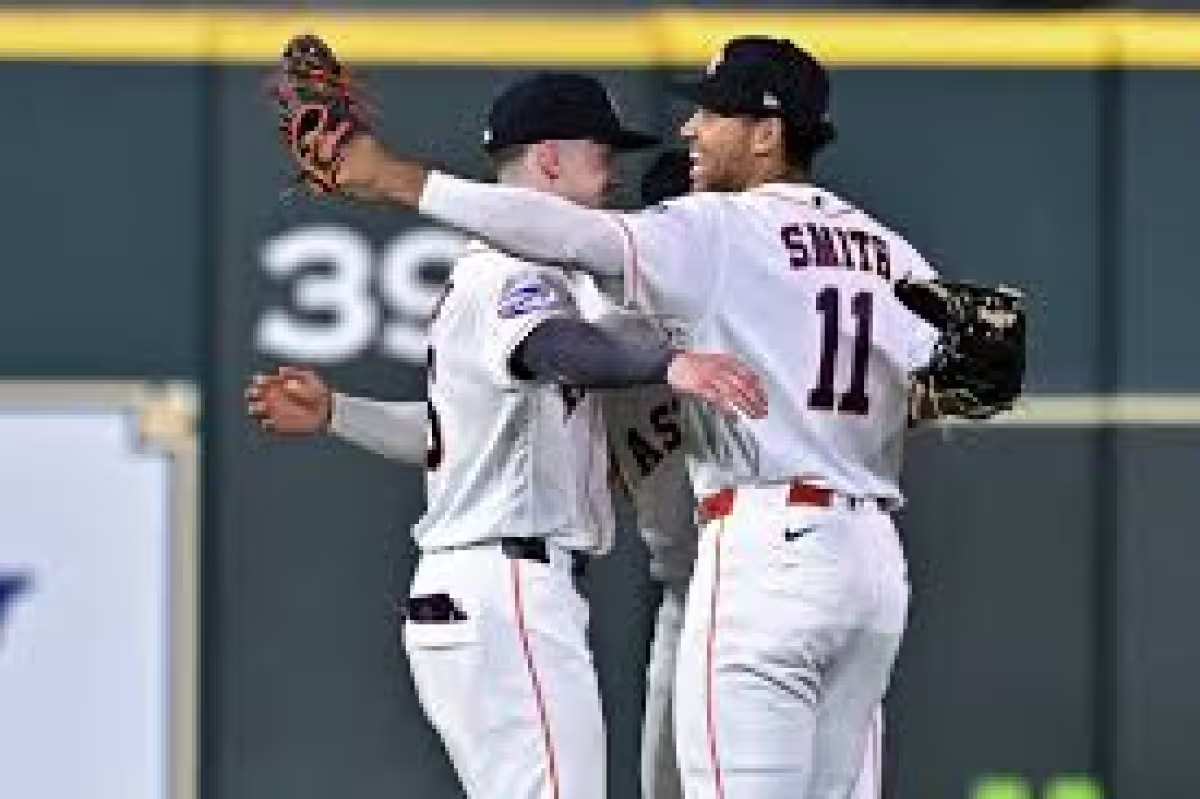
On the mound the Cubs have been uneven. Imanaga is the only starter in the last two full turns through the rotation to throw more than five innings in an outing. He lasted seven innings and allowed two runs in a 4-1 loss to the Braves, but on Monday night he was knocked around for 4 1/3 innings and eight runs in a 9-3 loss to the Brewers. Edward Cabrera, meanwhile, was lifted after one pitch in the fourth inning on Wednesday night because of a blister on the middle finger of his pitching hand; the Cubs expect to know by Friday whether he can make his next start.
Chicago’s immediate plan is laid out: Jameson Taillon is scheduled to face the Astros on Friday, Colin Rea is penciled for Saturday, and Ben Brown would take the mound Sunday if Imanaga gets a sixth day of rest. The rotation decisions matter because the Cubs cannot rely on bullpen stopgaps while their offense is sputtering.
Houston’s depth issues complicate matters for them, too. The loss of Brown, Javier and McCullers has thinned a staff already trying to right itself; the Astros have been outscored 52-23 during their slump. Rookie Spencer Arrighetti, the club’s 2024 rookie of the year, missed five months last season after fracturing a thumb when hit by a batted ball in batting practice — a reminder of how small margins have shaped both clubs’ current rosters.
Craig Counsell, asked about the Cubs during a recent conversation, put it purely: "We’re in a funk right now, and it’s up to us to change it." Friday’s opener between the astros - cubs is the clearest deadline yet. The wind, the injuries and the cold streaks in the lineup make these three games feel less like a weekend set and more like a playoff series for momentum.
If the Cubs cannot convert even a fraction of the homers into consistent run production, they will hand ground to the Brewers and further test a pitching staff thin on innings. The simplest, most consequential fact by Sunday will be whether Chicago can stop losing; everything else — rotation, lineups and workload — can be adjusted, but not the ground lost in the standings.