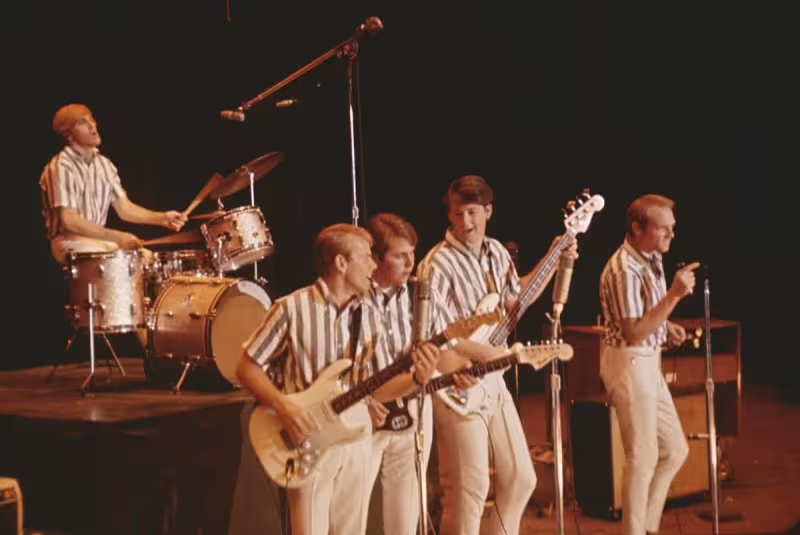
The San Diego Zoo and The Beach Boys have released a 35-minute video that pairs animal footage with the full run of Pet Sounds, giving fans a new way to experience the 1966 album as it marks its 60th anniversary. The video is available on the official YouTube channels for the band and the zoo.
The project links one of the most influential albums of the rock era to the place that helped shape its look and feel. The band said it wanted to celebrate the San Diego Zoo and the imagery that creatively fueled the record, whose cover featured animals and whose final track, “Caroline, No,” ends with dogs barking.
For Al Jardine, the album did not feel like a landmark when Brian Wilson first played the new material to him after the group returned from Japan. Jardine said Wilson was eager for the band to hear it, adding that the music was more thoughtful, romantic and melancholy than what they had made before. At the time, the change was not obvious from the inside. “It was just another record,” Jardine said of the sessions that would later be treated as a turning point.
The release also arrives alongside new material from the Pet Sounds sessions as part of the anniversary celebration, a reminder of how much of the album was built in the studio while the Beach Boys were split up from their frontman. By 1965, Brian Wilson had retired from playing live and was laying down the instrumental tracks while the rest of the band toured, a process that gave him unusual control over the record’s sound.
That control is part of why the album still carries such force. Mike Love recalled that Wilson pushed the group hard in the studio, making one section of “Wouldn’t It Be Nice” happen more than 25 times and earning two nicknames along the way: “Dog Ears” and “the Stalin of the studio.” Love said the sessions were exacting, but added that it all worked out for the good.
Bruce Johnston, one of the three surviving Beach Boys from that era’s lineup along with Jardine and Love, said he knew he was being included in something special. “I just shut up and didn’t talk and did whatever Brian told me to do,” Johnston said, adding that he was lucky to be part of what he called the album of his life.
The zoo video turns that history into a fresh viewing experience without changing the album itself. The weight of the anniversary is not that Pet Sounds has become important again, but that it never stopped being important and can still find a new audience through an image as simple as animals moving across a screen while the record plays in full.
For a project built around a record that has spent six decades being studied, praised and unpacked, the answer is already on the screen: the San Diego Zoo release is not a retread. It is a celebration, and for anyone who wants to hear Pet Sounds with a visual counterpart that matches its origin story, it is the one that matters now.