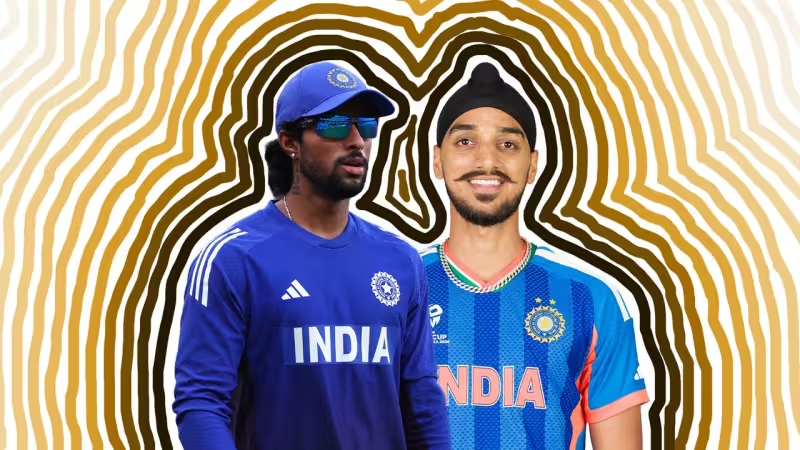
Last week a Snapchat video of Arshdeep Singh joking with teammate Tilak Varma went viral after Singh twice used colour-based jibes — calling Varma “andhera” and gesturing toward a fairer teammate as “Punjab da noor” — and making a passing joke about sunscreen.
The clip spread quickly across social media and spawned Reddit threads within hours, drawing two clear reactions: some viewers shrugged it off as harmless locker-room humour, while others called it colourism disguised as banter. Criticism followed soon after the video circulated, and the short exchange became a wider conversation about what such jokes mean off the field.
The starkest evidence that the moment mattered was the scale and speed of online response: the video’s spread on multiple platforms and the immediate Reddit commentary turned a brief, private-seeming exchange into a public debate about language and prejudice among athletes.
GQ India framed the clip as part of a broader problem, saying colourism has long survived in India through nicknames, punchlines and everyday banter that circulate freely through schools, locker rooms, gym groups and family gatherings. The magazine argues male spaces often use ridicule as a form of affection and intimacy, and that Indian society has normalised colourism to the point many people struggle to recognize it in casual conversation.
That context helps explain why reactions split. For those who treated the clip as routine ribbing, the gestures and words were part of an established locker-room grammar — crude shorthand among teammates that indicates familiarity. For critics, the same shorthand is embedded in a cultural history that assigns value and insult along skin tones, making a joke a reinforcement of prejudice even when no malice is intended.
The tension at the centre of the conversation is simple: is a noisy, public reaction proportional to a private, offhand exchange between players who have a working relationship, or does the public moment reveal a deeper, normalised bias that deserves pushback? The clip does not answer that; it only exposes how easily the two readings can coexist.
Both interpretations draw from the same facts: the words spoken on camera — “andhera” and “Punjab da noor” — and a sunscreen quip that framed the moment as joke rather than attack. What changed when the clip left the locker room was context. Once online, the exchange no longer lived as interpersonal humour but as an example in a national conversation about how shade and colour are used in everyday talk.
That shift explains why some called the footage harmless and others called it colourism. The footage did not introduce new language to the culture; it illuminated a familiar pattern that many now find harder to dismiss simply because the exchange was recorded and shared. The public response forced viewers to choose whether to label the moment as private banter or as one more instance of a longstanding social problem.
The consequence is clear: the clip has reopened an argument about where the line sits between camaraderie and normalised prejudice. It has not — from the facts available — produced institutional responses or sanctions, nor does it settle whether humour in male spaces should be read as proof of intimacy or proof of tolerance for ridicule tied to skin colour.
The conclusion the facts support is this: the video’s viral life reversed the usual invisibility of such jokes. Whether dismissed as locker-room banter or called out as colourism, the exchange now functions as evidence that colour-based teasing remains a live fault line in Indian public life — and that recording and sharing private moments changes how that fault line is judged.