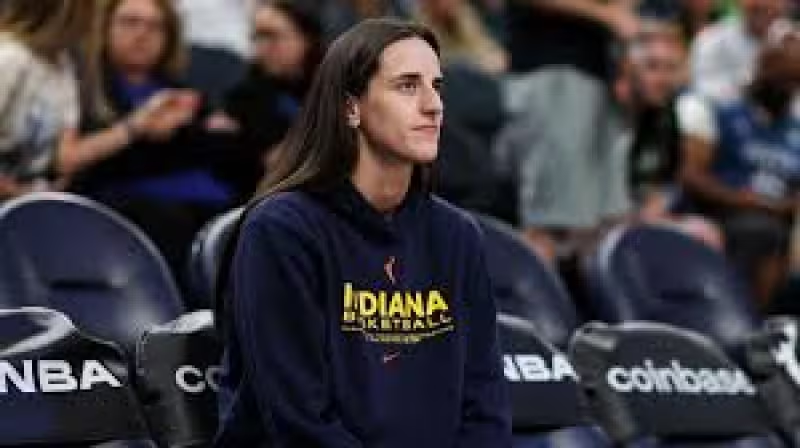
The WNBA warned the Indiana Fever on Thursday after the team failed to report Caitlin Clark’s injury status before she was declared a late scratch two hours before tip-off Wednesday against the Portland Fire, the league said.
Caitlin Clark — who told reporters after the Fever’s opening loss that her back "gets out of line pretty quickly" — has been the player at the center of the warning.
The league’s notice followed the Fever’s disclosure of Clark’s injury two hours before Wednesday’s game; she had not been on the team’s injury report a day prior when she didn’t practice. The WNBA requires teams to list injured players on a report by 5 p.m. the night before the game is played, and it expects teams to update the report if a player’s status changes overnight or early in the day. The league said that failing to meet those standards was what sparked its warning.
This matters now because Clark remains the Fever’s central on-court figure and because the timing of the disclosure broke the routine transparency the league’s rules are meant to protect. Clark is listed as probable for the Fever’s home game against the Golden State Valkyries, a designation that will be watched closely after the late scratch in Portland.
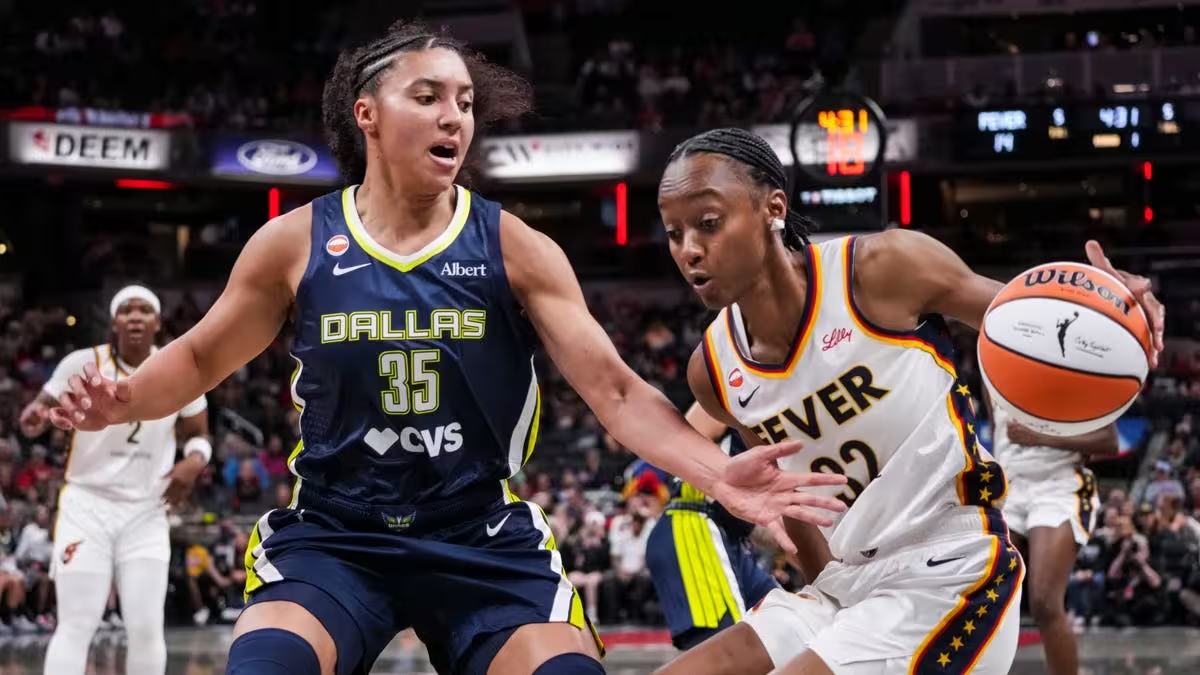


On the court, Clark has been producing at a high level when available — she is averaging 24.3 points, 9 assists and 5 rebounds through the first four games she has played in this season — and she delivered 21 points, 10 assists and seven rebounds in the matchup with the Seattle Storm. That performance history is why any sudden change to her availability carries immediate competitive and league-governance importance.
The Fever’s handling of the timeline creates an awkward gap between league rules and the team’s public reporting. Clark was not listed on Wednesday’s injury report a day after she missed practice, then the team disclosed an injury two hours before tip. The league requires a 5 p.m. listing the night before, with updates if status changes; the late announcement against the Portland Fire sits at odds with that procedure and prompted the WNBA’s formal warning.
Clark’s availability is additionally framed by her recent medical history. Her 2025 season was marred by multiple injuries: she suffered one injury before the All-Star break and another while she was rehabbing. Those setbacks — and her own description of a recurring back issue — have made each update on her status more consequential than it otherwise might be for any single player.
Clark’s own words underline the immediate stakes. After the late scratch in Portland she said she "had every intention of playing," a line that casts the roster paperwork and the on-court decision in different lights. The discord between a player saying she intended to play and the team issuing a last-minute injury disclosure is the precise kind of friction the league’s reporting rules aim to prevent.
The next act will be simple and sharp: Clark is listed as probable for the Fever’s home game against the Golden State Valkyries, and the Fever must follow the league’s reporting requirements leading up to that contest. How the team documents any change in her status before the 5 p.m. deadline — or whether Clark ultimately takes the floor — will determine whether this warning remains a one-off notice or the start of heightened scrutiny into the Fever’s compliance with league protocols.