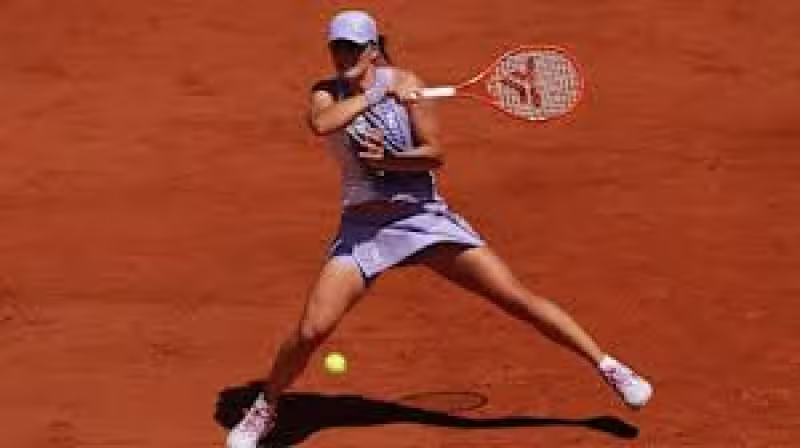
Second-round singles action begins Wednesday in Paris as the French Open schedule turns to Day 4, and the draw delivers high-profile rematches and fresh tests: Iga Swiatek meets Sara Bejlek at 12:00pm on Court Philippe-Chatrier while Novak Djokovic, Elena Rybakina and Alexander Zverev are also slated to play.
Swiatek arrives having dropped just three games in her opening-round match on Sunday and with a record that matters here — she has advanced to the second week of the tournament in all seven of her prior Roland Garros appearances. Her opponent, Sara Bejlek, comes off a confidence-boosting win over Sloane Stephens on Sunday; that victory was Bejlek’s second win at a Major.
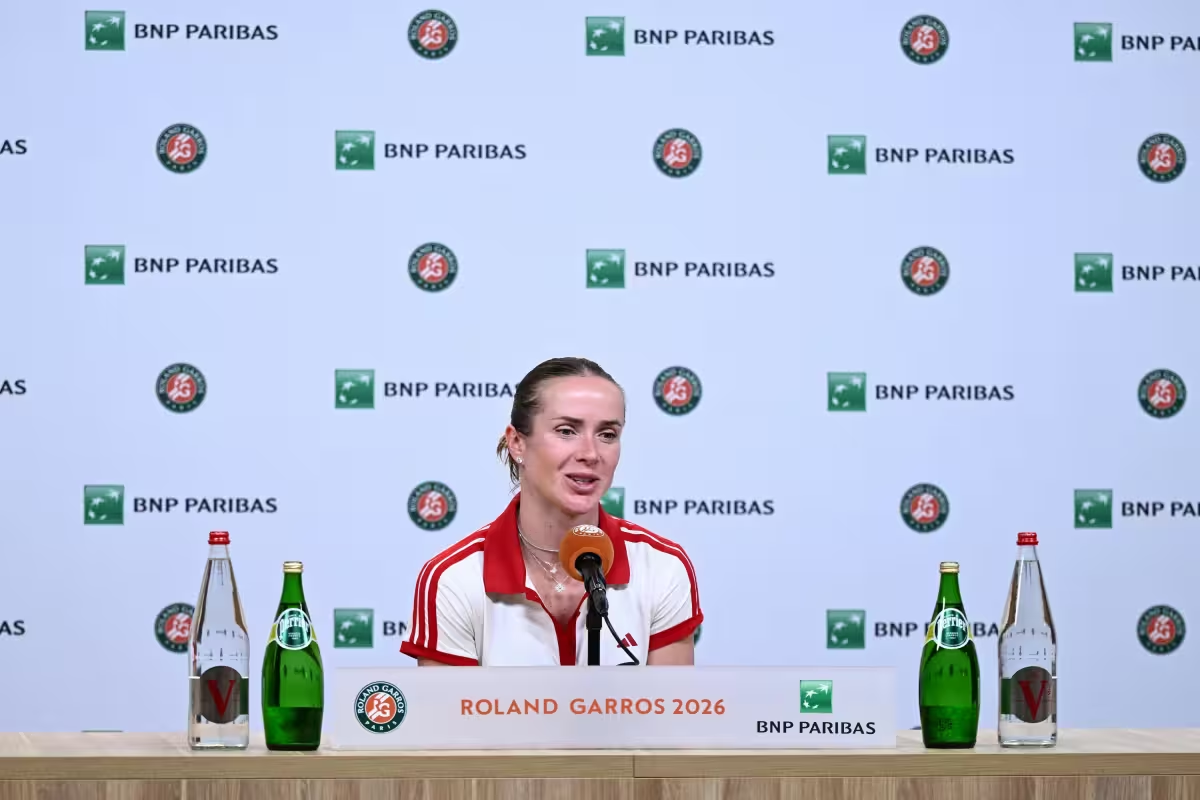
The schedule lists Yuliia Starodubtseva as the second match on Court Suzanne-Lenglen against Elena Rybakina, who herself conceded just four games in the first round. On Court Philippe-Chatrier, Valentin Royer is set to play Novak Djokovic third, and Tomas Machac is scheduled to meet Alexander Zverev not before 8:15pm on the same court. Across the grounds, Joao Fonseca and Dino Prizmic are billed third on Court 14, and James Duckworth is slotted third on Court 7 against Rafael Jodar.
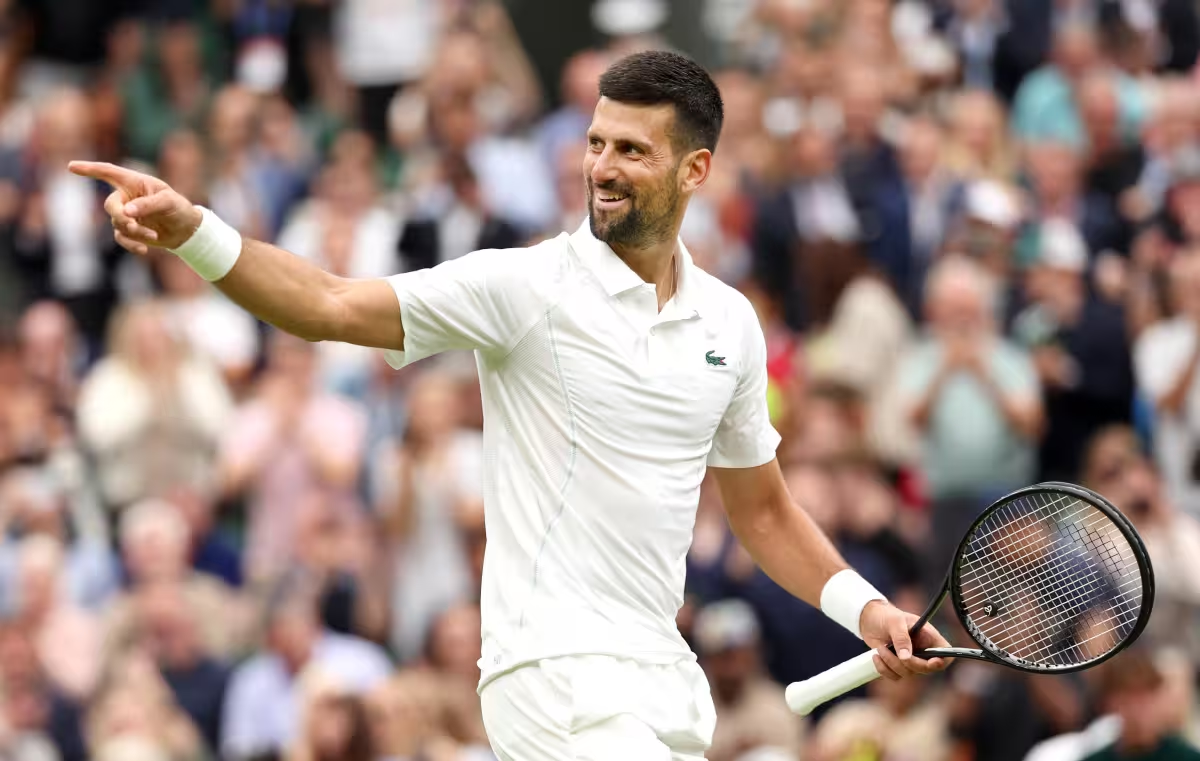
The opening round supplied clear numbers that shape the day. Rybakina and Starodubtseva each lost only four games in their Sunday matches. Jodar’s opener was emphatic — he won while losing only five games. Fonseca beat France’s Luka Pavlovic in straight sets on Sunday. Duckworth advanced after a mid-match retirement by Gabriel Diallo; before that match Duckworth was 1-8 lifetime at Roland Garros. On Sunday night Novak Djokovic came back from a set down to beat Giovanni Mpetshi Perricard — his first match win in two-and-a-half months.
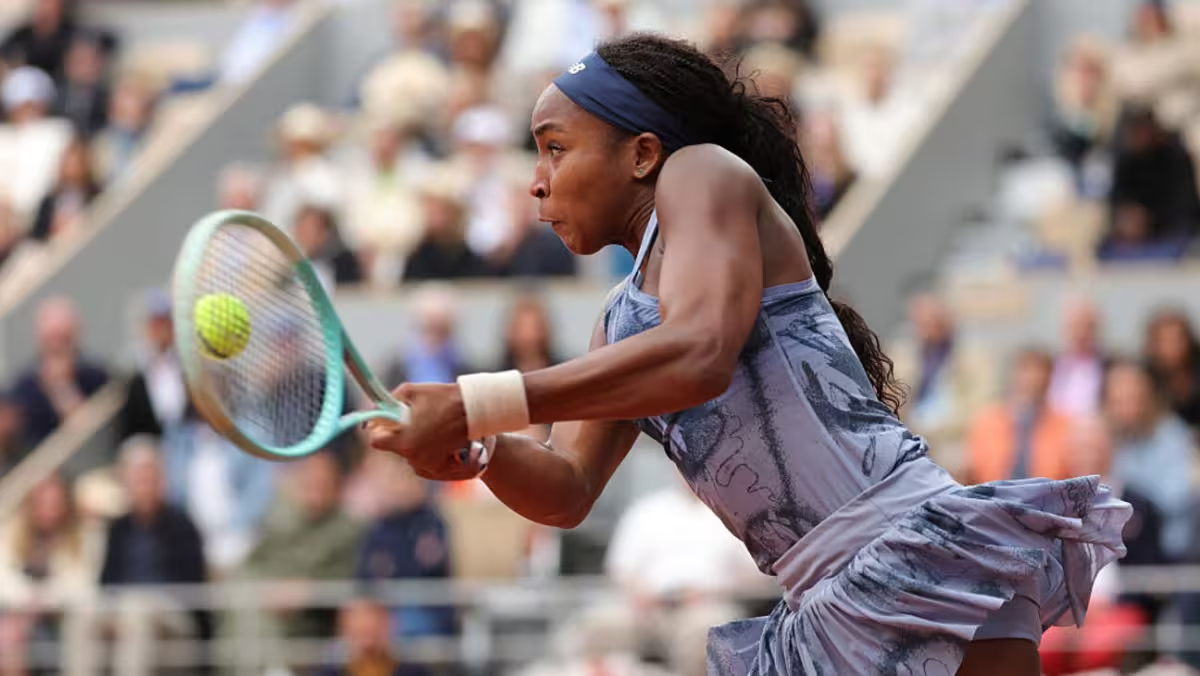
Some matchups carry backstories that lift them beyond routine second-round scheduling. Prizmic, who meets Joao Fonseca on Court 14, has put together an eye-catching season on clay: he has won 26 matches this year at all levels, 19 of them on clay, and already notched upsets of Ben Shelton in Madrid and Novak Djokovic in Rome. Zverev and Machac, who play a late match on Philippe-Chatrier, both come off straight-sets wins in the first round and met before — Zverev defeated Machac 6-3, 7-5 at the Paris Olympics two years ago.
The context sharpens what is at stake. Swiatek is a four-time champion here, and her consistency at Roland Garros is a defining fact: seven prior appearances, seven trips into the second week. Djokovic’s comeback win on Sunday was his first in two-and-a-half months and came in what is only his third event since reaching the Australian Open final in January. Prizmic’s clay form this year — including wins over high-profile opponents — frames his match with Fonseca as more than a routine second-round encounter.
Tension threads through the schedule. Bejlek’s recent upset of Stephens tests the depth of Swiatek’s early dominance: a player who lost three games in an opener is rarely pushed, but Bejlek is not a simple opening-round opponent. Djokovic’s match against Valentin Royer looks like a mismatch on paper but contains a wrinkle: Royer is 0-2 in the second round of Majors, while Djokovic has only just rediscovered match wins; questions about momentum and recovery make the pairing less automatic than it reads. And Prizmic’s résumé this season raises the possibility that another supposed underdog could steer a surprise on a smaller court.
When the sun sets over Philippe-Chatrier Wednesday, the clearest conclusion the facts support is this: Swiatek’s form and her spotless record of reaching the second week at Roland Garros make her the most likely candidate among the marquee names to advance. The rest of Day 4 will instead answer whether Djokovic’s halted run holds up, whether Prizmic’s clay run continues to turn heads, and whether a mid-day match on Chatrier can produce the kind of upset that reshapes the draw.