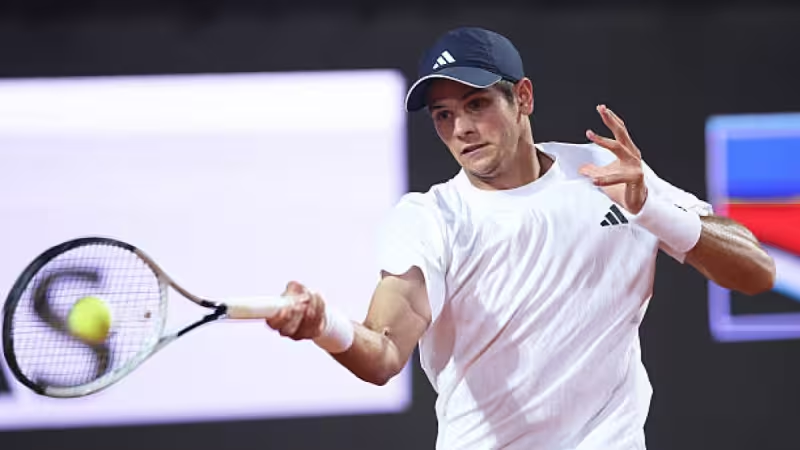
Rafael Jódar, 19, produced a one-sided opening on court 12 at Roland Garros, taking the first set 6-0 against Aleksandar Kovacevic and serving to close the second set with another 6-0 scoreline when Kovacevic left for the bathroom at the end of the second set.
The match was being played on court 12, a venue without a hawk-eye system, and the early stretch of dominance was unmistakable: Jódar blanked Kovacevic in the first set and stood a game from a second 'rosco' when play paused. Voices at the court punctuated the moment — "¡Pues buen saque y volea a placer para certificar el primer 'rosco' de su carrera en un Grand Slam!" and "¡Vaya defensa y vaya derecha para cerrar el juego y disponerse a sacar para cerrar la segunda manga con un 'rosco'!" — underscoring how unusual the sequence looked.
What makes the on-court performance stand out off it is Jódar's status. Punto de Break noted that rafael jodar began Roland Garros 2026 as a seeded player, a rare distinction: according to Punto de Break he is only the tenth player since the start of the Open Era to be seeded in one of his first two Grand Slam tournaments. Punto de Break recorded that only nine players had previously achieved that, and highlighted Mariano Navone's debut as a seeded player at Roland Garros 2024 as the most recent comparable case.
The numbers underline why the early games matter. A 6-0 set at a Grand Slam is a clear signal of control; being seeded in essentially the opening stages of a major amplifies expectations. Punto de Break also framed the wider seeding context: Grand Slam tournaments have used 32 seeds since 2001 and used 16 seeds before that, a change that shifted how quickly newcomers can enter seeded positions.
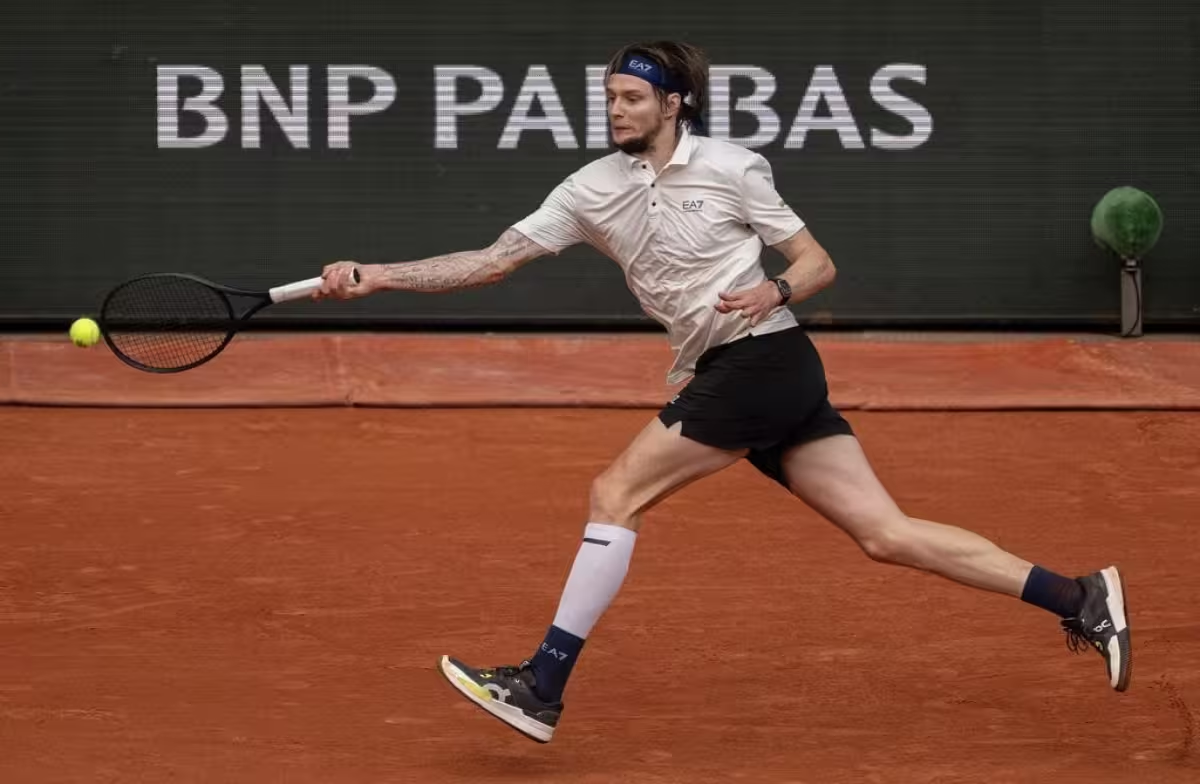
The match carries a tension that the scoreboard alone does not resolve. Court 12 lacks hawk-eye, removing the technological safety net for close calls in a match where one player was sweeping games. And Kovacevic's departure to the bathroom at the end of the second set — a fact reported from the court — interrupted the flow and left a small ambiguity about how the match would resume under those conditions. Those two facts together create a gap between the clean-looking scoreline and the practicalities of finishing a match on a show court without electronic review.
Observers at the venue did not hide their reaction: "Esto no es normal. Nos piden prudencia con Rafa Jódar y lo entendemos pero lo que juega este chaval de 19 años es de ser un elegido. Veremos hasta donde llega este primer año..." The comment captured both excitement and the caution that often follows rapid early success: extraordinary openings invite scrutiny as much as praise.
For tournament watchers and for the draw itself, the immediate follow-up is straightforward: can Jódar sustain that level beyond a commanding display on court 12? The short-term answer will come in the next matches; the larger implication, signalled by Punto de Break's historical note, is that being seeded so early in a Grand Slam career puts him into a small club of young players who have altered expectations from their first appearances.
Coverage of how the seedings shifted and the ripple effects on the draw included earlier reporting — James Duckworth Mentioned as Rafael Jodar Shakes Up French Open Seedings — — which tracked one strand of the tournament's early story lines.
At 19 and arriving at Roland Garros as a seeded player after a first-set 'rosco', Rafael Jódar has forced a simple, sharp question on the tournament: how far can he go?