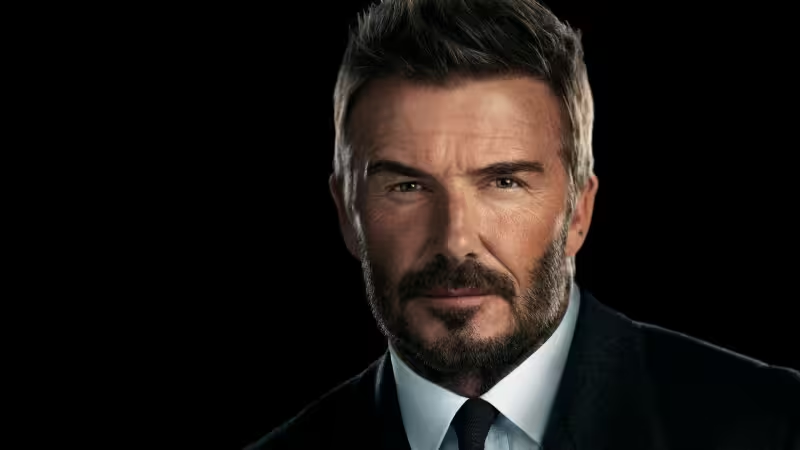
Sir David Beckham has become the United Kingdom’s first billionaire sportsman, the Sunday Times Rich List estimating the collective wealth of Sir David and Lady Beckham at £1.2bn.
Beckham, who retired from professional soccer in 2013 at age 38, has said his instincts guided many of those moves: "My gut was saying ‘this is the right thing,’" he said, adding later, "and I always go on my gut." The figure lands after a year in which Beckham raked in $100 million from endorsements and other business activities, and follows a career that earned him more than a half-billion dollars on and off the field before retirement.
The numbers behind the headline are varied: Beckham retains a 26% stake in Inter Miami and launched the IM8 business in 2024. He first crossed to Major League Soccer in 2007 when he negotiated a five-year contract with the Los Angeles Galaxy for $6.5 million per year and insisted on an option to purchase an expansion team for $25 million — a clause that presaged his later ownership role in MLS. Last year’s commercial haul and a string of long-term brand relationships pushed the couple into the billionaire ranks.

His production company, Studio 99, has also been active: late April saw the firm on set in Chiswick for consecutive shoots — one for Bowers & Wilkins and one for SharkNinja — signaling that Beckham’s post-playing enterprises span sport, media and consumer products as well as traditional endorsements.
Sunday’s Rich List — which notes there are now 157 UK billionaires — traces the Beckham fortune to a mix of endorsements, Netflix documentaries, Florida real estate deals, startup investments, IM8, Beeup and the Inter Miami stake. That blend of public-facing deals and private investments has reshaped how elite athletes build wealth long after they stop playing.
Yet there is friction in the story: a global household name who retired in 2013 has amassed the bulk of his fortune off the field, largely through deals and stakes that are not always transparent. Beckham himself has pointed to the steady, relationship-driven approach that produced the returns: "I understood early that being with the right brands and having the same values as these brands, that’s when you get to work for them for ten, 15, 20 years," he said.
Whatever the precise accounting, the milestone closes a chapter and opens another for Beckham. He framed his strategy not as luck but as calculation and persistence: "I work hard at these relationships because it’s important.... We always over-deliver." The payoff is now measured in billions, and the question for rivals and successors is whether the Beckham model—long-term brand alignment, early sport-to-business bets, and a spread of media and ownership projects—will become the blueprint for athletes hoping to follow him into billionaire territory.