Trey Parker told a Los Angeles crowd on Tuesday that criticism from the Trump administration lit a fuse under the writers and kept the show roasting Donald Trump week after week.
Parker, joined by Matt Stone at the South Park Emmy Official FYC event, said the response to one planned episode turned into a sustained creative push that bled through the show’s 27th and 28th seasons — seasons that drew record ratings for the long-running Comedy Central series.
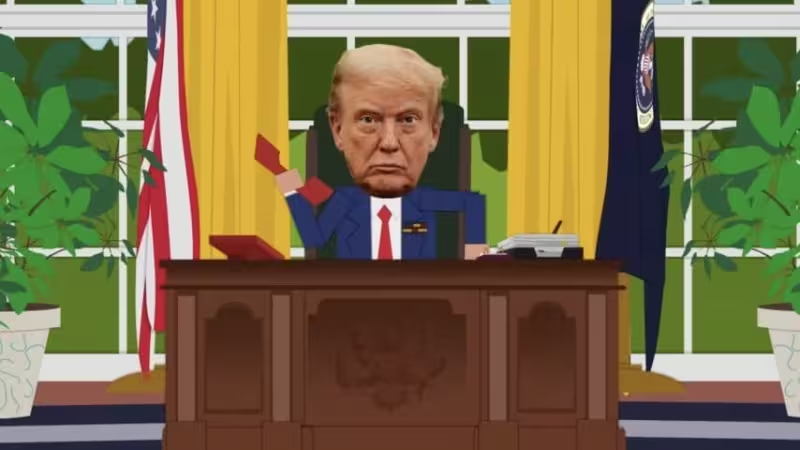
The Trump-focused episodes drew attention for their explicit content: the two seasons featured graphic depictions of Donald Trump, including scenes showing him with a micropenis, in bed with Satan, and having sex with Vice President JD Vance; the episodes also mocked Kristi Noem and Pete Hegseth.
“We were just going to do that first show with the Trump stuff,” Parker said, describing what was originally conceived as a single joke. He said the administration’s public reaction altered that calculation: “We laid into him so hard, and the thing became: ‘Well, who’s the bully now?’ It became this just totally juvenile joke of like, ‘We’re not gonna stop. We’re going to do it every single week.’ Even when everyone’s like, ‘OK, guys, move on,’ [we’re] like, ‘Nope, we’re not moving on. We’re going to keep going, going, going,’” Parker said.
Stone framed the dynamic in cultural terms, saying Trump’s second term created new boundaries around criticism. “Oh, that’s where the taboo is? Over there? OK, then we’re over there,” he said. “Trey and I are attracted to that like flies to honey.” Stone added bluntly, “We don’t care. We don’t give a fuck. We say it all the time. We’re not irresponsible, but we’ll go back to Colorado. We don’t give a fuck.”
That antagonism extended beyond critics and viewers: a White House spokesperson weighed in during the seasons’ run. “This show hasn’t been relevant for over 20 years and is hanging on by a thread with uninspired ideas in a desperate attempt for attention,” Taylor Rogers said, a condemnation Parker and Stone said only fueled them further; Parker also said hate from Trump voters spurred him on even more.
Parker offered another high-stakes flashpoint from the show’s recent history: before the 27th season premiere, South Park’s future was at a crossroads. “South Park was either going to be done—right then and there, that was it—or we were going to get a $1.5 billion deal,” he said, framing the moment as decisive for the series’ survival and ambition.
Those decisions now have a clear next chapter: Comedy Central announced Season 29 is set to premiere September 16, with new episodes scheduled every two weeks on September 30, October 14, October 28, November 11 and November 25. The schedule — and Parker and Stone’s repeated insistence that the show will aim for provocation — answers the implicit question from the Emmy event: yes, they plan to keep pushing boundaries and to keep the series in the cultural conversation.
Context matters to how the show manages that push. South Park’s famously fast production turnaround lets Parker and Stone seize current events mid-production, a capability that helped the 27th and 28th seasons build plots around Trump’s sexual dalliances with Satan and JD Vance and to react rapidly to the White House replies that, by their account, kept the satire rolling.
There is a tension between that appetite for provocation and the White House dismissal of the show’s relevance. The administration’s public derision helped turn a single episode into an arc that boosted ratings, but it also gives critics a fresh line of attack and underlines the risk of leaning on controversy as a creative engine.
Still, the concrete schedule and the creators’ posture make the outcome clear: Parker and Stone are not retreating. With Season 29 set to run on a biweekly cadence beginning September 16, south park will return to television with the same appetite for taboo and the same willingness to answer critics by doing more of what drew the fire in the first place.