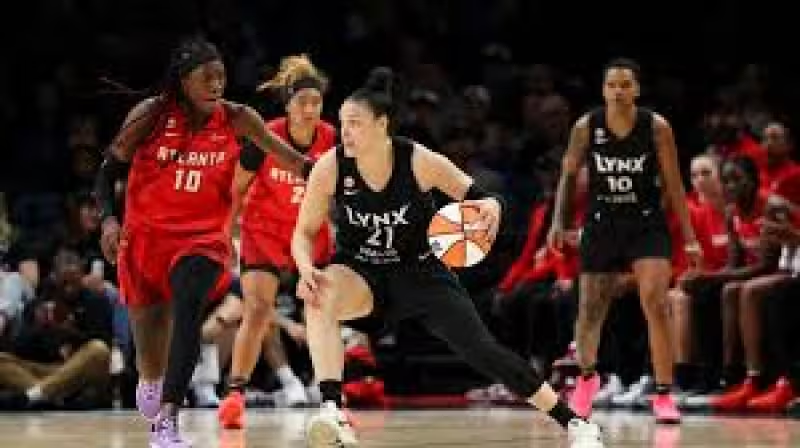
Napheesa Collier was listed out with a knee injury when the Minnesota Lynx played the Atlanta Dream on Wednesday, May 27 at 8:00 PM CT at Target Center.
The absence was one line on a short but consequential Minnesota injury report: Emma Cechova and Dorka Juhasz were also listed out — Cechova with a knee issue, Juhasz with a foot injury — while Anastasiia Olairi Kosu was listed probable in concussion protocol. The Lynx said they would wear Rebel Edition jerseys for the game, and fans could watch via USA or Victory+ live streams, with restrictions applying.
The matchup carried weight beyond uniforms and broadcast windows. Covers.com pointed to Atlanta’s defense as the defining matchup, saying the Dream were 2.1 points better per 100 possessions than Minnesota in defensive rating. That advantage matters tonight because the Lynx arrived with multiple rotation players sidelined, forcing coach and teammates to adapt minutes and matchups without Collier, one of their core frontcourt pieces.
Covers.com also highlighted players and patterns that could sway the game. Allisha Gray entered the contest averaging 21.8 points per game, and Courtney Williams had dished exactly three assists in four straight games. The site noted Angel Reese had 14 rebounds in the teams’ earlier meeting in May, and that four straight Atlanta games had gone under their totals — a string that framed the Dream as a defense-first unit capable of slowing possessions and lowering scoring.
Context matters here: the Lynx’s official report listed three players out and one probable before the May 27 game, a clear and immediate constraint on Minnesota’s rotation. The Dream, by contrast, were described by Covers.com as lacking key injuries, and Atlanta’s defensive rating edge was the statistical anchor for why they were considered the tougher matchup on that end of the court.
The tension in this setup is simple and sharp. Covers.com framed both teams as having “no key injuries to report,” yet the Lynx themselves published an injury list that removed two players from the game and put a third in doubt. That contradiction creates an unsettled picture for bettors, fans and the Lynx coaching staff: does the public narrative — that both teams are largely intact — accurately reflect the roster Minnesota actually presented on game night?
Practical consequences follow. With Collier out, the Lynx needed others to fill minutes and rebound duties she typically supplies. Atlanta’s defensive edge, plus Gray’s scoring and Reese’s earlier 14-rebound performance in the matchup, meant Minnesota faced a two-part problem: replace lost production inside and do it against one of the league’s stingier defenses. The Rebel Edition jerseys signaled a home-team identity for the night; the real test was whether that identity could overcome personnel shortfalls.
The most consequential question after this lineup shakeup is who will absorb Collier’s minutes and match up effectively with Atlanta’s physical frontcourt. If the Lynx cannot find consistent help on the glass and keep up scoring against a defense that limits possessions, their problems are immediate and measurable. The answer to that question will determine whether Minnesota’s adjustments on and off the court were sufficient to blunt the Dream’s defensive edge.