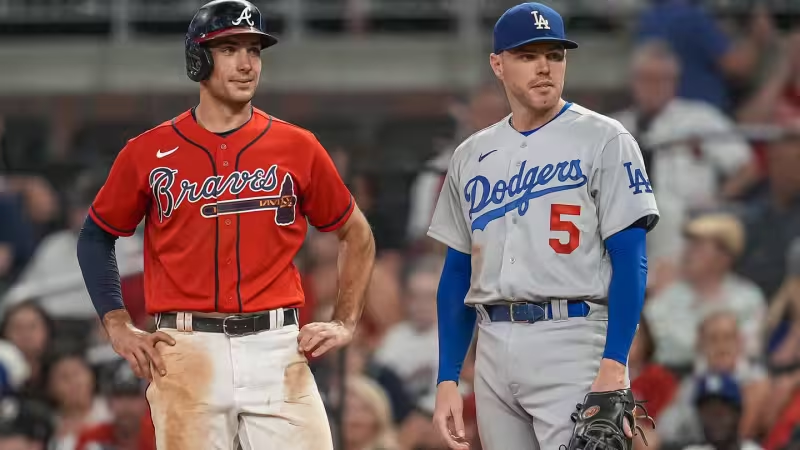
Ken Rosenthal revealed a previously unreported twist in the Braves’ post-lockout scramble: once Atlanta believed it was out on Freddie Freeman in March 2022, the club tried to sign Anthony Rizzo before acquiring Matt Olson from the then-Oakland Athletics. That decision — a pivot from one veteran first baseman to another — set the franchise on a different path.
Matt Olson has lived the result. Since joining the Braves, Olson has played in every game, has not missed a game in a half-decade and has produced 23.1 WAR since 2022, a total the article says outpaces Freddie Freeman’s 21.4 WAR in the same span. Olson, 32, broke the franchise home run record, earned a top-five finish in the NL MVP race, and is on his way to his third All-Star Game as a Brave, all while carrying four years left on his contract.
The hard numbers underline why the pivot mattered. Freddie Freeman signed with the Los Angeles Dodgers on a six-year, $162 million deal in March 2022; he has since helped the Dodgers win two straight World Series titles and took home a World Series MVP trophy in one of them. Still, Atlanta’s bet on Olson has delivered both production and durability: 23.1 WAR for Olson versus 21.4 for Freeman since 2022, plus the continuity of a player who, according to the SportsTalk ATL article cited in reporting, “had not had a subpar season in Atlanta.”
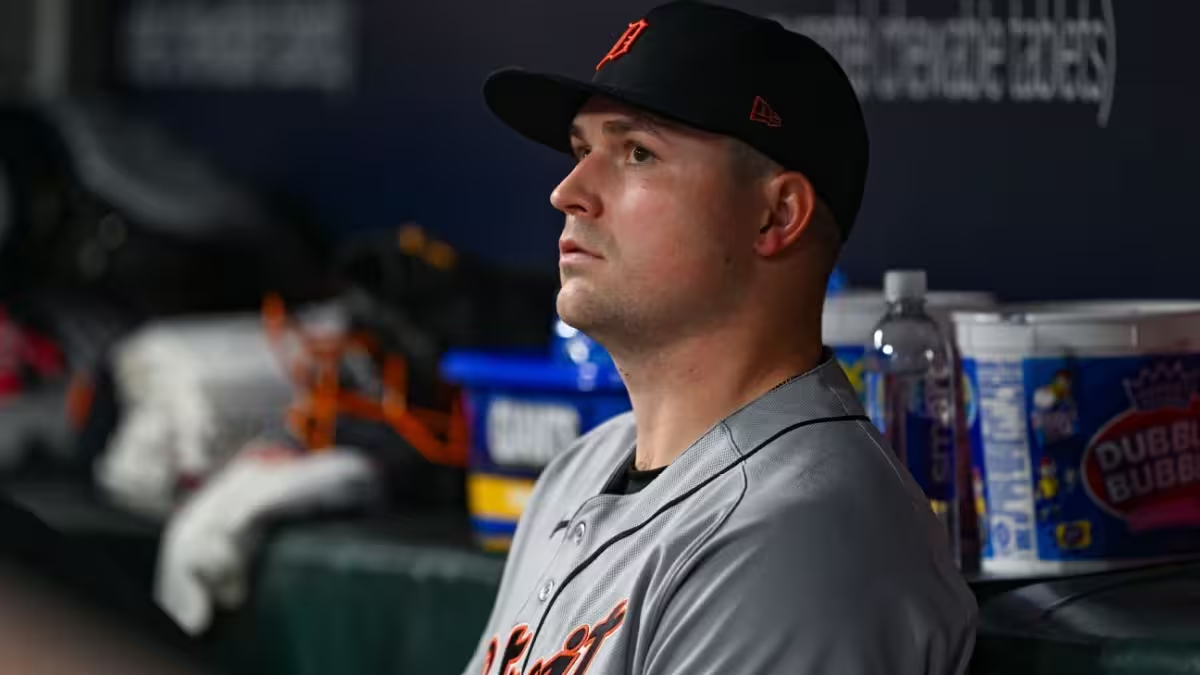
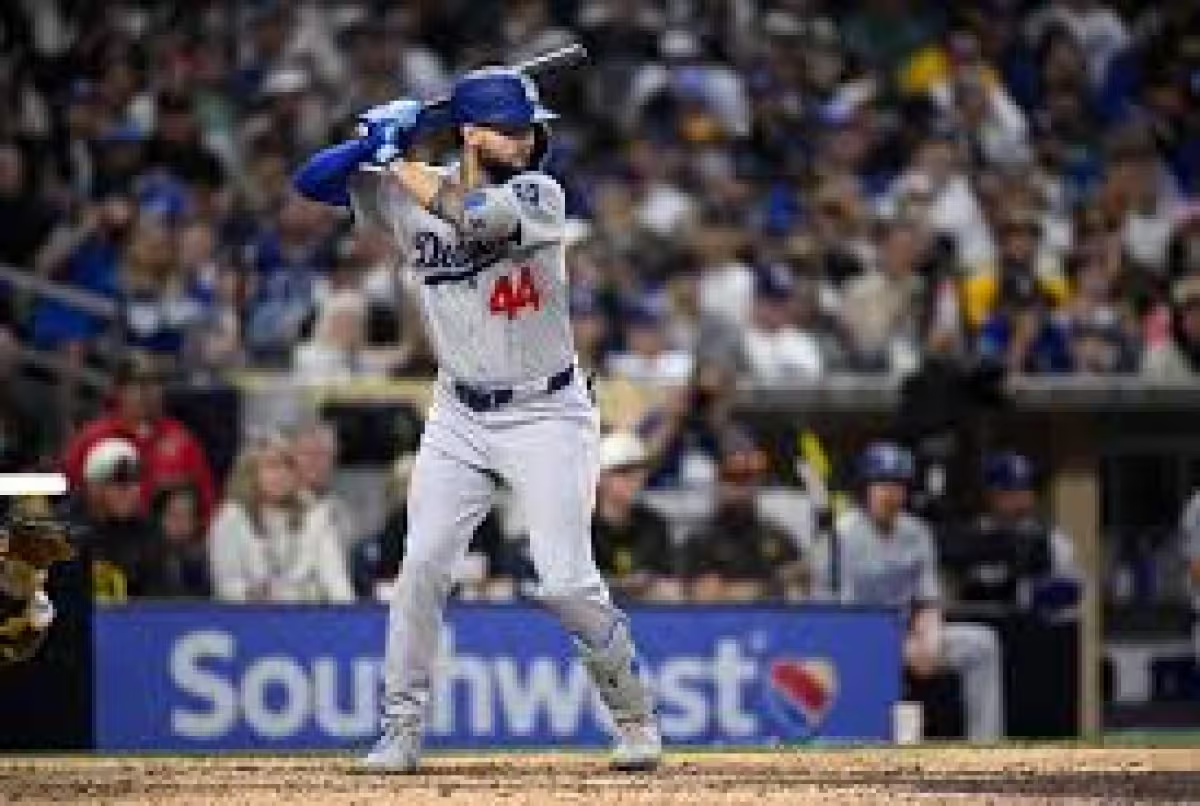
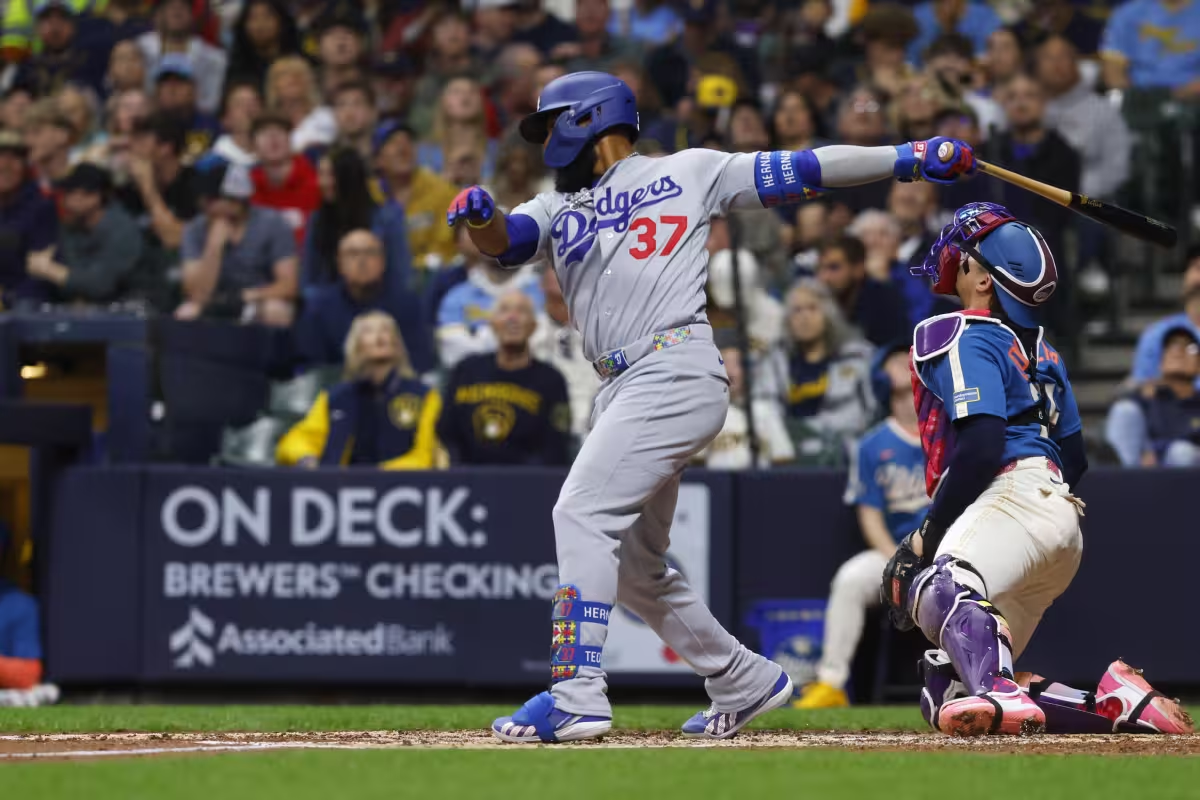
Rosenthal laid out what happened behind the scenes: "The previously unreported twist is this: Once the Braves believed they were out on Freeman during the post-lockout free-agent frenzy in March 2022, they tried to sign another first baseman before acquiring Olson from the then-Oakland Athletics" and, he wrote, "That first baseman, according to people familiar with both the team’s and player’s discussions, was Anthony Rizzo. The parties did not get close to a deal. The Braves, who do not give players opt-outs, declined to offer Rizzo the kind of contract he received from the New York Yankees — two years, $32 million, with an opt-out after the first year. The team’s preference, according to a person close to Rizzo, was to sign him for one year."
That revelation sharpens the narrative around a narrow offseason choice: the Braves declined to match the Yankees’ two-year, $32 million offer with an opt-out and instead pursued Olson via trade. The consequences are stark in hindsight. Rizzo is no longer in the league; over his three seasons after Atlanta’s failed pursuit he averaged 1.0 WAR per season with the Yankees. Freeman, pushing 37 and slated to be a free agent after next season, has added rings and hardware in Los Angeles but is on the wrong side of 35. Olson, by contrast, is 32 with four guaranteed years remaining in Atlanta.
The tension is between what Atlanta could have had and what it chose: a short-term, one-year preference the club reportedly favored for Rizzo versus the long-term stability Olson provides. The Braves had just come off a 2021 World Series title and entered a market reshaped by a four-month lockout; the free-agent frenzy in March 2022 left teams and players scrambling. Atlanta believed it was out on Freeman, Freeman signed with the Dodgers, and the Braves shifted course. That chain — belief, pivot, trade — is now central to evaluating the club’s roster-building instincts.
The clearest conclusion is this: the Braves’ pivot to Matt Olson has not been a consolation prize but a structural investment that has already paid dividends. Olson’s durability, power and above-average run value have anchored Atlanta’s corner of the infield and bought the club a multi-year window it did not have if it had tried to extend Freddie Freeman at the same price and term. With Freeman aging toward free agency after next season and Olson under contract for four more years, Atlanta’s decision in March 2022 looks less like a fallback and more like the defining move of its recent offseason strategy.