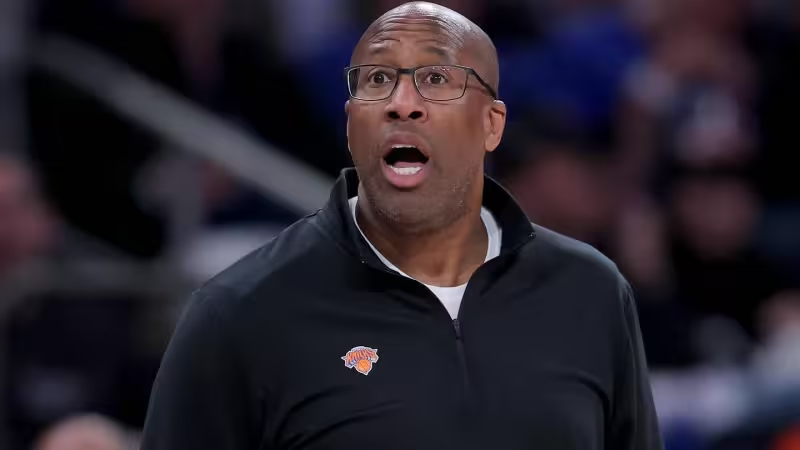
The New York Knicks are two wins from their first NBA Finals appearance in 27 years after beating the Cleveland Cavaliers in Game 2 of the Eastern Conference Finals on Thursday, and veteran guard Jordan Clarkson has become a living, breathing piece of the decision the franchise must make this summer.
New York’s victory on Thursday streaked the team to nine consecutive wins and capped a nine-game run during which the Knicks set the NBA record for the best point differential at plus-212, a figure that has altered how teams will value every player on the roster. Clarkson, signed to a minimum contract last offseason, has been part of that push — a low-cost rotation piece whose postseason minutes and effectiveness have added a new wrinkle to Brooklyn and league-wide calculations about his next deal.
On paper Clarkson’s regular season role was modest: he averaged 17.8 minutes across 72 games, putting up 8.6 points per game on.451/.327/.830 shooting while adding 1.8 rebounds and 1.3 assists. In the playoffs his minutes dipped to 12.1 per game off the bench, but his scoring efficiency has climbed — he is averaging 5.5 points per game while shooting 50.9 percent from the field. Clarkson, 33 and turning 34 next month, arrived on a veterans’ minimum after previously earning $28.3 million over two years with the Utah Jazz; New York is scheduled to pay him $2.2 million for the 2025-2026 NBA season.
All of that matters because the Knicks are strapped. Internally and in public projections they sit with 10 expiring contracts to various degrees, are projected to rank 26th in available cap space, and — according to Spotrac — have $3.5 million remaining before the first apron. Those constraints turn every bargain into a strategic lever: a player like Clarkson, who played on the minimum this season, suddenly looks like a candidate to be priced out when contenders with more room chase shooting off the bench.
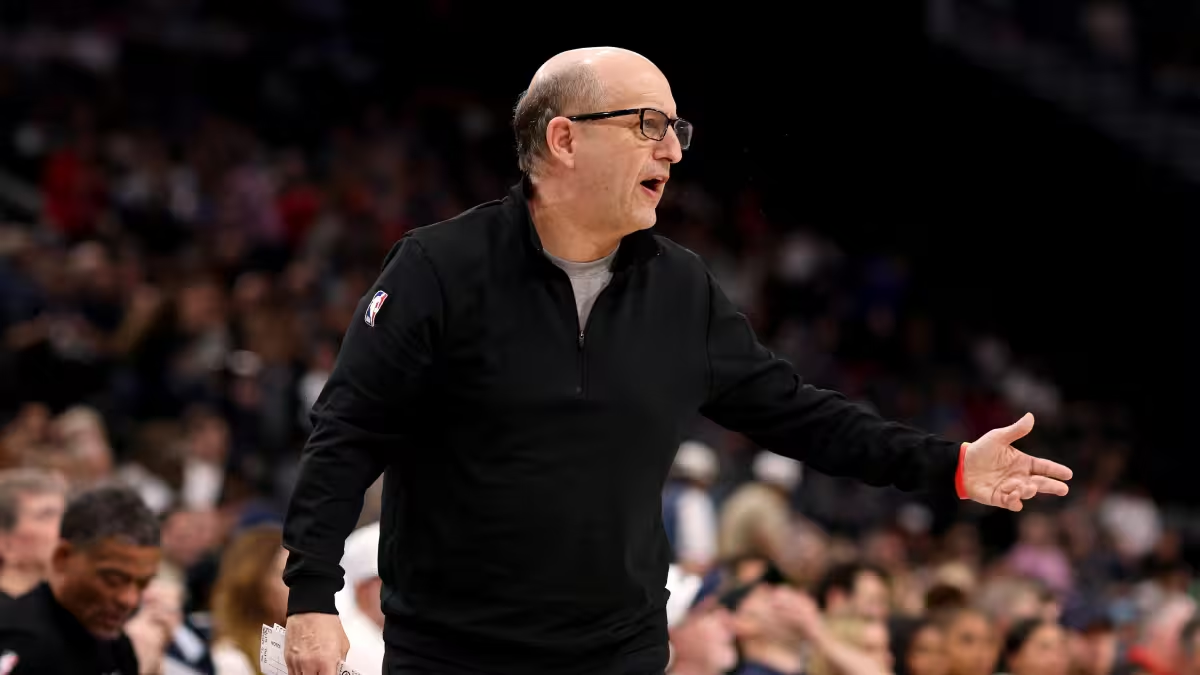
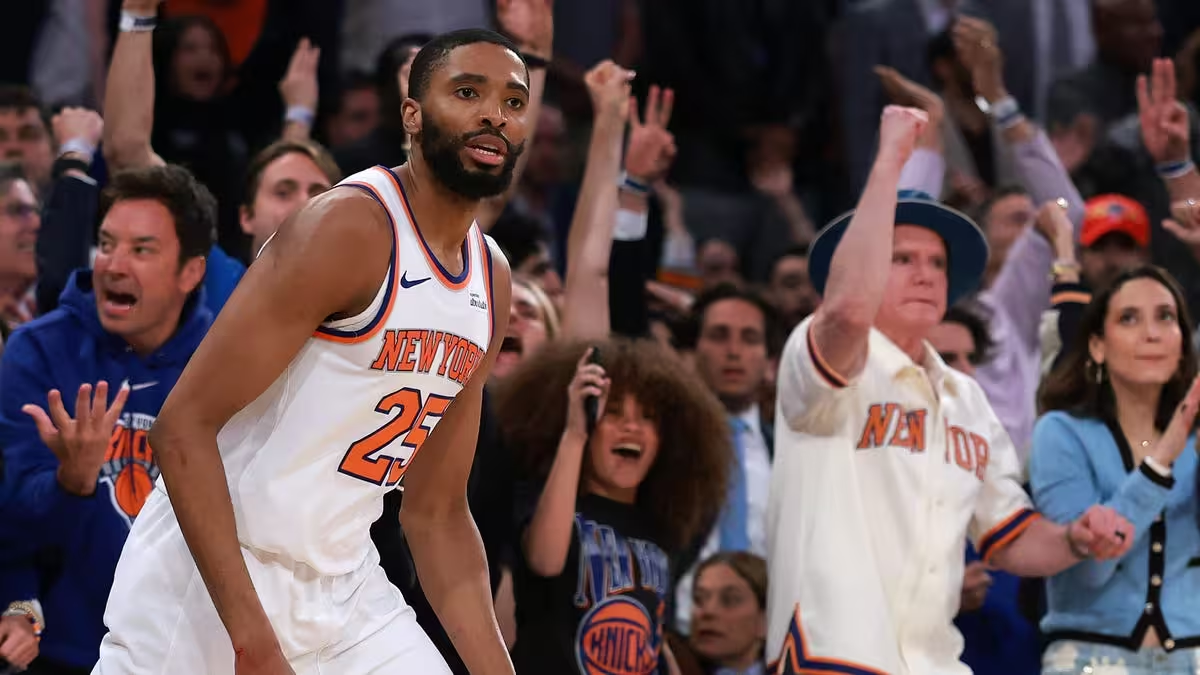
That tension is already being voiced by evaluators. “Although this isn’t the most offensively productive playoff run of his career, it is the deepest Clarkson has gone since he was with the 2017-18 Cavaliers,” said Devon Platana. “That extended time in the postseason spotlight could cause him to seek a contract worth more than the minimum he played on this season. He’s turning 34 years old next month, so no one would blame him for chasing one last payday.”
Those two sentences from Platana capture the calendar in front of the Knicks. Clarkson has been in the league 12 years, has won the Sixth Man of the Year award and has previous playoff experience with the Cleveland Cavaliers and Utah Jazz; the 2017-18 Cavs marked his deepest postseason run before this year. Now, after more playoff exposure, he is widely viewed as a likely exit candidate in free agency and is expected to draw attention from contenders in need of bench shooting.
The numbers sharpen the trade-offs. Re-signing Clarkson would cost a team with limited cap flexibility at least a meaningful portion of available room; letting him walk would mean replacing reliable, efficient play off the bench for a player who has shown he can deliver under postseason pressure. For a Knicks roster that has just ripped off nine straight wins and owns an unprecedented nine-game point-differential mark, the choice is concrete: preserve short-term continuity with a veteran who fit the rotation at a minimum this season, or free space to chase longer-term upgrades and wage inflation this summer.
The single practical fact that will determine the answer is the open market. Clarkson’s lowered salary and reduced role create bargaining leverage for New York now; his playoff tape and history of scoring on limited minutes create leverage for him with teams that can pay more. If the Knicks want to keep him, they will have to clear room from a roster that, by projection and public accounting, has little of it. If they do not, the postseason spotlight the team just provided will likely turn into phone calls from teams that can afford to pay what Clarkson may ask.
For Clarkson, the calculus is simple and personal: he is approaching 34, has already accepted a minimum to join a contender, and has delivered efficiency in the moments that matter — a profile that, as Platana noted, gives him both the right and the opportunity to seek more when free agency arrives.