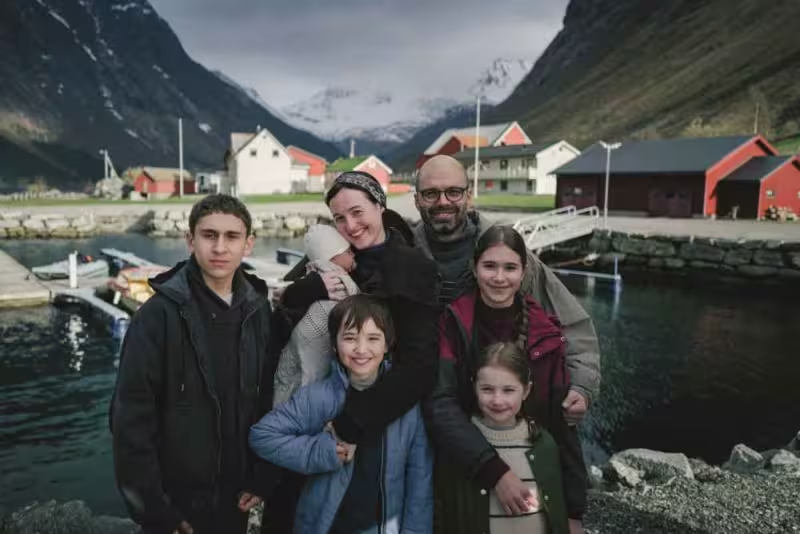
Cristian Mungiu’s Fjord won the Palme d’Or at the Cannes Film Festival 2026, making Mungiu the tenth filmmaker in history to take the prize twice — his first came 19 years earlier for 4 Months, 3 Weeks and 2 Days.
The announcement at the festival’s closing ceremony placed Mungiu back on the festival’s highest shelf while a spread of other major awards underscored a crowded, international podium: Andrey Zvyagintsev’s Minotaur took the Grand Prix; The Dreamed Adventure by Valeska Grisebach received the Jury Prize; Best Director was split in a rare tie between Javier Calva and Javier Ambrossi for The Black Ball and Pawel Pawlikowski for Fatherland; Best Actress went jointly to Virginie Efira and Tao Okamoto for All of a Sudden; Best Actor was awarded to Valentin Campagne and Emmanuel Macchia for Coward; Best Screenplay went to Emmanuel Marre for A Man of His Time.
Beyond the Competition slate, the festival handed out major festival prizes across formats: Ben’Imana by Marie Clémentine Dusabejambo won the Camera d’Or for first features, For the Opponents by Federico Luis captured the Short Film Palme d’Or, and Everytime by Sandra Wollner took the Un Certain Regard Award while Elephants in the Fog by Abinash Bikram Shah won the Un Certain Regard Jury Prize and Iron Boy by Louis Clichy received the Un Certain Regard Special Jury Prize. Peter Jackson, Barbra Streisand and John Travolta were each honored with an Honorary Palme d’Or before the ceremony.
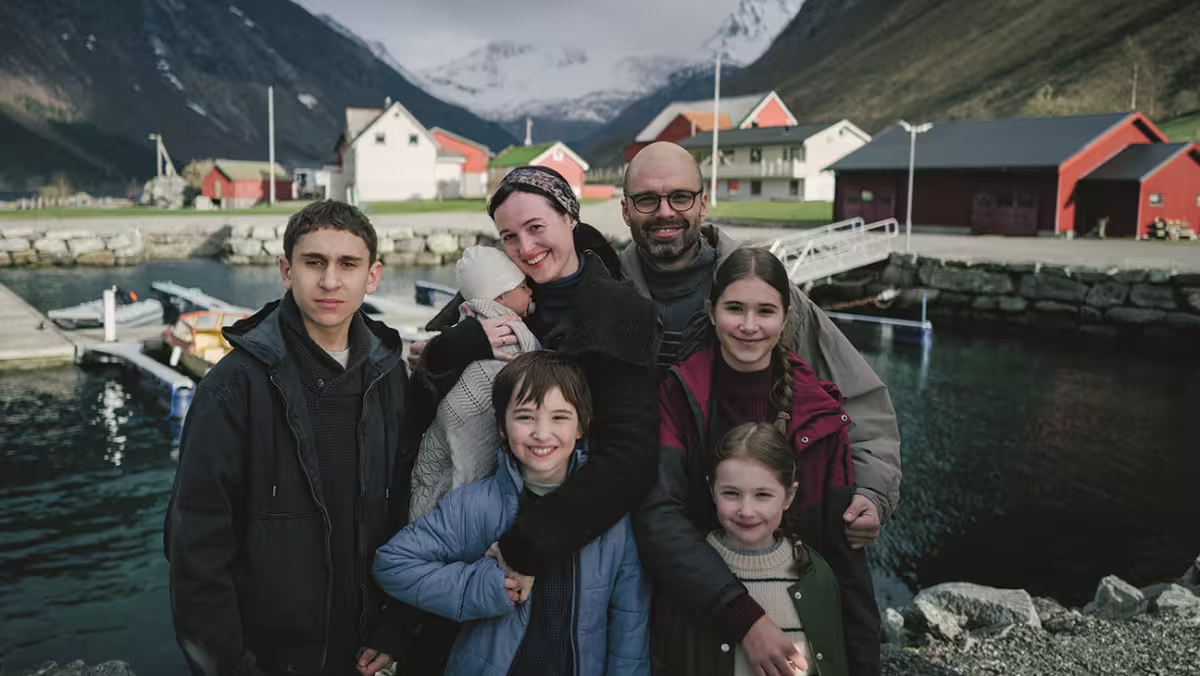
The weight of Mungiu’s win is immediate and literal: a second Palme d’Or, arriving 19 years after his first, is a rarity reserved for a handful of directors and reshapes how his body of work will be read. The festival’s distribution pattern also matters to how that reshaping will play out — the distributor Neon carried the top prize at Cannes for the seventh year running, reinforcing a repeated pipeline between festival acclaim and high-profile market launches.
There was friction in the jury’s decisions that points to a broader fault line at this edition of the festival. The tie for Best Director and the multiple joint acting prizes indicate a body unwilling to coronate a single dominant voice, even as it handed the top honor to a veteran auteur. That split — anointing both the established and the emergent across categories — leaves the season without a neat narrative and forces buyers, critics and audiences to reconcile conflicting signals about what the festival valued most.
For Mungiu, the result is unambiguous: joining the ranks of two-time Palme winners cements his place in the festival’s small, canonical club and will shape the critical and commercial life of Fjord. For the festival itself, the mix of awards — from Grand Prix to Camera d’Or and the Un Certain Regard recognitions — maps a year in which juries rewarded returnees, first-time directors and shorts alike, scattering attention rather than concentrating it.
The clear next step is market and audience reckoning. Films that won this week will move into sales negotiations, festival circuits and theatrical planning, and the Neon-backed top prize suggests at least one robust route from Cannes screens to global release. But the festival’s larger signal is already set: Cannes Film Festival 2026 honored a familiar master at its center while deliberately distributing spotlight and prizes across a diverse field — a choice that both protects cinema’s veterans and forces the industry to pay attention to many new voices at once.