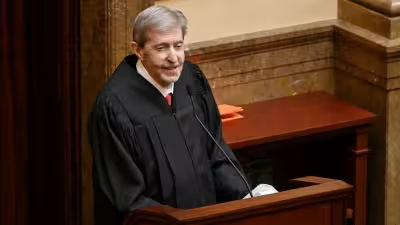
Oklahoma City beat San Antonio 122-113 on Wednesday, knotting the Western Conference Finals at 1-1, and the change in Isaiah Hartenstein’s role was the clearest sign of the adjustment. Hartenstein played 27 minutes, and his physical presence against Victor Wembanyama was a decisive element of the Thunder’s Game 2 plan.
Stat lines underline the shift: Hartenstein finished with 10 points, 13 rebounds — eight of them offensive — and three assists. He spent important minutes guarding Wembanyama, who still piled up 21 points, 17 rebounds, six assists and four blocks while committing four turnovers. San Antonio’s 21 turnovers turned into 27 Thunder points, a swing that matched the margin Oklahoma City needed to pull away.
A quick look at isaiah hartenstein stats from Game 2 shows why coach Mark Daigneault altered the script: after limiting Hartenstein to 12 minutes in Game 1, Daigneault pulled him aside at Tuesday’s practice and told him his number would be called more and that the team would try something different. Daigneault had said he didn’t feel good about the 12-minute allotment the first game, and he made a conscious change.
The backstory is simple and immediate. On Monday, Wembanyama dominated Game 1 with 41 points and 24 rebounds, including 26 points in the paint. Oklahoma City needed a different look against the rookie’s size and mobility, and Hartenstein’s extended minutes were that answer. Hartenstein said he would do whatever the team needed, and he emphasized doing more physically — making sure Wembanyama didn’t get easy rim finishes and making him work for every play.
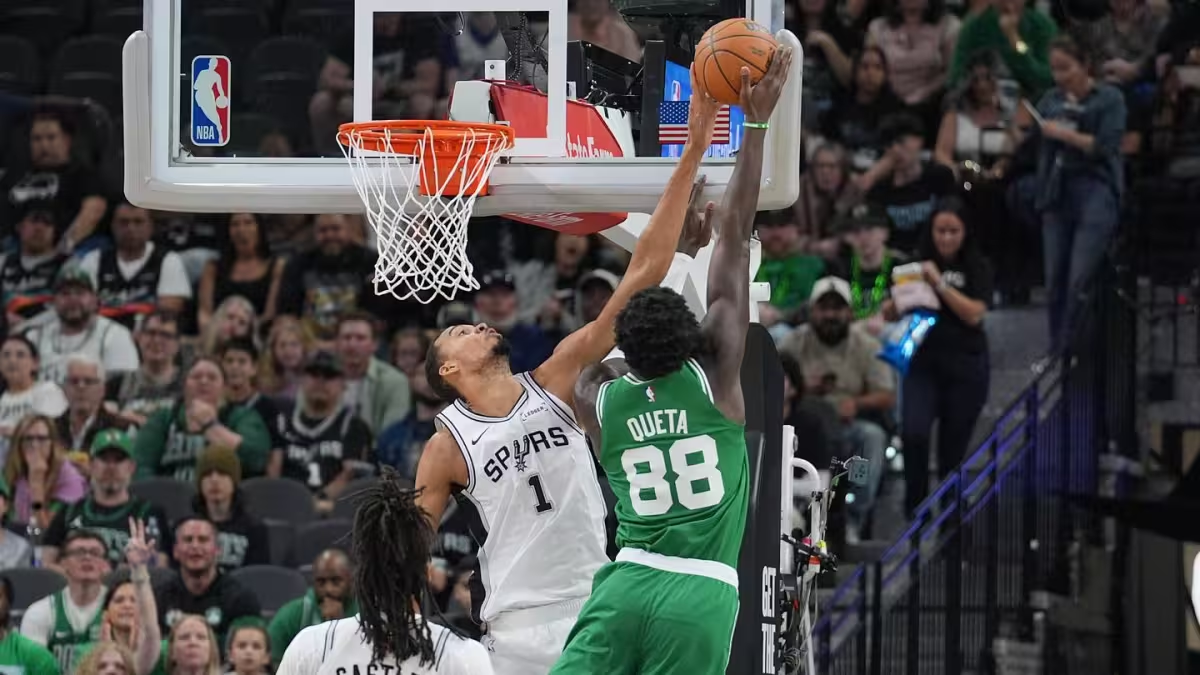

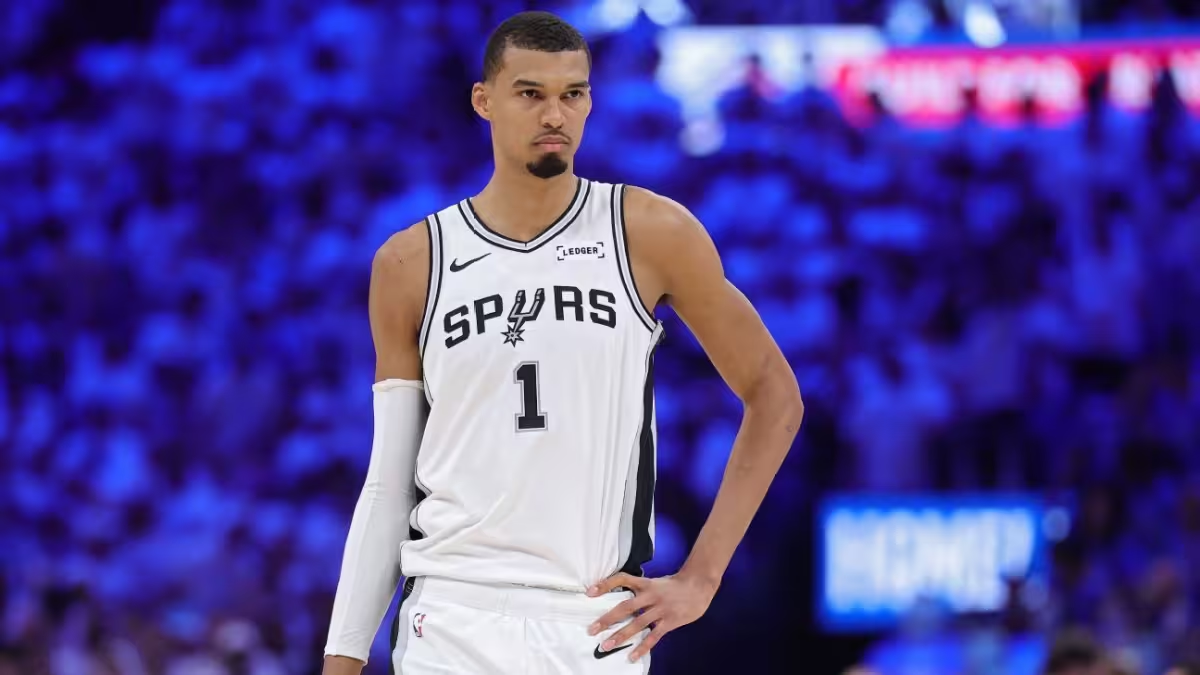
Tension in the victory comes from two competing truths. On the one hand, Hartenstein’s offensive rebounding and physical defense directly disrupted San Antonio’s usual rhythm: eight offensive boards created second-chance opportunities and bodyed up Wembanyama at the rim. Alex Caruso praised that approach, saying Hartenstein did a good job of being physical. On the other hand, the Spurs’ 21 turnovers and the 27 points those miscues produced were a blunt force that also decided the contest. It is not yet clear whether the matchup change or the turnover margin was the greater cause of the outcome.
Wembanyama’s box score remains imposing even when slowed: his 21 points and 17 rebounds in Game 2 came with six assists and four blocks, a reminder he still moves the needle for San Antonio. He managed only 10 paint points in Game 2 after a 26-point paint outburst in Game 1, but the Spurs’ ball security problems — 21 turnovers — left them without the second chance opportunities they relied on earlier in the series.
Daigneault’s gamble to increase Hartenstein’s minutes paid in multiple ways. Hartenstein’s presence on the floor was more than minutes; it was a physical template. The coach said he told Hartenstein to be ready, that his number would be called more, and that the team would try something different — a conversation that preceded the 27-minute outing and a game in which Hartenstein did, in Daigneault’s words, what he does.
By the final buzzer the series was level, and the most consequential immediate consequence is tactical: Oklahoma City has now proven it can lean on Hartenstein’s size and offensive-rebound aggression to counter Wembanyama without surrendering the matchup entirely. Hartenstein’s promise to do whatever the team needs, and his effort to make Wembanyama work on every trip, suggests the Thunder have found a repeatable counter. If Oklahoma City keeps forcing turnovers and giving Hartenstein the minutes he showed Wednesday, the series will be decided less by singular star explosions and more by who executes that physical plan better across the next games.