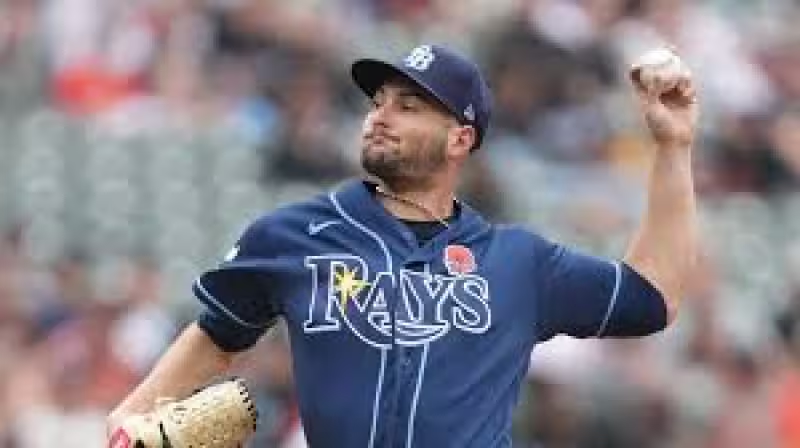
Shane Baz took the ball Tuesday at 6:35, starting for the Rays against the Orioles in a night that came with an immediate roster shake-up for Baltimore.
Baz, whose two most recent outings have been the clearest signs of a turnaround, came in on the heels of six strong innings in his last start and seven solid frames the outing before that — performances that pushed his season ERA down from 5.48 to 4.87.
The roster move that preceded Tuesday’s game was stark: Dietrich Enns was designated for assignment earlier in the day, and the Orioles added Nick Raquet to make room. Enns carried a $2.625 million salary, a figure that underscored how consequential the decision was for a club still searching for reliable relief help.
Raquet arrives with a tidy Triple-A line — a 3.24 ERA and a 2.86 FIP over 16.2 innings — numbers that earned him a promotion. They also come with a warning: his three MLB games earlier this year "did not go well," a blunt fact the club is implicitly betting it can overcome.
The timing of the move was practical as well as political. Baltimore had just played a 13-inning game on Monday, and the bullpen workload was a likely factor in the front office’s choice to clear a spot. The change is meant to shore up a relief corps that needs immediate answers.
All of it lands against a mixed team backdrop. The Orioles had lost five of six before a small run of form — three wins in four games — but had also endured three embarrassing displays in Tampa a few days earlier. That uneven stretch helps explain why management felt compelled to make a payroll-conscious roster change after a long Monday night.
There is a sharper tension beneath the surface. Baz has produced back-to-back quality outings that materially improved his ERA, yet the club’s fortunes have not aligned with his strides: the Orioles had not won a start by Shane Baz since April 28, a statistic that highlights how pitching improvement and team results have not moved in lockstep.
Raquet’s promotion is illustrative of the gamble: Triple-A success versus shaky major-league work. Enns’ DFA, despite a salary that matters in roster calculations, signals the club’s impatience with a bullpen that has been tested at the worst possible times. Management is effectively trading guaranteed dollars for the hope that Raquet can be the more effective short-term piece.
The immediate question is obvious and urgent: can Baz’s recent upswing finally translate into wins, and will Raquet stabilize a relief group that prompted a costly cut? How Baltimore answers both parts will shape short-term rotation decisions and whether the front office keeps looking for veteran fixes or leans on internal options.