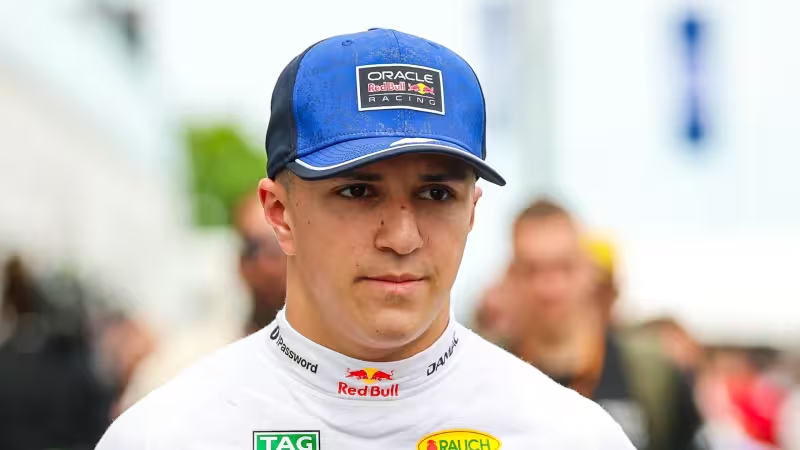
Isack Hadjar qualified seventh for the 2026 Canadian Grand Prix after topping the Q2 timesheets but falling back in Q3, finishing behind team mate Max Verstappen.
The 21-year-old led Q2 only hours after suffering an issue on his car in Saturday’s Sprint that forced him to retire initially and later rejoin at the back of the field. Hadjar looked quickest through the middle phase of qualifying before a costly error in the shootout dropped him to P7.
Hadjar did not hide the reason for the slip. "I made a mistake on the first run of Q3, and I couldn’t really have a good reference heading into that final lap and I was kind of overdriving it," he said, putting the mistake squarely on himself.
The weight of what was lost was immediate. Hadjar said the team finally produced "the first really good car they had had this year," and that the speed on Saturday’s qualifying day was a genuine step forward from the Sprint. "It’s really a shame because it’s the first time this year we’ve had such a good car, and I had to kind of throw it all away because I didn’t do a good job. I’m quite p****d," he added.
Those comments underline how much mattered in a single lap. Hadjar had been quickest in Q2 and arrived at Q3 in form; instead he left qualifying with a grid slot that will make his race more difficult. He also finished behind Verstappen in the session, a detail that framed the team's internal comparison for the rest of the weekend.

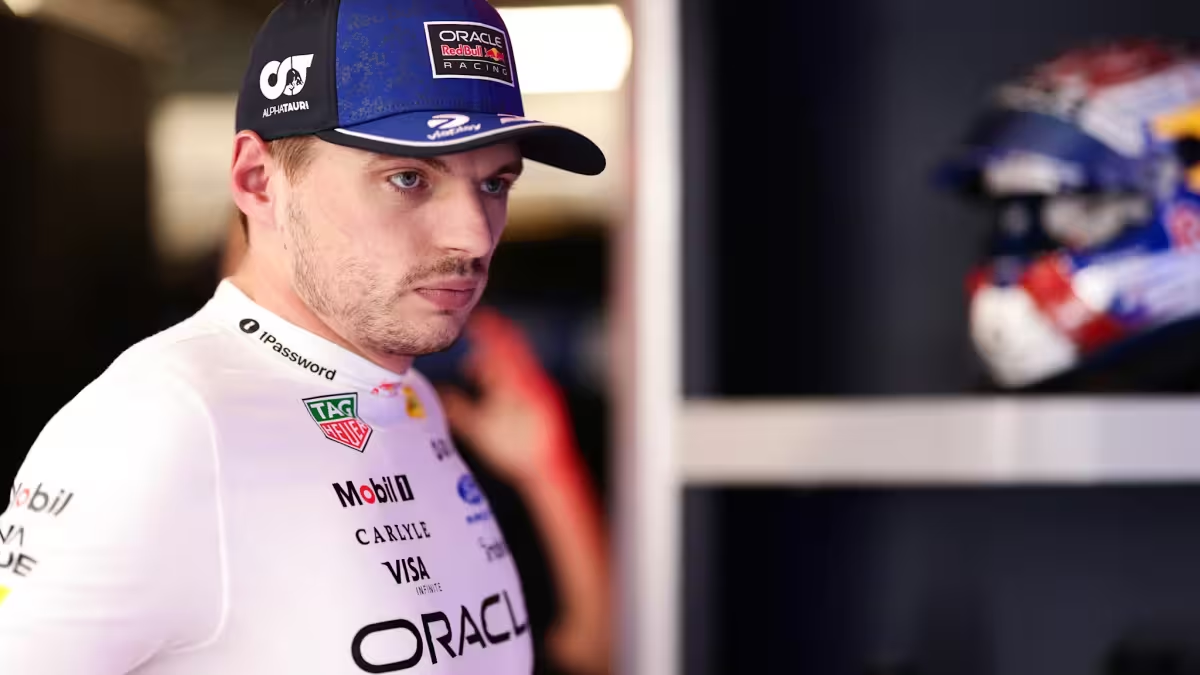
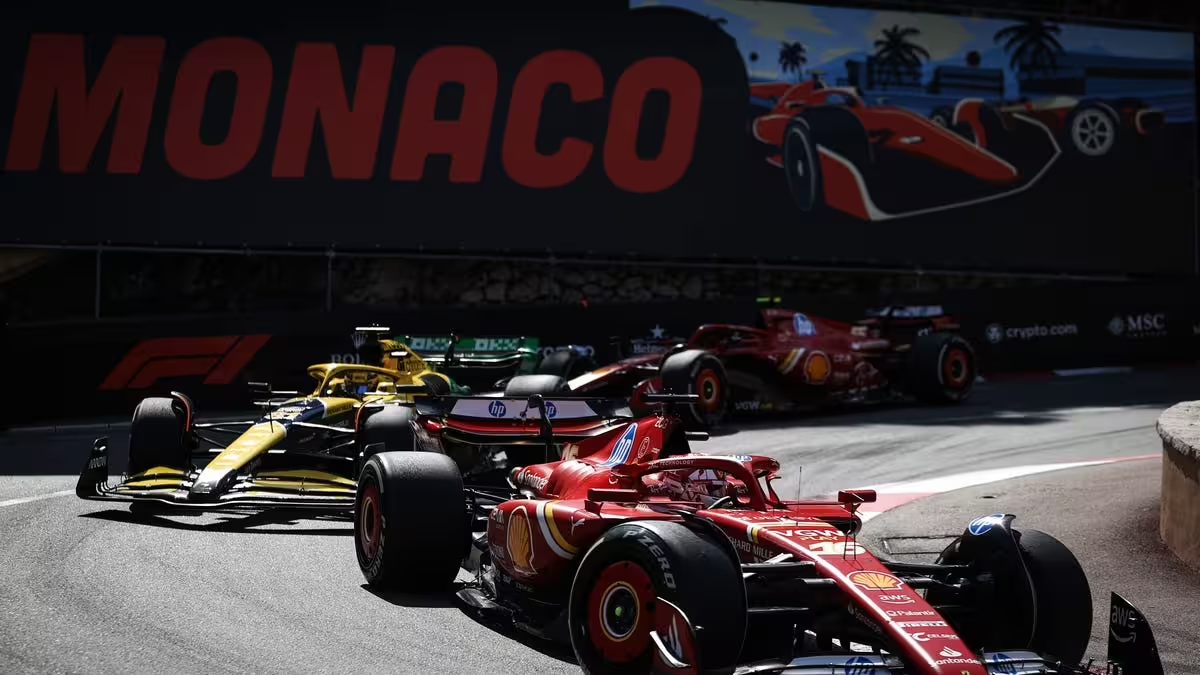
Context came fast. Red Bull appeared in much stronger form in qualifying than it had in Saturday’s Sprint, a swing Hadjar acknowledged — and one he wants the team to explain. "We need to understand why we were so much quicker than yesterday, even though I have an idea," he said, flagging that the team must pin down what changed between sessions.
The tension in Hadjar’s remarks is the gap between raw pace and execution. He praised the car and the step forward it represented but also insisted he left precious positions on the table. "That’s definitely positive, but then on the other hand I should have been in that top three and I didn’t," he said, expressing both optimism about the package and frustration at his own laps.
Saturday’s Sprint problem had already complicated Hadjar’s weekend. The issue on the car forced an initial retirement and a later rejoin from the back, an interruption that interrupted his running and may have fed into the rhythm he lost in qualifying, though Hadjar blamed his Q3 mistake rather than the earlier failure.
For the team, the session is both a proof point and a warning: the car has pace, but mistakes erase potential. For Hadjar, the result is personal. He has the speed — he topped Q2 — and he knows where he should have been on the grid. He left the track angry and blunt about the missed chance, demanding answers on why the team was quicker and admitting he must deliver the lap he did not.
What matters next is simple and urgent: Hadjar and his engineers must turn the clearer performance into a clean, mistake-free run in the race if the package is to convert into a top-three finish. He may have the car; now he has to stop throwing away the lap that could have taken him there.